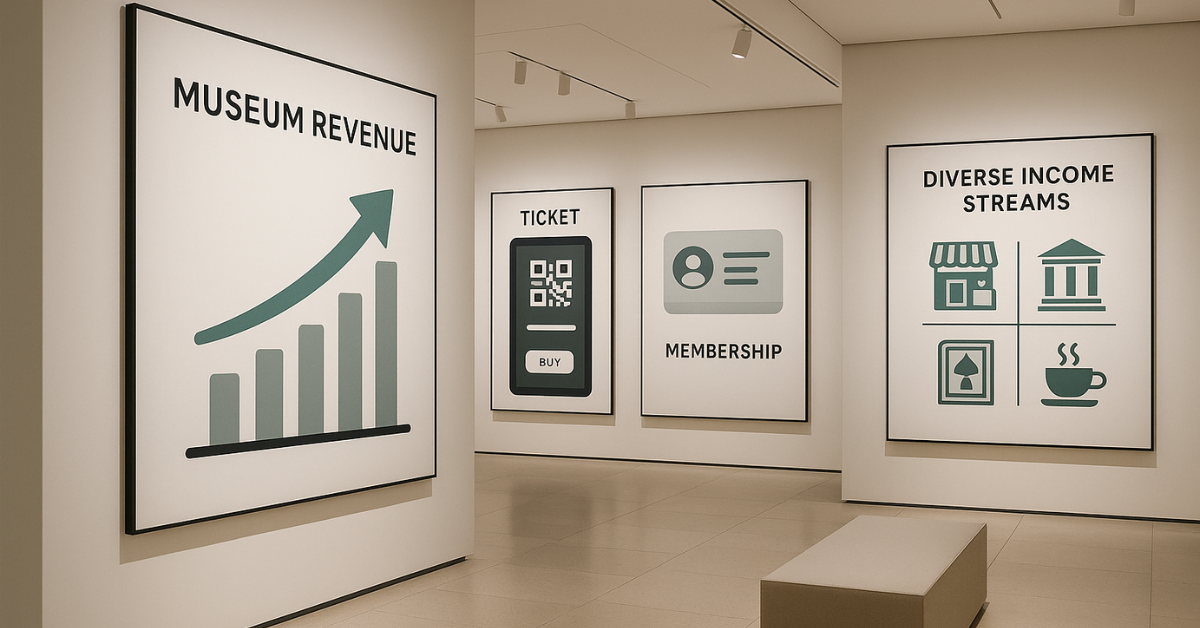
Museum revenue diversification means expanding beyond a single income stream such as ticket sales into multiple, sustainable revenue channels including memberships, digital experiences, retail, programs, partnerships, and earned income. It helps museums stabilize finances, reduce risk, and increase long-term resilience.
If your museum still relies on one or two revenue levers, you’re not under-performing, you’re operating with unnecessary financial risk.
Because in 2025 and beyond, museums that diversify revenue win the future, attract new audiences, and unlock capital others never tap into.
Why This Topic Matters
As someone who has worked closely with cultural institutions, I’ve seen this pattern repeatedly:
A museum’s revenue is 80–90% dependent on admissions, grants, or donations…
…and one disruption — weather, tourism dip, grant rejection — creates a funding crisis.
But here’s the truth:
Museums are sitting on more monetizable assets than any commercial business.
Visitor journeys. Collections. Space. Community trust. Content. Stories. Education programs. Cultural authority.
The problem?
Institutions rarely treat these as scalable revenue engines.
This guide changes that.
Modern Museum Revenue Diversification Landscape
Why traditional models no longer work
Most museums still depend on:
- Admissions
- Grants
- Donors
- Occasional fundraising events
This creates three risks:
- Unpredictable cash flow
- Over-dependence on seasonal tourism
- Vulnerable budgets tied to external decisions
Top Threats to Museum Revenue in 2025:
- Declining public funding
- Inflation increasing operational costs
- Changing visitor behaviors
- Competition from digital entertainment
- Membership fatigue
Traditional models are fragile. Diversification is no longer optional—it’s a survival strategy.
7 Most Reliable Revenue Streams for Modern Museums
1. Memberships (Your #1 predictable revenue engine)
Memberships remain the most scalable way to diversify revenue because they offer:
- Recurring predictable income
- Higher lifetime value
- Built-in loyalty
- Opportunity for tiered monetization
Example
A museum that shifts from one-time ticket buyers to a digitally managed membership flow sees a 30–60% increase in recurring revenue within 12 months.
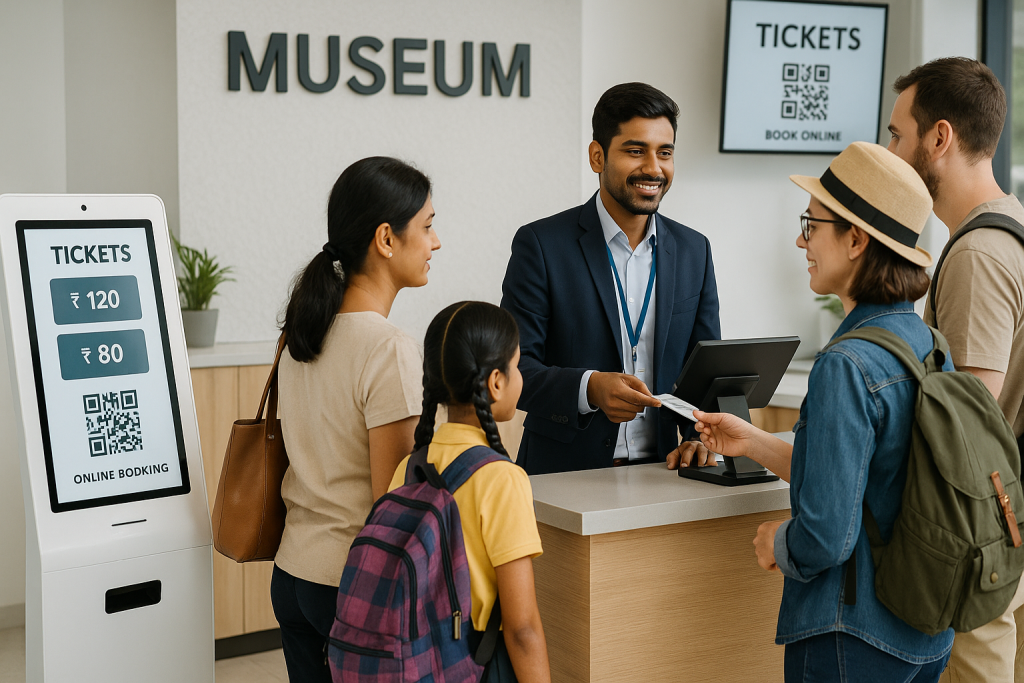
2. Digital Ticketing & Dynamic Pricing
Today’s visitors expect seamless online ticketing.
Dynamic pricing unlocks:
- More revenue during peak hours
- Better utilization during off-peak slots
- Automated yield optimization
EveryTicket helps museums automate pricing rules, manage capacity, and increase sales instantly.
3. Educational Programs & Workshops
Museums are under-leveraging education.
Examples:
- Children’s workshops
- Masterclasses
- Online courses
- Curator-led experiences
These programs become high-margin, year-round revenue drivers.
4. Retail & E-commerce
Museum stores can evolve into:
- Online shops
- Limited-edition drops
- Artist collaborations
- Digital merchandise
Retail’s biggest shift?
E-commerce is now more profitable than physical stores.
5. Corporate & Private Events
Museums are prestige venues.
You can monetize:
- Corporate events
- Gala dinners
- Private celebrations
- Film & photoshoot rentals
This alone can become a 6–7 figure annual stream.
6. Corporate Sponsorships & Partnerships
A growing trend:
- CSR partnerships
- Research collaborations
- Brand activations
- Exhibition sponsorships
Museums underestimate how attractive their audience demographics are to brands.
7. Digital Content Monetization
You’re already producing content, you just aren’t monetizing it.
Possible channels:
- Paid virtual tours
- Curated video series
- Behind-the-scenes access
- Licensing images and archives
You now have 7 proven, scalable revenue levers.
But strategy—not a list—is what turns them into results.
Museums Don’t Need More Funding; They Need More Monetizable Assets
Most leaders search for “new funding sources.”
But the opportunity is different:
Create new value, not just new requests for funds.
Museums can transform into:
- Learning hubs
- Digital content studios
- Community experience centers
- Premium membership clubs
- Corporate innovation partners
This positions the museum not as a recipient of support —
but a creator of economic and cultural value.
5 Biggest Myths About Museum Revenue Diversification
Myth 1: “We can’t charge for educational content.”
You can. People pay for expertise, not just entertainment.
Myth 2: “Memberships won’t grow because we’re a small museum.”
The opposite is true, small museums often have more loyal local audiences.
Myth 3: “Digital content will cannibalize physical visits.”
Data shows digital engagement increases on-site interest.
Myth 4: “Partnerships are too complicated.”
Brands actively hunt for cultural alignment.
Myth 5: “We lack the technology.”
Modern, low-friction platforms like EveryTicket eliminate those barriers.
Step-by-Step — How Any Museum Can Diversify Revenue in 90 Days
Step 1: Audit Your Existing Revenue Sources
Identify:
- Overdependence risks
- Gaps in visitor journey monetization
- Untapped assets
Step 2: Implement Digital Ticketing & Membership Management
This alone can:
- Increase conversion
- Capture data
- Enable retention
- Unlock upsells
Step 3: Build One New Recurring Stream
Most museums start with:
- Membership tiers
- Corporate events
- Workshops
Step 4: Create a High-Value Offer
Example:
“Annual Curator’s Circle” → limited membership tier with VIP access.
Step 5: Launch, Measure, and Scale
Use KPIs:
- LTV
- Repeat visitors
- Average revenue per visitor (ARPV)
- Membership churn
- Program revenue
Key Frameworks for Modern Museum CFOs
Framework 1: The 3R Revenue Model
- Recurring — memberships, subscriptions
- Repeat — workshops, events
- Retail — physical + digital
Any museum can build a predictable revenue engine using this formula.
Framework 2: The Visitor Value Loop
- Awareness
- Visit
- Retention
- Membership
- Community
- Advocacy
Your job is to move visitors from step 2 → step 4.
Framework 3: The 5-Lane Diversification Blueprint
- Admissions
- Programs
- Digital
- Retail
- Partnerships
Activate at least 3 of the 5 lanes to stabilize finances.
Wrap-up!
Museum revenue diversification is no longer an optional strategy; it’s a financial imperative. By expanding beyond admissions into memberships, digital ticketing, programs, digital content, retail, and partnerships, museums create stable, predictable, and scalable income. With the right frameworks and digital tools — especially platforms like EveryTicket — museum CFOs and directors can unlock entirely new revenue channels, reduce risk, strengthen visitor engagement, and build a future-proof financial model.
If you’re preparing to modernize ticketing, memberships, or visitor revenue — EveryTicket is built to help museums increase income through digital ticketing, membership automation, and smarter visitor engagement.
Ask for a demo, and We’ll walk you through how top museums use it to grow revenue.
FAQs
1. What is museum revenue diversification?
It means creating multiple sustainable revenue sources instead of relying on admissions or grants.
2. Why do museums need diversified income?
To reduce financial risk, improve stability, and fund long-term growth.
3. What role do memberships play in revenue diversification?
Memberships provide recurring, predictable income with high lifetime value.
4. How can digital tools help museums diversify revenue?
Digital ticketing, pricing automation, membership management, and online content unlock new revenue streams.
5. What is the fastest revenue stream to launch?
Workshops or digital ticketing often create immediate revenue within 60–90 days.
6. Can small museums diversify revenue?
Absolutely — small institutions often have stronger community loyalty.
7. Do digital experiences reduce physical visits?
No. Data shows digital engagement increases on-site interest.
8. How do corporate partnerships fit into diversification?
They bring high-margin revenue and brand exposure.