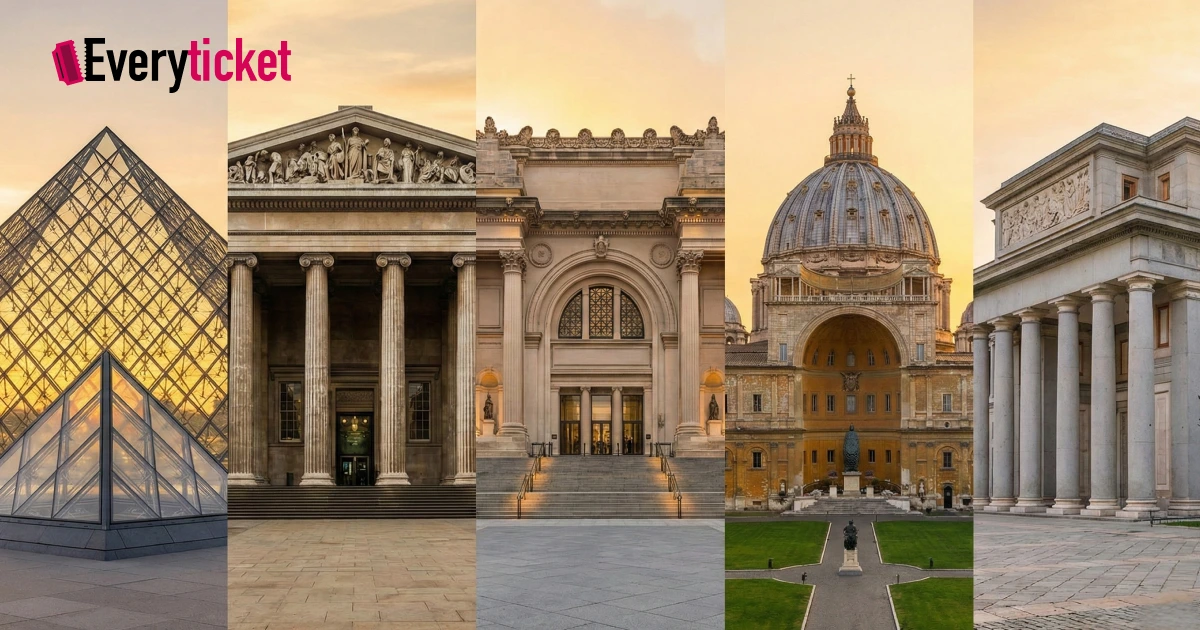
Museum curators and artists evaluate the top art museums not just by their fame, but by their institutional gravity. These organizations define the global standards for how global art collections are preserved, presented, and accessed. For cultural leaders, these top 5 art museums in the world serve as the primary references for benchmarking excellence in the museum industry.
| Institution | Core Benchmarking Strength | Operational Focus |
| The Louvre | Narrative Scale | Crowd Flow Modeling |
| British Museum | Scholarly Authority | Timed-Entry Logistics |
| The Met | Digital Accessibility | Open Access Data |
| Vatican Museums | Institutional Continuity | Tiered Access Management |
| Museo del Prado | Specialized Depth | Quality-First “Plan Host” |
1. The Louvre Museum, Paris: Narrative Clarity at Scale
The Louvre is the benchmark for encyclopedic museums. While it is the most visited art museum globally, its true value to curators lies in its zoning discipline. Managing over 35,000 artworks requires a logical flow that prevents visitor fatigue. The Louvre uses data-driven crowd modeling to manage the density around its most famous exhibits.
By utilizing Bluetooth signal tracking, the museum identifies bottlenecks in real-time. This allows staff to adjust entry rhythms, ensuring the “visual history of humanity” remains accessible. For smaller institutions, replicating this oversight is possible through a centralized ticket management dashboard, which tracks attendance patterns to prevent overcrowding.
According to research from the MIT SENSEable City Lab, the Louvre’s ability to map visitor paths provides critical insights into how humans interact with art in dense environments. This is a vital lesson for any curator managing high-traffic exhibits.
2. The British Museum, London: Scholarly Authority and Access
The British Museum focuses on scholarly trust and deep research-led curation. As one of the top art museums that offers free public access, it faces the logistical challenge of unpredictable surges. To solve this, the museum implemented a mandatory timed-entry system. This ensures that even “free” visitors are accounted for in the daily capacity planning.
This museum proves that global art collections are most effective when paired with contextual storytelling. By placing artifacts within political and historical frameworks, the British Museum elevates the visitor experience from mere viewing to active learning.
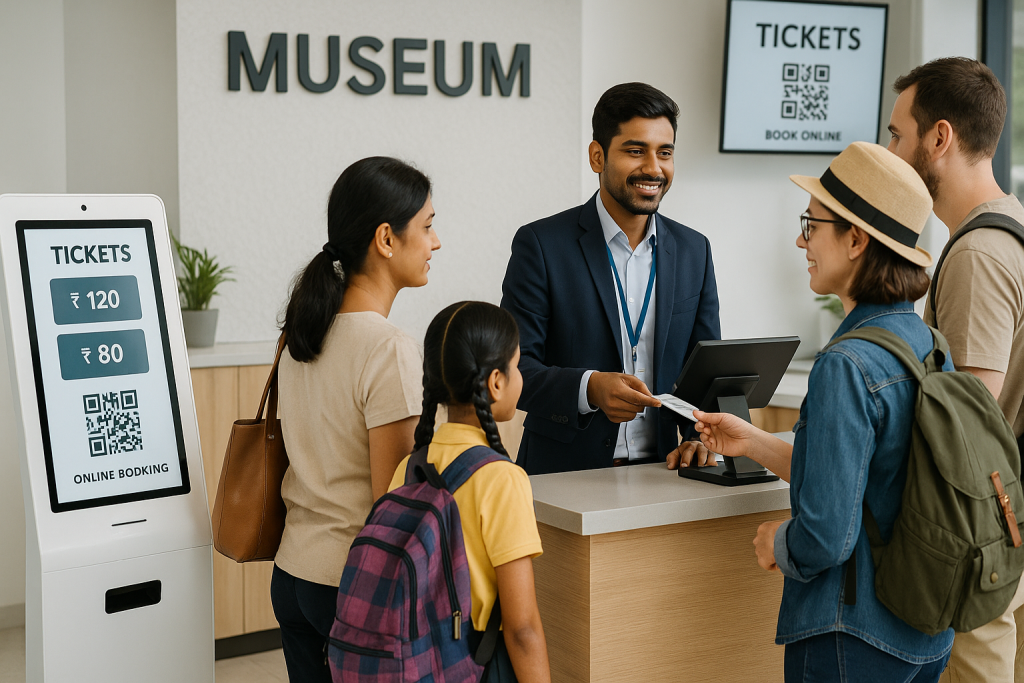
Maintaining this level of public trust requires organized entry points. Utilizing integrated POS and online booking systems allows museums to distribute footfall evenly across operating hours, ensuring that educational goals are not compromised by chaotic crowds.
3. The Metropolitan Museum of Art (The Met), New York: The Digital Playbook
The Met is often cited as the most balanced museum in the world. It successfully manages the tension between traditional gallery spaces and modern digital relevance. Its “Open Access” initiative provides high-resolution images of its global art collections for public use. This strategy directly supports artists by removing barriers to study and inspiration.
For curators, The Met demonstrates the ROI of a unified web presence. By consolidating multiple locations under one digital platform, they increased international engagement by over 36%. This digital-first strategy is a fundamental requirement for a modern museum ticketing system.
4. The Vatican Museums, Vatican City: Legacy and Tiered Access
The Vatican Museums are a masterclass in managing global art collections that carry deep institutional legacy. Because the collection includes high-sensitivity areas like the Sistine Chapel, the museum uses a complex, tier-based ticketing structure. They offer specific access levels for pilgrims, school groups, and VIP researchers.
This allows the museum to maximize revenue while protecting the physical integrity of the exhibits. Managing these diverse demographics requires a ticketing solution for museums that can handle multi-currency payments and specific group discounts. The Vatican’s success among the top art museums is due to this ability to sacralize art while maintaining modern logistical standards.
5. Museo Nacional del Prado, Madrid: The Quality-First Model
The Prado houses the finest collection of Spanish masters. Unlike other top art museums that pursue raw attendance growth, the Prado recently implemented the “Plan Host” strategy. This strategy prioritizes the visitor’s “right to see art without overcrowding.” By capping ticket sales, the museum ensures a calm and uncluttered environment.
This specialization outperforms scale by focusing on “dwell time,” how long a visitor stays with a single piece of art. For curators, the Prado is a reference point for sustainable museology. According to Blooloop, this shift has significantly improved visitor satisfaction scores. Curators can use data-driven reporting tools to monitor similar trends and prove that quality often generates more long-term value than quantity.
Apply Global Standards to Local Institutions
The top art museums win because they treat the visitor journey as a designed experience. They balance education with operational efficiency. For artists and curators, these institutions provide the blueprints for how to manage global art collections in a digital age.
The common thread across all five institutions is the use of technology to remove friction. Whether it is The Met’s digital archives or the British Museum’s timed slots, the goal is to let the art take center stage. Implementing these standards requires an automated ticketing system that connects front-end sales with back-end analytics.
Institutional Impact Checklist
- Clarity over Quantity: Do your exhibits follow a clear narrative or are they simply a collection of objects?
- Access Management: Does your entry system prevent bottlenecks during peak hours?
- Digital Continuity: Is your collection accessible to artists who cannot visit in person?
By benchmarking against these top art museums, curators can elevate their own institution’s positioning. The future of cultural authority depends on a foundation of robust museum IT infrastructure that allows for data-driven decision-making.