Museums across the country moved from paper tickets to online booking systems over the past few years. That was the right first step. But many institutions now run a digital system that still behaves like a manual one. Visitor data sits unused. Staff spend time on manual reconciliation. Entry lines form at the gate even on pre-booked days.
A digital ticketing solution should eliminate these problems. If it does not, the system may be digital in form but not in function.
Let us show you what smart ticketing looks like, how it differs from basic digital tools, and what museum directors need to assess before selecting a digital ticketing system.
Paper Ticketing Is Still Costing Museums More Than They Realise
The shift away from paper was necessary. But the scale of the problem is still underestimated.
- Museums lose an estimated 15 to 20 percent of potential revenue due to inefficient ticketing systems.
- 83 percent of tourists book everything online, yet many museums still lack a functional digital booking system.
- Staff at paper-based institutions spend an average of five hours daily counting tickets and reconciling cash.
Paper tickets also create a data gap. When a visitor buys a physical ticket, the museum captures almost nothing useful. No contact details. No visit frequency. No demographic signals. That missing data makes planning, staffing, and marketing harder over time.
Understanding how visitor management systems work helps museum teams see how much operational intelligence they are currently missing.
What “Smart Ticketing” Actually Means, and Why It Is Not the Same as “Digital”
Going digital means accepting an online payment and sending a booking confirmation. Smart ticketing goes further.
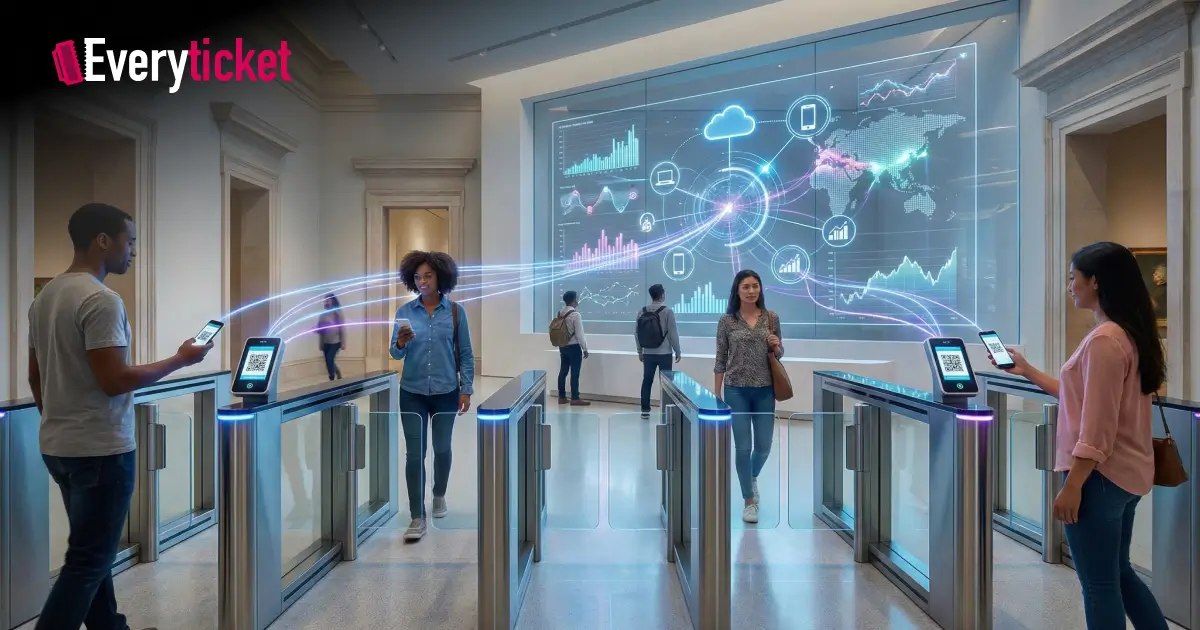
A smart digital ticketing system connects ticket sales to visitor intelligence. It uses live data to guide operational decisions, automates routine administrative tasks, and gives teams one reliable source of information across all sales channels.
The global digital ticketing market was valued at $27.8 billion in 2024 and is projected to reach $107.7 billion by 2034. Mobile-based digital ticketing solutions now hold 52 percent of this market, reflecting how visitors prefer to access tickets today.
Smart ticketing is built on five core capabilities:
- Real-time analytics that report footfall, peak hours, and ticket type performance
- Dynamic pricing that adjusts rates based on demand and time slot
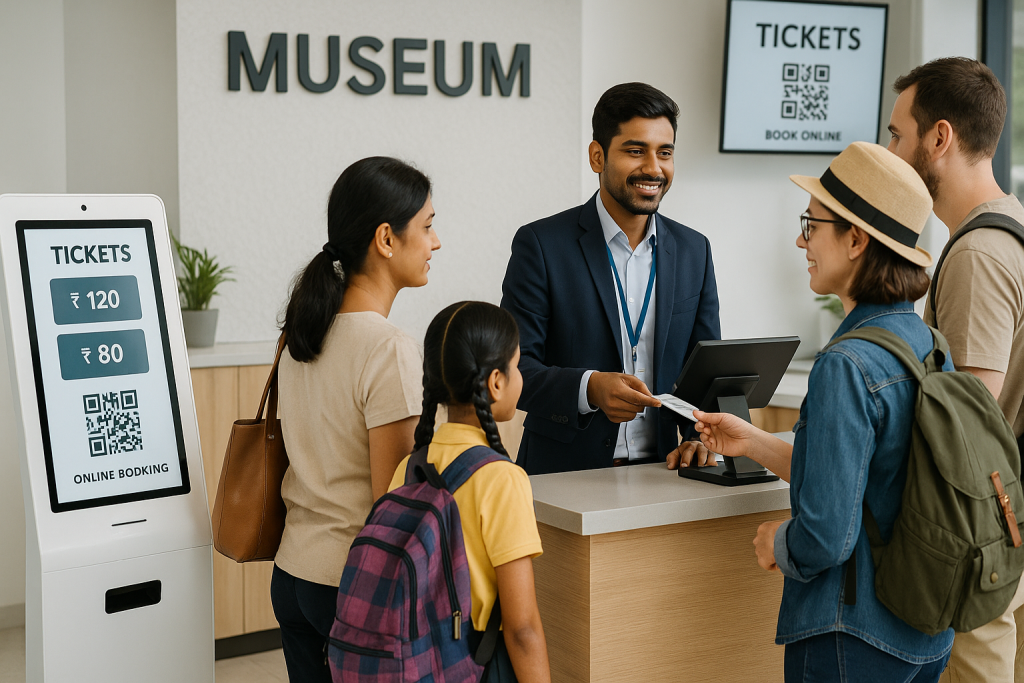
- Omnichannel access covering online booking, counter sales, kiosks, and mobile wallets
- Cloud-native operations with no on-site servers and no manual software updates
- CRM integration that links each ticket sale to a visitor profile
A digital ticketing solution that delivers none of these is an online form, not a smart system.
The Core Capabilities That Separate Smart Ticketing from Basic Digital Systems
Real-Time Visitor Analytics
A smart digital ticketing solution tracks every scan, booking, and cancellation and presents this data on a live dashboard. Directors see footfall trends and peak hour patterns without waiting for end-of-day manual reports.
Dynamic Pricing and Timed Entry
Smart systems allow museums to set different ticket prices for peak and off-peak hours. Timed entry controls crowd density and prevents overcrowding at exhibitions. This feature directly shapes how a ticketing system supports museum revenue when configured correctly.
Omnichannel Ticket Access
Visitors should be able to purchase tickets from any channel: the museum website, a self-service kiosk, the front counter, or a mobile wallet. All channels must share a single capacity pool to prevent overbooking across sources.
Cloud-Native Operations
Cloud-based platforms require no hardware installation, no manual updates, and no IT maintenance. Museum staff access the full digital ticketing system from a browser or tablet. Data syncs automatically across locations and devices.
CRM-Integrated Visitor Engagement
Ticket sales generate visitor data. CRM tools built for museums convert that data into targeted communications, membership renewal prompts, and repeat-visit campaigns. Without CRM integration, visitor data stays locked inside the ticketing platform and produces no downstream value.
India’s Cultural Institutions Are Already Responding to the Smart Ticketing Shift
India’s push for smart ticketing in cultural spaces is visible at multiple levels.
The Ministry of Culture has backed digitisation programs across national museums and archaeological sites through the JATAN virtual museum software developed with C-DAC. At the city level, the VISTA platform in Visakhapatnam provides unified QR-based digital ticketing solutions for museums, parks, and heritage sites, combined with AI-driven crowd analytics and real-time dashboards.
The Smart Cities Mission actively encourages digital adoption at cultural venues of all sizes. Projects like the Major Dhyanchand Museum in Jhansi demonstrate how smart ticketing modernises the full visitor experience, from entry to data reporting.
Institutions tracking the broader shift in museum management will see that pressure from both visitors and government programs is pointing in the same direction.
Five Signs Your Museum Is Ready to Move to Smart Ticketing
If the following situations are familiar, the current system is likely underperforming:
- The ticketing platform does not generate automatic daily or weekly visitor reports
- Online bookings and counter sales are managed in separate tools that do not sync
- Visitors ask for UPI or digital wallet payments, but only cash or card is available
- There is no visibility into repeat visitors, school group trends, or peak hour patterns
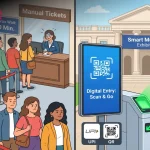
- Entry queues form even when visitors have pre-booked QR code tickets
Three or more of these is a clear signal that the museum is carrying the operational cost of a manual system inside a digital one.
What Museum Directors Should Actually Evaluate When Reviewing Digital Ticketing Solutions
Choosing the right digital ticketing solution requires looking beyond the feature list. Here is what matters in practice:
- UPI and multi-payment support: The platform must handle UPI, RuPay, card, and cash in one system.
- GST-compliant reporting: Tax-compliant invoices must generate automatically without manual entry.
- Timed entry and capacity controls: Essential for peak seasons, school group days, and special exhibitions.
- Multilingual interface: Required for regional-language domestic visitors and international tourists.
- Offline mode: Heritage sites and remote museums need entry validation to work without stable internet.
- API integrations: The system must connect to existing CRM, email, and access control tools.
Understanding how software integration works in museum environments helps institutions avoid fragmented data and expensive custom development.
According to market research, the museum ticketing platform market reached $1.7 billion in 2024 and is projected to grow to $4.5 billion by 2033. Institutions that adopt smart digital ticketing solutions now will meet the visitor experience standards that tech-forward museums are already delivering.
EveryTicket Is a Digital Ticketing System Built for Museums Moving to Smart
EveryTicket is a museum-specific digital ticketing solution built for the operational realities of cultural institutions. It combines online booking, on-site POS, self-service kiosks, QR-based entry, real-time analytics, UPI payment support, and CRM integration in one platform.
The system works across national museums, heritage sites, art galleries, and science centres. Setup takes days, not months. Staff onboarding is included at no extra cost. The platform supports multilingual interfaces, GST-compliant billing, offline entry validation, and automated visitor reports.
Museums using EveryTicket have reported a 40 percent increase in ticket sales and a 30 percent reduction in entry wait times. The Museum of Art and Photography in Bengaluru saw measurable improvements in both operations and visitor satisfaction after switching.
Book a free demo to see how the platform fits your museum.
FAQs
What is smart ticketing for museums?
A system using AI, QR codes, and real-time data to automate museum admissions and improve visitor management.
How does smart ticketing differ from basic digital ticketing?
Smart ticketing uses predictive analytics, dynamic pricing, and cloud tools rather than simple online ticket sales alone.
What are the key benefits of digital ticketing solutions for museums?
Reduced queues, automated check-ins, visitor data insights, UPI payments, and higher revenue with less manual work.
How do museums implement a smart digital ticketing system?
By adopting cloud platforms with QR entry, UPI support, GST compliance, multilingual access, and a real-time analytics dashboard.
What features matter most when evaluating a digital ticketing solution?
Timed entry, QR validation, UPI integration, CRM connection, multilingual interface, and a live visitor analytics dashboard.