Museums operate as active learning centers. Educational programs draw high student and family attendance. Staff must process these registrations quickly and accurately. Traditional paperwork causes significant delays. Institutions require modern event ticketing platforms to process workshop bookings.
The subcontinent sees a rapid increase in cultural digitization. Schools integrate museum visits into local curriculums. High visitor volumes require a robust digital infrastructure. Operations managers require reliable tools to schedule these visits and collect payments. Event ticketing platforms replace manual ledgers with automated digital databases.
Administrative Bottlenecks Plaguing Educational Curators
Educational curators face specific challenges when organizing programs. Manual processes consume time that staff should spend on curriculum development.
The Burden of Manual Group Bookings
- School group bookings involve multiple communication steps.
- A teacher contacts the museum to request a date.
- The staff member checks a physical calendar or spreadsheet.
- The staff member replies with available dates and times.
- The teacher confirms a date and provides student numbers.
- The museum staff creates and sends a manual invoice.
- This manual sequence causes errors and double bookings.
Managing Capacity and Walk in Visitors
- Workshops have strict physical space limitations.
- Staff must track available seats for every single session.
- Walk in visitors complicate capacity tracking.
- Staff members struggle to update availability across different ticket desks.
- Overbooking leads to crowded rooms and poor learning environments.
Disconnected Member Benefits
- Museums offer discounted rates to active members.
- Generic booking systems do not recognize member IDs.
- Staff members must manually verify membership status at the door.
- This process delays entry for families attending workshops.
Software Solutions Modernize Workshop Management
Online event ticketing platforms solve these administrative bottlenecks. Software automates the steps required to register visitors and process payments.
Streamlining School and Group Registrations
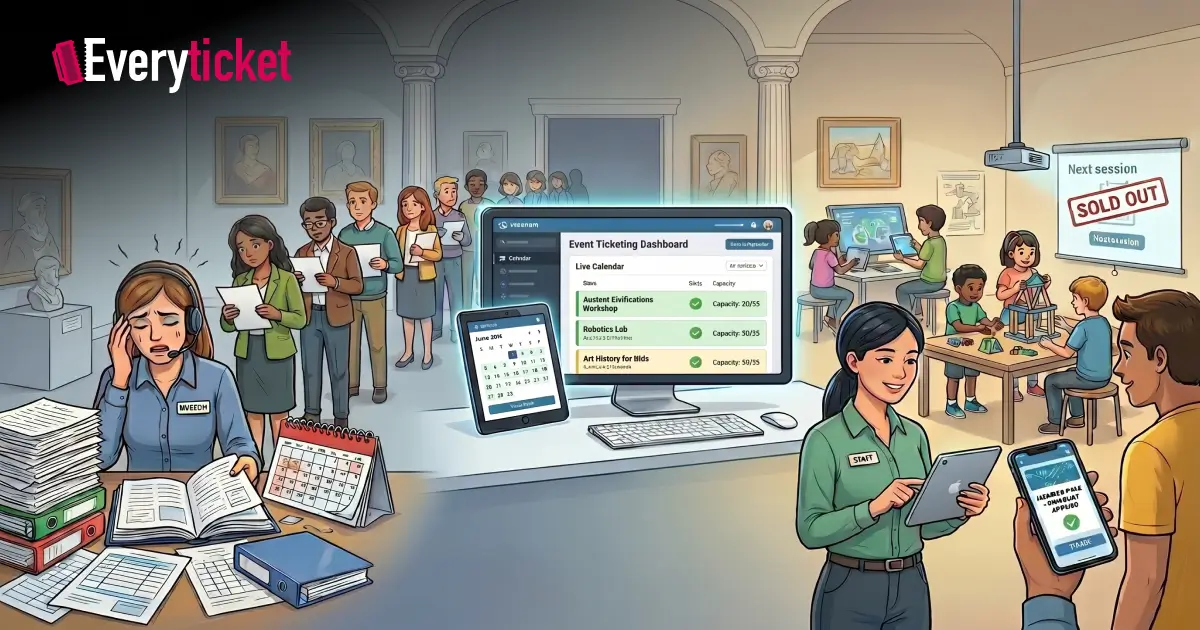
Online event ticketing platforms provide dedicated group booking portals. Teachers view a live calendar of available workshop times. They select a date and input the number of attending students. The system calculates the total cost automatically. The software generates an invoice and emails it to the school administration. Museum staff monitor these bookings from a central dashboard. They do not need to answer phone calls or write emails to confirm dates.
The United Nations Educational, Scientific and Cultural Organization provides global standards for institutional learning. Their guidelines on museum education state that digital tools ensure equitable access to educational resources. Online event ticketing platforms fulfill this standard by offering equal access to online registration for all regional schools.
Automated Capacity Tracking and Reminders
Event ticketing platforms track ticket sales in real time. Curators set a maximum capacity for each workshop. The system stops selling tickets when the workshop reaches this limit. The software displays a “sold out” message to online visitors. Front desk staff see the same availability on their monitors.
The system also sends automatic reminder emails. Registrants receive an email 24 hours before the workshop. This email contains directions, parking information, and a digital ticket. Automatic reminders decrease the number of absent attendees.
Integrated Database for Direct Member Access
Advanced software connects the ticketing page directly to the customer database. Members log in to the website before buying a ticket. The system recognizes their profile and applies the correct discount automatically. Front desk staff scan the digital ticket, and the system verifies the membership status instantly. Institutions achieve this synchronization through specialized API integrations that link the website to the main database.
Essential Features to Evaluate Before Purchase
Operations managers must evaluate specific features before selecting software. The best online event ticketing platforms offer tools designed for educational spaces.
Mobile First Checkout
- Most parents and teachers browse museum websites on their phones.
- The booking page must load quickly on mobile devices.
- The payment process must accept mobile wallets and standard credit cards.
- Buttons and forms must be easy to tap on a small screen.
Customizable Registration Forms
- Educational programs require specific information from attendees.
- Staff need to know the age of the participating children.
- Instructors must know about severe food allergies before cooking workshops.
- Online event ticketing platforms allow staff to add custom questions to the checkout page.
- Buyers must answer these questions before completing the purchase.
Supplementary Purchases and Material Fees
- Some workshops require specific art supplies or educational kits.
- Museums can sell these items during the ticket-buying process.
- The system prompts the buyer to add a supply kit to their cart.
- This feature aids in revenue maximization by collecting fees upfront.
- Instructors receive a report showing exactly how many kits to prepare.
Aligning Cultural Institutions with Regional Digital Initiatives
Regional governments actively fund technology upgrades for public institutions. The push for modernization requires museums to upgrade their technical infrastructure. The Ministry of Culture promotes the digital modernization of cultural spaces to preserve heritage and improve public access. Adopting modern event ticketing platforms aligns with these governmental policies.
Institutions secure funding to implement specific museum IT solutions to manage daily operations. Transitioning to cloud-based systems secures visitor data and provides accurate attendance reports. Government bodies require these reports to measure the impact of educational grants. Event ticketing platforms generate these attendance reports with a single click. Operations managers export the data and submit it to funding organizations to prove program success.
Software Takes Over Administration to Let Curators Focus on Education
Educational curators should spend their time designing curriculums. They should not spend their time updating spreadsheets and printing paper tickets. Software automation removes the manual labor from program management.
Museums choose EveryTicket to manage their educational program operations. EveryTicket handles automated capacity tracking and complex group booking workflows. The software processes payments and updates available slots instantly across all sales channels. Staff members use the platform to build custom registration pages without writing any computer code.
The system syncs with existing databases to verify members and apply discounts. Implementing EveryTicket allows museum staff to direct their full attention to delivering high-quality educational experiences.
FAQs
What is an event ticketing platform for museums?
It is a digital tool that streamlines bookings, manages capacities, and processes payments for educational programs.
How do online event ticketing platforms improve registrations?
They automate bookings, reduce manual paperwork, prevent overbooking, and provide direct access for educators and families.
Why do educational museums need specialized software?
Specialized software handles complex scheduling, group bookings, and member discounts that generic ticketing systems often lack.
Can museum ticketing platforms connect to existing systems?
Yes, advanced platforms sync directly with customer databases to manage memberships, analytics, and targeted educational marketing.
What are the main issues in workshop ticketing?
Common problems include managing strict capacity limits, handling complex school schedules, and reducing manual administrative workloads.