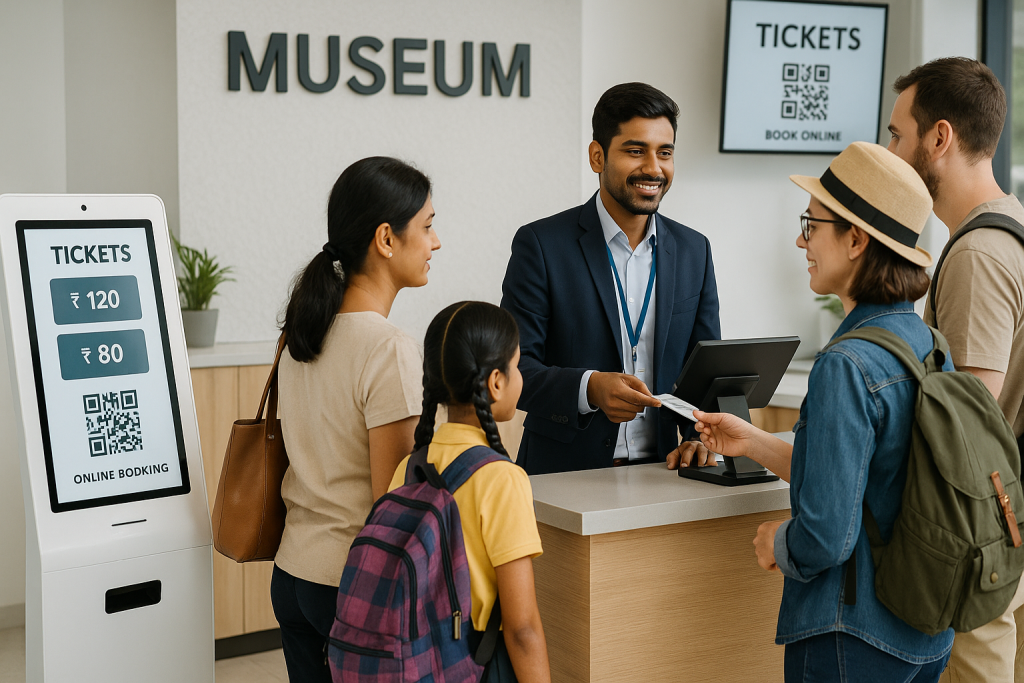
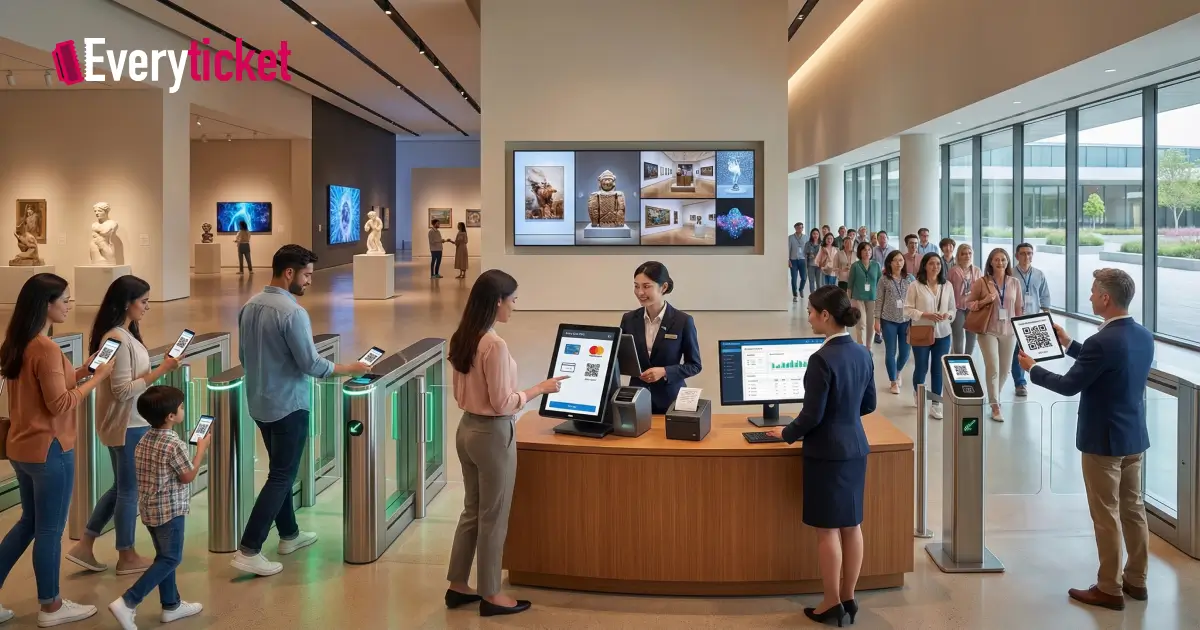
Visitors require quick access when they arrive at smart museums. Manual ticketing processes cause slow entry. A modern museum entry management system resolves this specific issue. It connects web-based reservations directly with physical ticket counters. This integration improves access control at the venue. It also ensures administrators maintain accurate daily attendance records.
Why Do Smart Museums Need Integrated Access Control?
- Accelerates physical entry: Staff process visitors continuously. An efficient entry gate POS handles walk-in visitors and verifies pre-booked digital tickets simultaneously.
- Stops overselling: An online ticketing solution for museums updates the central cloud database instantly. The system blocks further sales when the venue reaches maximum capacity.
- Unifies payment methods: Indian consumers pay using cash, credit cards, and UPI applications. An integrated museum ticketing software accepts and logs all these payment methods natively at the counter.
- Restricts unauthorized access: The system generates digital barcodes for every valid ticket. Security staff scans these barcodes at the turnstile to permit entry.
What Causes Slow Entry at Cultural Institutions?
Disconnected Sales Channels
Many institutions run separate platforms for online sales and physical counter sales. Staff print paper lists to verify online bookings manually. This administrative process creates long lines. A synchronized museum entry management system combines these channels into one interface.
Manual Payment Processing
Handling physical cash takes time. Cashiers count bills and calculate change manually. When a venue operates a dedicated entry gate POS, the hardware calculates exact totals and processes digital UPI payments instantly.
Complex Group Bookings
Schools and large tour groups arrive with many individuals. Processing fifty individual tickets at a physical counter causes a major bottleneck. A robust online ticketing solution for museums allows these groups to reserve spots in advance and enter using a single consolidated QR code.
Museum Ticketing Software Connects Web and On-Site Operations
The connection relies on a central database hosted on cloud servers. The following table illustrates how different hardware and software components interact within a museum entry management system.
| Component | Primary Function | Data Synchronization Status |
| Web Booking Portal | Processes advance visitor reservations | Real-time cloud sync |
| Entry Gate POS | Issues physical tickets and payment receipts | Real-time / Offline sync capability |
| Validation Scanner | Reads barcodes and verifies ticket validity | Real-time cloud sync |
| Admin Dashboard | Displays aggregated sales and attendance data | Real-time cloud sync |
Administrators use this setup to prevent data discrepancies. You can read our technical breakdown of how a museum ticketing system with POS and online booking directs data between these components.
Digital Upgrades Align with Indian Government Initiatives
- Infrastructure modernization: The Indian government directs cultural institutions to build digital infrastructure.
- Funding opportunities: The Ministry of Culture’s Museum Grant Scheme allocates funds for the modernization of existing museums. This includes installing digital ticketing hardware.
- Regulatory compliance: State-run and private institutions must log accurate visitor demographics. A compliant museum ticketing software compiles these mandatory reports automatically.
- Tourism volume management: Digital access control processes high volumes of domestic and international tourists safely. Implementing an automated online ticketing solution for museums facilitates this operational scaling.
What Role Does an Entry Gate POS Play in Revenue Management?
Consolidated Transaction Tracking
An entry gate POS records the details of every single transaction. It categorizes the incoming revenue by specific ticket type, voluntary donation, or merchandise sale. Staff avoid compiling multiple manual spreadsheets at the end of their shift.
Financial Audit Preparedness
Every ticket generated by the museum entry management system includes a unique digital signature. This mechanism prevents ticket duplication and fraud. Financial auditors review the permanent transaction logs stored by the database.
Dynamic Pricing Adjustments
Management teams change ticket prices for special temporary exhibitions or peak weekend hours. The museum ticketing software pushes these price changes to the web portal and physical counters instantly.
Why Is Real-Time Data Important for Museum Operations?
- Crowd management: Operations managers monitor live visitor headcounts. They deploy additional security staff to crowded exhibition halls based on this data.
- Trend analysis: The database identifies peak visiting hours and the most purchased ticket categories.
- International standards: The International Council of Museums (ICOM) mandates digital transformation in the cultural sector to secure data and improve operational efficiency globally.
- Staff scheduling: Human resources departments schedule front-desk employees based on the traffic trends logged by the online ticketing solution for museums.
A Solid Museum Entry Management System Handles Hardware Failures
Offline Transaction Modes
Internet connections drop occasionally. A reliable entry gate POS features an offline mode. Cashiers continue selling tickets and printing physical receipts without internet access.
Automatic Data Reconciliation
The terminal stores the offline transaction data locally on the device memory. Once the internet connection returns, the museum ticketing software uploads the stored data to the main cloud server automatically.
What Are the Implementation Steps for an Online Ticketing Solution for Museums?
Deploying a new museum entry management system involves specific, sequential steps. Smart museums follow a strict project plan.
- Audit current operations: Document existing bottlenecks at the physical ticket counters and the public web portal.
- Select compatible hardware: Purchase receipt printers, handheld barcode scanners, and entry turnstiles that communicate natively with the software.
- Configure the platform: Input ticket categories, local tax rates, and staff user permissions directly into the museum ticketing software.
- Train front-line staff: Instruct employees on operating the entry gate POS and processing dynamic payment methods like UPI QR codes.
- Execute system tests: Process trial transactions to verify the web portal and physical hardware sync correctly.
EveryTicket Supports Your Access Control Upgrades?
Installing digital infrastructure demands reliable technology. Venues require systems that process high daily traffic and secure multiple payment types. Our platform supplies the explicit tools necessary for strict access control and accurate revenue tracking. We build software for cultural institutions executing digital upgrades.
- We deploy cloud-based databases that provide real-time data synchronization.
- We integrate native UPI processing for the Indian consumer market.
- We build offline-first point-of-sale terminals for uninterrupted counter sales.
- We structure detailed reporting dashboards for administrative oversight.
You can review the specific hardware integrations and software features on the EveryTicket platform to determine how it supports your venue’s operational targets.