Ticketing software for museums saves time and money by automating admissions, reducing manual labor, preventing revenue leakage, and improving operational efficiency. By replacing paper tickets and fragmented systems, museums lower staffing costs, increase financial accuracy, and gain real-time insights into visitor behavior.
The Hidden Financial Impact of Manual Systems
Museum directors often view ticketing as a fixed administrative cost. However, manual systems create hidden expenses that impact the bottom line. Paper-based processes require staff to handle cash, print stubs, and manually record sales data. These tasks take time and increase the risk of human error.
If two staff members spend one extra hour each day on manual reconciliation, the museum loses approximately 720 hours per year. This time loss is equivalent to the salary of a part-time employee. Adopting a ticketing software for museum use cases eliminates these physical steps. Digital systems process payments quickly and provide instant transaction records. This transition helps directors identify where resources are being wasted.
How Automation Streamlines Daily Operations
Automation is a primary driver of efficiency in cultural institutions. When a visitor books a ticket online, the system handles the inventory update and confirmation without staff intervention. This reduces the workload on front-desk employees. Automation also extends to the financial department. Modern software generates daily sales reports automatically. Finance teams no longer need to manually reconcile receipts with bank statements.
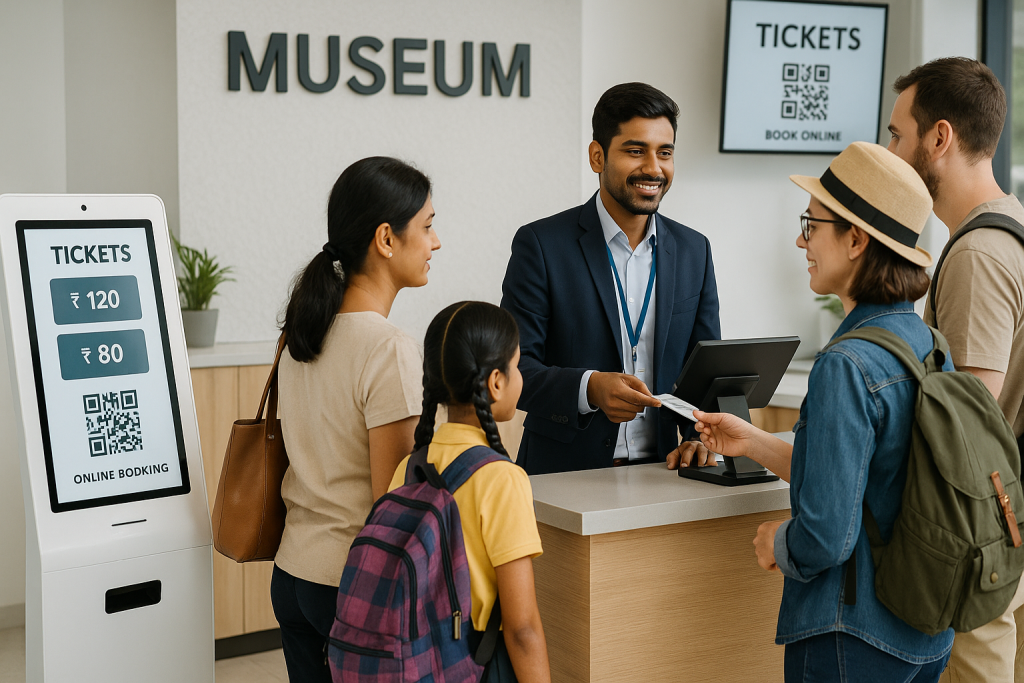
By using features in a museum ticketing system to reduce queues, management can control visitor flow. Digital scanning at the entrance takes seconds, whereas manual ticket checks take minutes. This speed allows the museum to handle more visitors with fewer entrance staff. Automation ensures that the data is accurate, which prevents the need for time-consuming error correction later.
Identify Sources of Cost Savings
Direct cost savings result from the elimination of physical materials. Museums save money on paper, ink, and ticket-printing hardware. However, the most significant cost savings occur through the prevention of revenue leakage. Manual systems often suffer from blind spots, such as incorrect pricing or unauthorized complimentary entries. Digital systems create a timestamped audit trail for every transaction.
According to reports on museum technology trends, data-driven management can reduce overall operating costs by up to 25%. These savings allow museums to redirect funds toward conservation or new exhibits. Even for smaller institutions, finding the best museum management software for small museums provides a clear path to financial stability.
Analyze Ticketing Software Benefits for Leadership
The primary ticketing software benefits involve the conversion of data into actionable insights. Directors can see peak attendance times in real-time. This information allows for smarter staffing decisions. If the data shows low attendance on Tuesday mornings, the director can reduce the number of floor guides for that shift.
Another of the key ticketing software benefits is the ability to manage memberships and donations within the same platform. When the system tracks a visitor’s history, it can automatically prompt them to renew their membership. This reduces the administrative cost of retention.
Furthermore, the maximizing ROI strategies used by modern museums focus on increasing the average transaction value through automated add-ons, such as audio guides or special exhibit access.
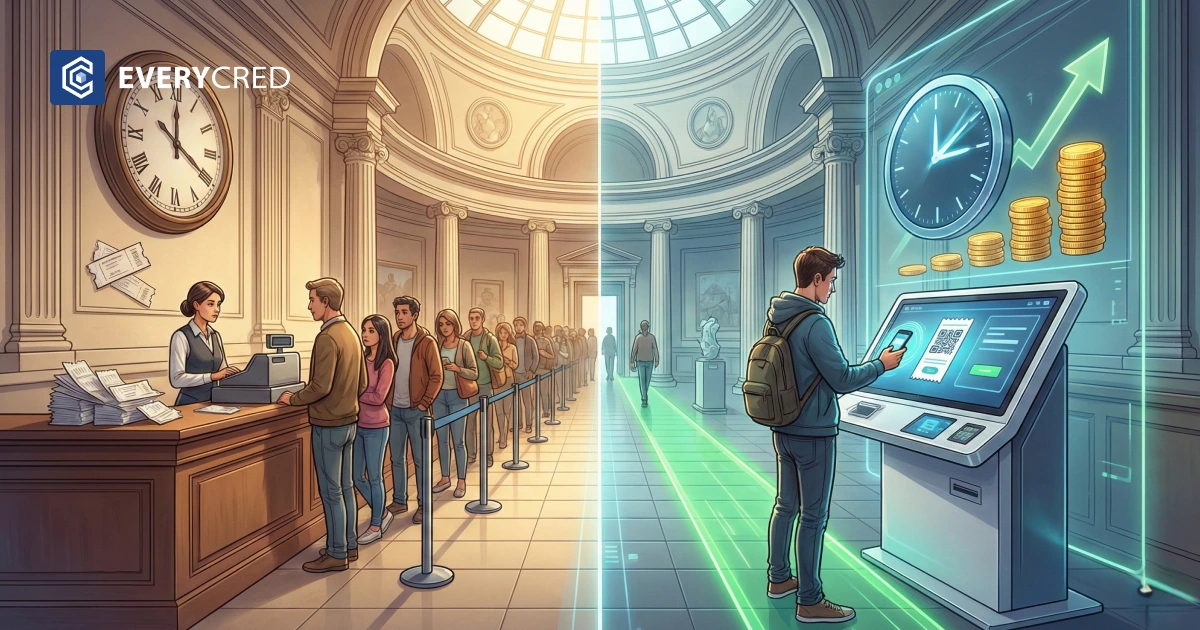
Operational Comparison: Manual vs. Digital
| Area of Operation | Manual Process | Digital Software Solution |
| Transaction Speed | 3 to 5 minutes | Under 30 seconds |
| Financial Accuracy | High risk of human error | Automated precision |
| Data Collection | Fragmented and slow | Real-time and centralized |
| Staff Utilization | High administrative burden | Focus on visitor engagement |
| Reporting | Weekly or monthly delays | Available on-demand |
Need to Overcome Common Myths about Digital Transition
Many directors believe that digital systems are too expensive for their current budget. The reality is that manual systems are more expensive over time due to inefficiency. The initial investment in software is recovered through lower labor costs and better revenue protection.
Another common belief is that visitors prefer physical tickets. Research from Juniper Research shows that modern visitors prefer mobile-first experiences that reduce wait times. Speed and convenience are now standard expectations for museum attendees. Software is not difficult to manage; most platforms are designed for non-technical users. Staff can integrate museum ticketing software easily into their existing daily routines.
Step-by-Step: Calculate ROI for Your Museum
Museums can calculate the return on investment (ROI) by following these steps:
- Calculate Time Costs: Track the total hours staff spend on ticket sales, reconciliation, and reporting.
- Identify Leakage: Audit previous records for counting errors or pricing mistakes.
- Estimate Automation Impact: Determine how many hours automation will reclaim.
- Compare Costs: Weigh the monthly software fee against the saved labor hours and prevented errors.
Most institutions achieve a positive ROI within three to six months. This makes the software a piece of essential infrastructure rather than a simple expense.
The Strategic Value of Automation
Using automation for ticket sales allows the museum to build a reliable visitor database. This database is used for marketing and fundraising. Manual systems do not capture email addresses or visitor preferences effectively. By automating this data collection, the museum reduces its future marketing costs.
The cost savings from reduced marketing waste are significant. Digital tracking tells the museum exactly which advertisements lead to ticket sales. This precision eliminates spending on ineffective campaigns. This level of automation ensures that every dollar spent on marketing produces a measurable result.
Conclusion
The transition to a digital platform provides immediate and long-term ticketing software benefits. It solves the problem of long queues and inaccurate data. It provides the cost savings necessary for institutional growth. By focusing on direct actions and literal data, museums improve their operational health.
EveryTicket offers specialized tools that address these specific museum needs. These solutions remove administrative friction and allow directors to focus on their core mission. The result is a more efficient organization that values both time and financial precision.
FAQs
1. How does ticketing software save time for museums?
It automates the sales process, entrance validation, and financial reporting. This reduces the number of hours staff must spend on repetitive manual tasks.
2. Is ticketing software expensive for small museums?
Scalable cloud-based systems are affordable. The savings in staff time and error reduction typically exceed the cost of the software within months.
3. Can ticketing software reduce staffing needs?
It optimizes staffing by reducing the need for multiple counter agents, especially during peak hours. Staff are then redirected to higher-value roles.
4. Does digital ticketing improve visitor experience?
Yes. It enables online booking and faster entry, which significantly reduces queue times and increases visitor satisfaction.
5. How quickly can museums see ROI?
Most museums observe a positive return on investment within three to six months through reclaimed hours and prevented revenue leakage.
6. Is training required for staff?
Modern platforms are intuitive and require minimal training for non-technical staff to operate effectively.
7. Can ticketing software handle events and exhibitions?
Yes. These systems manage timed entry, special exhibitions, and membership-only events within a single interface.