Museum groups operating multiple physical locations require centralized control over their daily operations. Managing public admission across separate venues with isolated software leads to inaccurate financial reporting and inefficient staff allocation. An online ticket management system resolves these operational issues. Administrators use online ticketing solutions to consolidate sales data, manage visitor entry rates, and process financial transactions across all museum branches from a single digital interface.
Growing Museum Groups Face Multi-Site Ticket Chaos
Museum networks often acquire new physical locations or expand their existing historical facilities. This structural growth introduces severe administrative difficulties. Physical sites frequently use different point of sale software acquired at different times. These separate local systems do not communicate with the central administrative office. This hardware and software disconnect creates multi-site ticket chaos.
Staff members must manually export sales reports from each location at the end of the operating day. Accounting departments spend hours reconciling data discrepancies between local cash registers, credit card terminals, and independent online web portals. Visitors also face inconsistent entry experiences across the network. A ticket bought at the main historical museum frequently fails to grant access to a satellite art gallery across town because the local scanners cannot read the centralized barcode format.
High daily visitor volumes complicate these manual processes further. Wait times increase at the physical entry gates when staff must verify tickets manually. This operational inefficiency forces management to focus on daily troubleshooting instead of long-term strategic planning. Administrators must implement standardized online ticketing solutions across their entire portfolio to solve these physical delays.
Scale Demands an Online Ticket Management System
An online ticket management system centralizes all data collection. Directors view real-time ticket sales for every single location through a standard web browser. This data centralization allows management to adjust physical staffing levels based on live daily attendance figures.
Unified Cloud Dashboards Support Operations
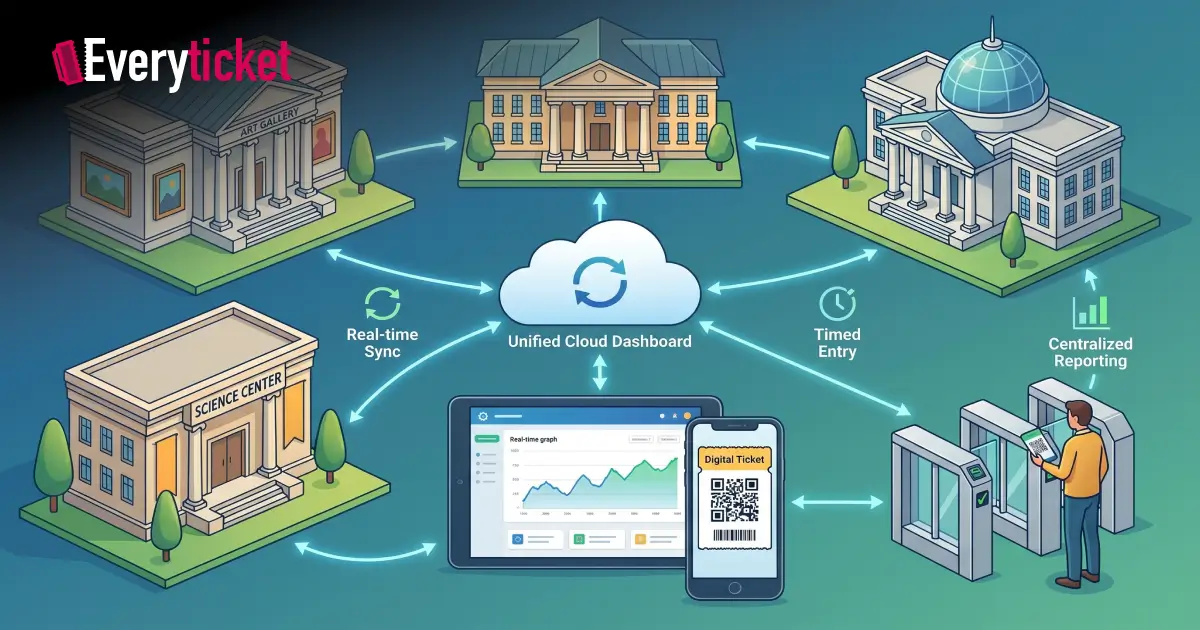
A cloud-based infrastructure stores all transaction records in one secure server location. Administrators rely on specific ticketing system benefits that utilize this centralized data architecture. Directors generate standardized reports detailing total revenue, ticket categories sold, and specific entry times. They filter this data by individual venues or view the combined network total. This data visibility ensures accurate financial auditing and removes the need for manual spreadsheet compilation by local staff.
Real-Time Syncing Connects Sales Channels
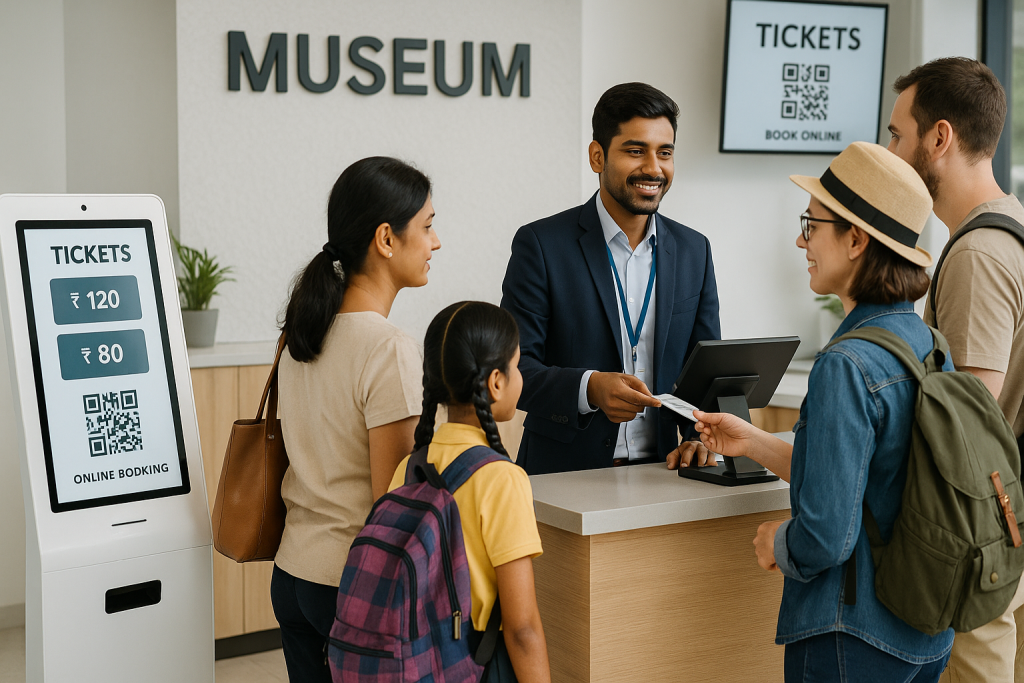
Museums sell admission tickets through websites, mobile applications, and on-site physical counters. These distinct channels must share inventory data instantly to prevent errors. A complete online booking setup links the physical ticket counters directly to the central cloud database. When a cashier sells an admission pass at a satellite museum, the central digital inventory drops by one unit immediately. The public website immediately reflects this updated physical capacity. This mechanism prevents accidental overbooking.
User Access Controls Protect Financial Data
Enterprise software platforms provide granular user access controls. The system administrator assigns specific system permissions to different staff members based on their job requirements. A front desk cashier only sees the sales terminal interface. A local site manager views the daily reports for their specific building. The network director views the financial data for all locations. This strict access hierarchy protects sensitive financial data from unauthorized internal viewing.
Enterprise Online Ticketing Solutions Require Specific Capabilities
Standard event management software lacks the technical tools necessary for multi-location museum networks. Administrators evaluating online ticketing solutions must require specific enterprise-grade features. The International Council of Museums highlights how digital transformation models require robust technical foundations to ensure operational sustainability for cultural heritage sites.
Timed Entry Manages Venue Capacity
High footfall at primary monuments often creates severe physical bottlenecks at the entry gates. Implementing a system to manage high traffic distributes visitor arrivals evenly throughout the operating hours. The software forces online buyers to select a specific time slot for their entry. The system caps the total number of tickets available for each thirty-minute window. This control mechanism guarantees that visitors enter the building at a steady, predictable rate. Security personnel process entries faster, and the museum maintains strict compliance with local fire safety regulations.
API Integrations Expand System Functions
Enterprise software must connect directly with existing business applications. Museums use Customer Relationship Management platforms to track donor engagement and process membership renewals. Proper API integrations allow the central ticketing database to send visitor contact details directly to the external marketing software. This automated data transfer helps membership departments target recent daily visitors with customized annual pass offers through email.
Localized Payment Solutions Secure Transactions
Payment processing preferences vary significantly by region. Visitors expect to use the Unified Payments Interface to complete transactions rapidly via their mobile devices. Modern platforms process these dynamic transactions instantly at the physical counter and on the mobile website. Administrators selecting operations software must ensure the payment gateway supports local banking regulations, generates compliant tax invoices, and handles high-volume concurrent transactions without server timeouts.
Access Control Hardware Syncs with the Database
Software requires compatible physical hardware to function at the venue. An online ticket management system connects directly to physical turnstiles and handheld laser scanners. When a visitor scans their mobile barcode, the scanner queries the central cloud database in milliseconds. The database confirms the ticket’s validity and sends a signal to unlock the physical turnstile. This automated process removes the need for human ticket validators.
Centralized Digital Ticketing Streamlines Network Operations
Transitioning multiple physical locations to a single digital platform requires structured technical planning. The Archaeological Survey of India demonstrated this requirement by launching a unified digital platform to manage entry for over 170 monuments centrally. This administrative approach standardizes the visitor experience across all governed locations.
A single online ticket management system allows visitors to purchase multi-venue access passes. A tourist buys a digital barcode on their mobile phone. They scan this exact barcode at the main art gallery, the historical archives building, and the botanical gardens. The central system tracks and validates the ticket at each distinct location automatically.
The marketing team gains software tools to manage special cultural exhibitions and events that span several physical sites. They configure customized pricing rules, set distinct capacity limits for the special event, and track the specific return on investment, completely separate from the general admission sales.
Upgrade to EveryTicket Enterprise Systems
Enterprise software provides the technical control needed to run a multi-site museum network efficiently. At EveryTicket, we develop precise digital solutions that connect your physical points of sale directly with your online booking engine.
We provide secure local payment integrations, centralized cloud reporting dashboards, and strict timed entry controls. We deploy these online ticketing solutions to eliminate your isolated data systems entirely. We configure the core platform to handle your specific physical capacity requirements and custom reporting structures.
Conclusion
Museum groups must abandon disconnected software platforms to maintain their operational efficiency. An integrated online ticket management system provides the exact technical tools required to unify sales, digital distribution, and physical access control. Consolidating your multi-site network onto one platform secures your daily revenue tracking and accelerates visitor entry across every location you manage.
FAQs
What is an online ticket management system?
It is a centralized digital platform that automates ticket sales, entry validation, and reporting for venues.
How do online ticketing solutions help multi-location museums?
They eliminate data silos by connecting online sales, on-site counters, and kiosks across all physical locations.
Can ticketing software manage high museum footfall?
Yes, it distributes visitor demand using timed-entry slots and real-time capacity tracking to prevent gate congestion.
Are digital tickets suitable for Indian museum visitors?
Absolutely. Modern systems integrate popular regional payment methods like UPI alongside standard card and cash options.
Does multi-site ticketing offer centralized reporting?
Yes. Enterprise systems generate unified dashboards showing revenue, attendance, and analytics across all museum branches instantly.