
Museums exist to educate, inspire, and preserve culture.
But behind every great visitor experience is something far less glamorous — operations.
For many museums, ticketing is still manual:
- Printed tickets
- Cash counters
- Long queues
- End-of-day guesswork
A ticketing system changes this completely.
Let’s break down what a ticketing system is, why it matters, and how it benefits museums specifically.
What is a Ticketing System?
A ticketing system is a digital platform that manages:
- Ticket sales
- Online bookings
- Visitor entry
- Payments
- Check-ins
- Reporting
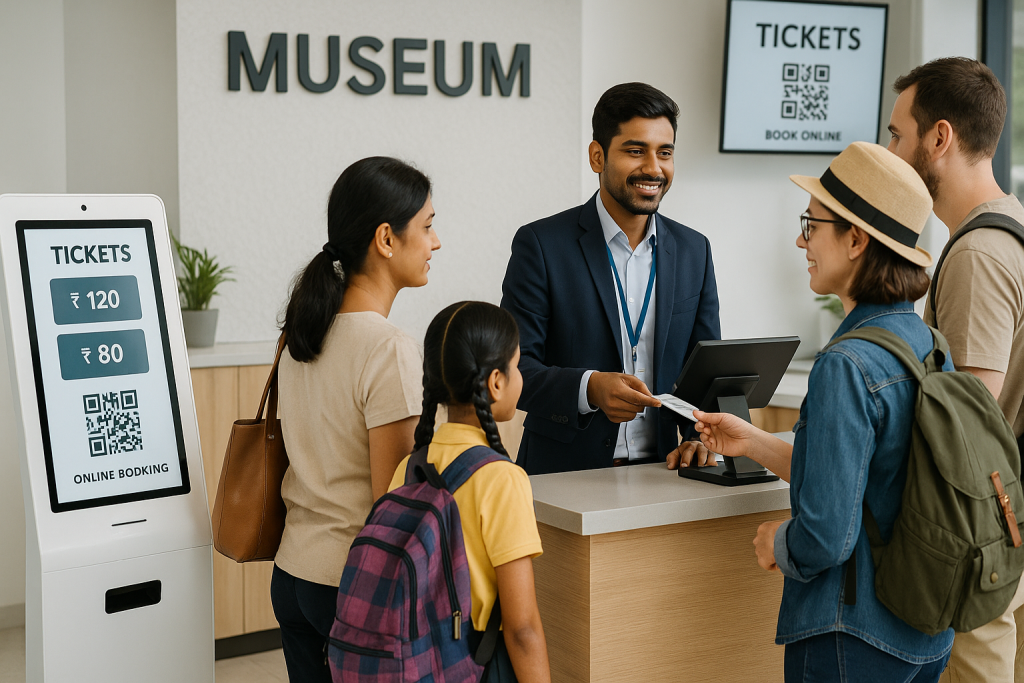
Instead of selling tickets only at the counter, visitors can:
- Book online
- Receive digital tickets
- Scan QR codes at entry
- Enter faster with minimal friction
For museums, a ticketing system becomes the foundation of visitor flow and revenue management.
Why Manual Ticketing No Longer Works for Museums
Manual ticketing creates problems that compound over time.
Common issues:
- Long queues during peak hours
- Slow check-ins
- Cash handling errors
- No real-time visitor count
- Inaccurate revenue records
- Stressed staff and frustrated visitors
What seems “manageable” on normal days breaks completely during:
- Weekends
- School trips
- Tourist seasons
- Special exhibitions
A ticketing system fixes this at the root.
Key Benefits of a Ticketing System for Museums
1. Faster Entry & Shorter Queues
Digital tickets + QR code scanning = seconds per visitor.
No counting cash.
No printing delays.
No manual validation.
Result:
- Smooth entry flow
- Happier visitors
- Less congestion at gates
2. Better Visitor Experience
Visitors remember:
- How easy it was to enter
- Whether they felt rushed or relaxed
Online booking allows visitors to:
- Plan ahead
- Choose time slots
- Avoid queues entirely
A smoother entry sets the tone for the entire visit.
3. Online Booking Convenience
With online booking:
- Visitors buy tickets anytime
- Museums sell tickets even when counters are closed
- Tourist groups can pre-book in advance
This directly increases:
- Accessibility
- Attendance
- Revenue consistency
4. Accurate Revenue Tracking
Manual systems rely on:
- Registers
- Paper logs
- End-of-day reconciliation
Ticketing systems provide:
- Real-time revenue dashboards
- Payment breakdowns
- Daily, weekly, monthly reports
No guesswork. No missing numbers.
5. Real-Time Capacity Management
Museums often struggle with:
- Overcrowding
- Underutilized hours
A ticketing system shows:
- How many visitors are inside
- Which time slots are full
- When staff should be deployed
This improves safety, comfort, and planning.
6. Staff Efficiency & Cost Savings
Instead of multiple staff handling:
- Cash
- Tickets
- Entry validation
Staff can focus on:
- Visitor assistance
- Exhibits
- Education programs
Less operational chaos.
More meaningful work.
7. Data & Insights for Better Decisions
Ticketing systems generate data like:
- Peak visiting hours
- Popular days
- Repeat visitors
- Revenue trends
This data helps museums:
- Optimize timings
- Plan exhibitions
- Adjust pricing
- Improve marketing
8. Support for POS, Donations & Memberships
Modern ticketing systems often include:
- POS for souvenir shops
- Donation collection
- Membership passes
This turns ticketing into a complete museum management layer, not just entry control.
9. Scalability for Events & Peak Days
Special exhibitions, festivals, or holidays create sudden demand.
Digital ticketing allows museums to:
- Handle high volumes
- Limit entries per slot
- Avoid overcrowding
- Maintain service quality
10. A More Professional, Modern Image
Visitors associate smooth systems with:
- Trust
- Credibility
- Quality
A digital ticketing experience signals that the museum is:
- Well-managed
- Visitor-focused
- Future-ready
Expert Guide: Museum Software for Ticketing, POS & Membership Management
How Ticketing Systems Improve Museum Operations End-to-End
Think of ticketing as a control center:
Ticket sold → Visitor data captured → Entry managed → Revenue tracked → Insights generated
Everything connects.
Instead of reacting to problems, museums can plan proactively.
Digital Ticketing for Small & Mid-Sized Museums
A common myth:
“Ticketing systems are only for large museums.”
Reality:
- Small museums benefit the most
- Fewer staff → more efficiency needed
- Limited budgets → errors hurt more
Modern museum software is designed to be:
- Affordable
- Easy to use
- Quick to deploy
When is the Right Time to Switch?
If your museum experiences:
- Regular queues
- Manual cash handling
- No visitor analytics
- Stress during peak days
Then the right time was yesterday.
The second-best time is now.
How Modern Museum Ticketing Software Works
Most platforms follow a simple flow:
- Visitor books online or at counter
- Payment processed digitally
- Ticket issued (QR / mobile)
- Entry validated via scan
- Data stored automatically
Solutions like EveryTicket combine:
- Ticketing
- POS
- Online booking
- Reporting
- Membershipsinto one system built specifically for museums.
Final Takeaway
A ticketing system is not just about selling tickets.
It’s about:
- Respecting visitors’ time
- Empowering staff
- Improving operations
- Making better decisions
- Future-proofing your museum
For modern museums, digital ticketing is no longer optional.
It’s foundational.
Book a demo to see how EveryTicket modernizes museum ticketing without complexity.
FAQs
1. What is a ticketing system?
A digital system that manages ticket sales, entry, and reporting.
2. Why do museums need ticketing software?
To reduce queues, improve visitor experience, and track revenue accurately.
3. Is online booking useful for museums?
Yes, it allows advance planning and smoother entry.
4. Can small museums use ticketing systems?
Absolutely. Many systems are designed for small museums.
5. Does ticketing software reduce staff workload?
Yes, it automates repetitive tasks and reduces manual errors.