The five core functions of museums are collection, preservation, research, education, and exhibition. Together, they ensure that cultural and natural heritage is protected, understood, and shared with the public today and for future generations.
Museums as Living Institutions
Most people think museums are places to store old things.
In reality, museums are active systems, they research, teach, preserve identity, and shape how societies remember themselves.
Why Museum Functions Matter
If you’re a museum educator, curator, or operations leader, clarity on museum functions isn’t academic, it’s practical.
- It guides program design
- Shapes funding and grants
- Influences visitor experience
- Aligns teams around a shared mission
Without this clarity, museums risk becoming warehouses instead of living institutions.
5 Core Functions of Museums
1) Collection
Collection is the foundation of every museum. It involves identifying, acquiring, and documenting objects that represent cultural, historical, artistic, or scientific value.
What collection really includes:
- Acquisition (donations, purchases, excavations)
- Documentation and cataloging
- Provenance and authenticity checks
- Ethical acquisition policies
Modern shift:
Collections today aren’t just physical. Many museums now collect digital artifacts, oral histories, and community narratives.
Example:
A regional museum collecting not just traditional tools but also video interviews with artisans who used them.
Collection defines what a museum stands for and whose stories it preserves.
2) Preservation
Preservation ensures collections survive decades or centuries.
Key preservation activities:
- Conservation treatments
- Climate control (temperature, humidity, light)
- Pest management
- Secure storage and handling protocols
This function aligns closely with global heritage standards set by bodies like UNESCO.
Why it matters today:
- Climate change threatens artifacts
- Aging infrastructure increases risk
- Poor preservation = irreversible loss
Example:
Textiles stored in low-light, humidity-controlled environments to prevent fiber decay.
Preservation protects the physical integrity of history.
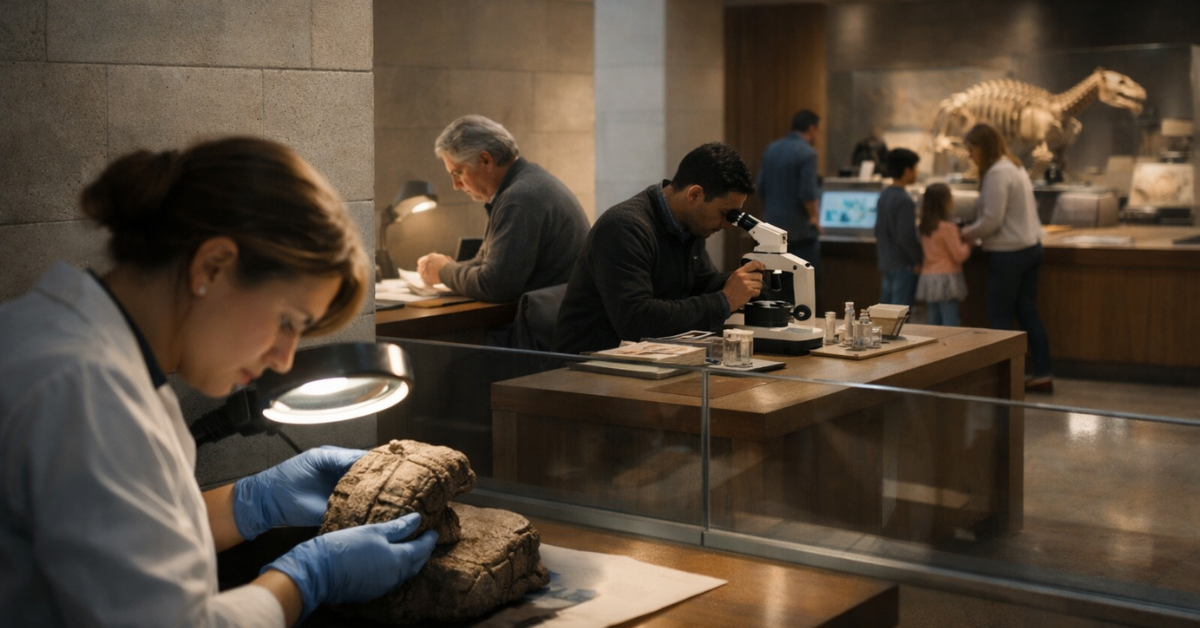
3) Research
Museums are research institutions, not just display spaces.
Research includes:
- Studying objects and collections
- Publishing papers and catalogs
- Collaborating with universities
- Supporting student and academic research
The International Council of Museums explicitly defines research as a core museum responsibility.
Modern evolution:
- Interdisciplinary research (history + science + tech)
- Community-led research models
- Open-access archives
Example:
A natural history museum using DNA analysis to reclassify species collected 100 years ago.
Research turns objects into knowledge.
4) Education
Education is how museums serve society directly.
Educational functions include:
- Guided tours and workshops
- School programs
- Public lectures
- Digital learning resources
Museums support formal and informal education, often reaching audiences traditional schools cannot.
Modern reality:
- Learning must be inclusive
- Content must be multilingual
- Digital access is essential
Example:
Interactive exhibits teaching climate science through local environmental data.
Education transforms collections into shared understanding.
5) Exhibition
Exhibitions are the public-facing expression of all other functions.
Exhibition work involves:
- Curatorial storytelling
- Exhibit design and interpretation
- Visitor flow and accessibility
- Temporary and traveling exhibitions
Today’s challenge:
Competing with short attention spans while maintaining depth and accuracy.
Example:
A rotating exhibition that combines physical artifacts with AR storytelling.
Exhibitions are where research, preservation, and education meet the public.
Museums as Experience Platforms
Most discussions stop at “five functions.”
The opportunity lies in how they connect.
Modern museums are becoming:
- Learning platforms
- Community hubs
- Cultural experience ecosystems
When exhibitions, education, and operations align, museums unlock:
- Repeat visitation
- New revenue streams
- Stronger public relevance
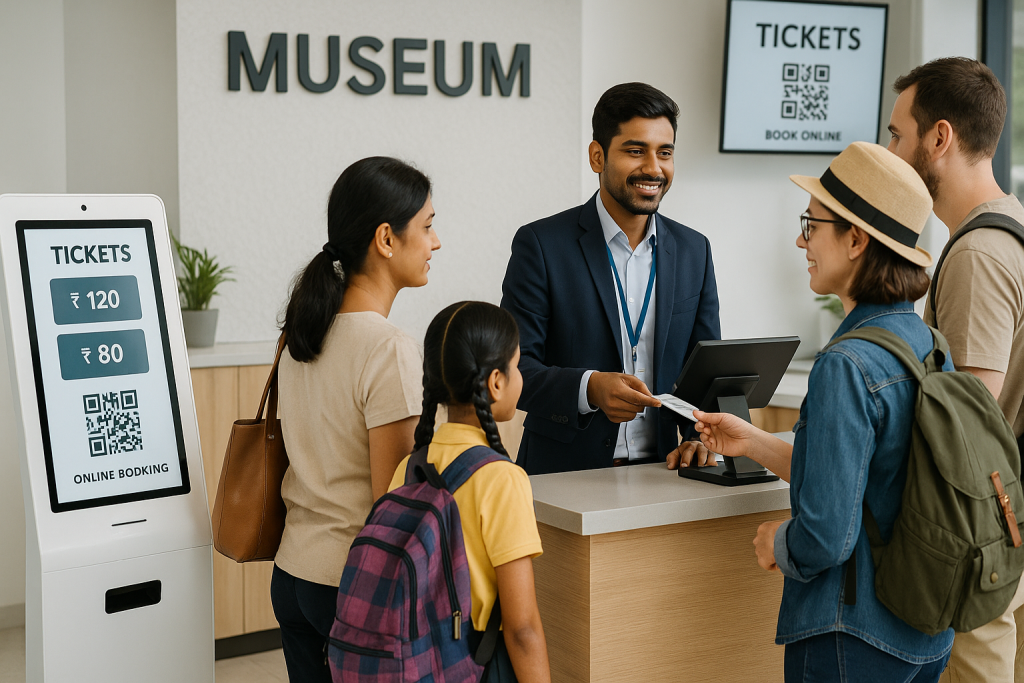
This is where experience design and digital ticketing systems quietly become strategic not just operational.
Common Myths About Museum Functions
Myth 1: Museums only preserve the past
→ Reality: They actively shape present understanding
Myth 2: Education is secondary
→ Reality: Education is a core mandate
Myth 3: Exhibitions are just displays
→ Reality: They are narrative and pedagogical tools
Myth 4: Operations are separate from mission
→ Reality: Operations enable every function to work
How These Functions Work Together (Step-by-Step)
- Collect meaningful objects
- Preserve them responsibly
- Research to uncover context
- Educate diverse audiences
- Exhibit stories effectively
- Measure engagement and iterate
This loop repeats and improves with every exhibition cycle.
Simple Frameworks for Museums
Museum Value Chain
Object → Knowledge → Experience → Impact
3E Model
- Evidence (collection & research)
- Education (learning & outreach)
- Engagement (exhibitions & programs)
Modern Museum Stack
- Mission
- Collections
- Education
- Operations
- Technology
Wrap-up!
The five functions of museums collection, preservation, research, education, and exhibition work together to protect heritage and serve society. Modern museums go further by connecting these functions into cohesive experiences that educate, engage, and inspire. Understanding these roles clearly helps museum professionals align mission, operations, and impact in a rapidly evolving cultural landscape.
If your museum wants smoother visitor flow, better data, and modern ticketing that supports education and exhibitions, explore EveryTicket built for museums, not generic venues.
FAQs
1. What are the main functions of a museum?
Collection, preservation, research, education, and exhibition.
2. Why is education a core museum function?
Because museums exist to serve society through learning and public engagement.
3. Who defines museum functions globally?
Organizations like the International Council of Museums (ICOM).
4. Are museum functions changing today?
Yes, digital access, community engagement, and sustainability are reshaping them.
5. How do museum operations support these functions?
Operations enable access, safety, preservation, and visitor experience.
6. Can technology enhance museum functions?
Absolutely, through digital archives, ticketing, analytics, and learning tools.