Account-based ticketing (ABT) is a system where a visitor’s right to enter is managed in a secure cloud-based back-office rather than on the ticket itself. This shifts the focus from a one-time paper or digital barcode to persistent visitor accounts, providing seamless digital access, robust visitor tracking, and centralized control that turns every visit into a long-term relationship.
Why Museums Are Quietly Re-Thinking Ticketing
Museums usually don’t rethink their ticketing infrastructure until the friction becomes impossible to ignore. Long queues at the entrance, lost paper slips, and the frustration of being unable to identify a “repeat visitor” from a stranger are more than just operational hiccups, they are lost opportunities.
Traditional ticketing treats every visitor like a transaction: Sell ticket → Scan ticket → Goodbye. This “media-based” model leaves museums with a massive data blind spot. You know you sold a ticket, but you don’t know who bought it, what they did after entering, or how to bring them back. Account-based ticketing changes this quietly but fundamentally. It redefines the entire infrastructure of museum access.
Why Static Ticketing is Failing the Modern Museum
Most museum systems were built for 20th-century transactions, not 21st-century engagement. Today’s operations and IT teams are under pressure to deliver more than just a scan; they need to support memberships, dynamic timed-entry, and personalized visitor journeys.
Account-based ticketing solves these problems at the architecture level. By moving the “intelligence” of the ticket to the cloud, you are no longer limited by what a QR code can do. You are empowered by what a visitor account can represent. This is the difference between a one-off entry and a platform for lifelong cultural engagement.
Traditional vs. Account-Based Ticketing
| Feature | Traditional (Media-Based) | Account-Based Ticketing (ABT) |
| Logic Location | Stored on the ticket/barcode | Managed in the secure back-office |
| Data Continuity | Transactional & anonymous | Persistent via visitor accounts |
| Updates | Fixed once the ticket is issued | Real-time changes to permissions |
| Security | High risk of fraud/lost tickets | Secure; revoked instantly via cloud |
| Visitor Journey | Disconnected and fragmented | Unified digital access across sites |
| Hardware Needs | Complex proprietary scanners | Lean, internet-ready devices |
What Is Account-Based Ticketing?
In the old model, the ticket is the value. If you lose the paper or delete the email, the “right to enter” is gone. In the account-based ticketing model, the “right to enter” lives inside the visitor accounts. The QR code on your phone is just a “token”—a simple key that tells the system, “Look up this person’s account.”
Think of it like Netflix vs. a physical DVD. With a DVD (Traditional), you need the physical disc to watch the movie. If the disc is scratched or lost, you’re out of luck. With Netflix (Account-Based), you just need your login. Your history, your preferences, and your “right to watch” stay with your account, no matter what device you use. This is exactly how digital access should work in a modern museum.
How It Actually Works: The Four Pillars
- Creation: The visitor creates a profile (often with a single click via social login) during their first purchase.
- Linking: All permissions, like entry tickets, special exhibit passes, and even café vouchers, are linked to their visitor accounts.
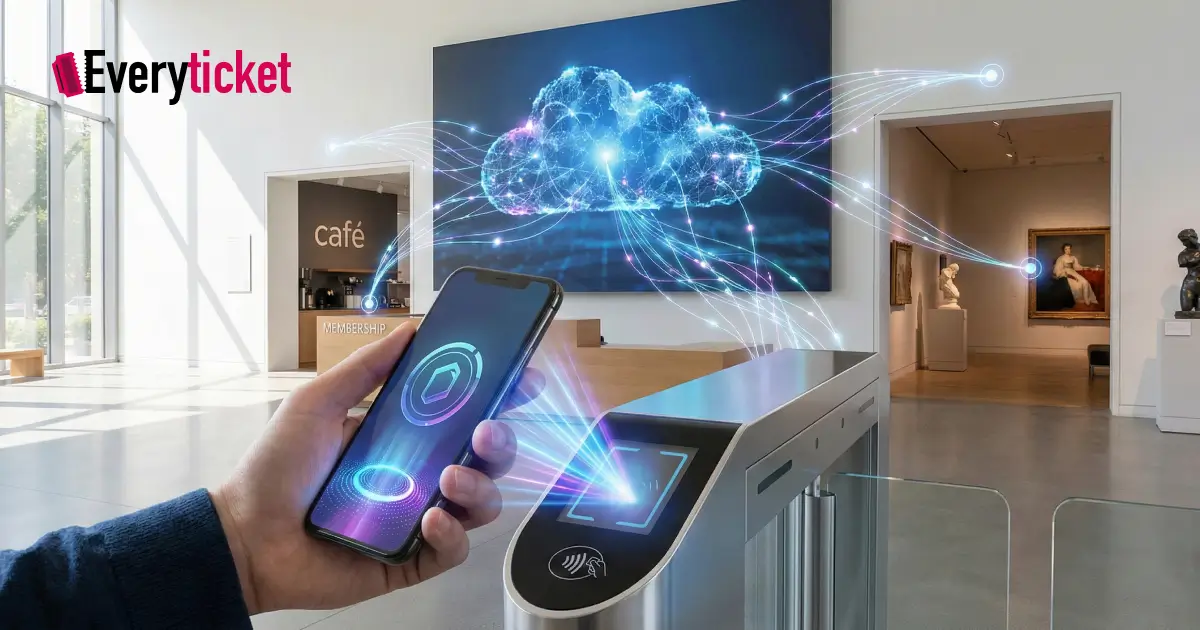
- Validation: When the visitor arrives, they scan a token (QR, NFC, or even a membership card). The scanner asks the back-office: “Does this account have the right to enter right now?”
- Intelligence: The system validates the entry and logs the data, creating a rich history of visitor tracking that helps the museum improve future exhibitions.
Core Benefits of Account-Based Ticketing for Museums
1. Radically Better Visitor Convenience
The primary friction in any museum visit is the “ticketing hurdle.” Visitors hate searching through buried emails for a PDF or worrying about a dying phone battery. With account-based ticketing, the visitor experience is frictionless. Because their entry rights live in their account, they can access their digital access tokens via a mobile app, an Apple/Google Wallet, or even by providing their name at a help desk.
Less friction at the gate leads to a better first impression. When the entry process is invisible, visitors can immediately focus on the art and history. For more on how this impacts your bottom line, see our guide on the 9 powerful benefits of a museum ticketing system.
2. True Digital Access, Not Just Digital Tickets
There is a massive difference between a “paperless ticket” and true digital access. Paperless tickets are still just static files. Account-based ticketing provides programmable access.
- Timed Entry: Easily adjust a visitor’s entry window in the back-office if they are running late.
- Add-ons: If a visitor decides to join a guided tour mid-visit, they can buy it on their phone, and their visitor accounts are updated instantly.
- Multi-Site: For organizations with multiple locations, one account provides unified digital access across the entire network.
This flexibility is essential for digital transformation in museums, moving toward a world where the physical and digital visitor journeys are one and the same.
3. Clean, Actionable Visitor Tracking
For operations teams, data is the new currency. However, traditional systems only provide “gate data.” They tell you how many people walked in, but they don’t tell you who they are. Account-based ticketing unlocks sophisticated visitor tracking by connecting every touchpoint.
By analyzing the data in your visitor management system, you can identify “Super-Visitors”—those who visit three times a year but aren’t yet members. You can see which exhibits are “bottlenecks” and which are “ghost towns.” This isn’t just about numbers; it’s about relationship intelligence that respects privacy while delivering insight.
4. Simplified Operations for IT & Ops Teams
From an IT perspective, account-based ticketing is a dream for infrastructure management. Because the logic is in the cloud, you don’t need expensive, specialized hardware at every gate. Any internet-connected device can act as a validator.
- Fewer Disputes: If a visitor “loses” their ticket, staff can find it in seconds by looking up their visitor accounts.
- Scalability: Adding a new temporary exhibit? You don’t need to reconfigure your scanners. Just add a new permission level to the back-office.
- Security: According to Paragon ID, ABT removes the complexity of ticket loss and physical infrastructure, making the entire ecosystem more resilient to fraud.
5. The Foundation for Memberships & Loyalty
You cannot build a loyalty program on anonymous paper tickets. Account-based ticketing is the natural engine for growth. When a visitor has an account, the transition from “one-time ticket holder” to “annual member” is seamless. The system already knows their history, making the upsell feel like a personalized invitation rather than a cold sales pitch.
By utilizing Museum Ticketing CRM Integration, museums can automate this journey, sending thank-you notes and membership offers based on the specific exhibits the visitor spent the most time in.
Ticketing as Identity Infrastructure
Most vendors in the space still compete on hardware or scanning speed. But the real shift in 2026 is seeing ticketing as identity infrastructure. Your ticketing system isn’t just a way to collect money; it’s the foundation of how you recognize and serve your community.
When you adopt account-based ticketing, you are choosing a future where your museum acts as a digital hub. This enables cross-museum collaborations, educational tracking for students, and highly personalized “curated” visits that adapt to the user’s interests. Research on museum experience design trends suggests that personalization is the single biggest driver of repeat attendance in the digital era.
Common Myths & Mistakes
- Myth: “Accounts create too much friction during checkout.”
- Reality: Modern “guest checkout” flows can create visitor accounts in the background using just an email, providing all the benefits without the hurdle.
- Myth: “It’s too complex for small museums.”
- Reality: Because ABT requires less on-site hardware, it is often cheaper and easier to manage than legacy systems for smaller institutions.
- Mistake: Treating accounts as just an email list.
- Value: Accounts are about digital access and experience control, not just marketing.
How EveryTicket Enables the Future
EveryTicket was built from the ground up with an “account-first” philosophy. Unlike legacy systems that bolted on digital features later, our platform is designed for the modern museum that demands:
- Frictionless Visitor Accounts: Designed to capture data without slowing down the sale.
- Adaptive Digital Access: Supporting everything from timed entries to complex group bookings.
- Powerful Analytics: Integrating visitor tracking directly into your operational dashboard.
Our success with institutions like MAP Bengaluru proves that when you simplify the foundation, your revenue and visitor satisfaction follow. We help you move away from the “transaction” and toward the “relationship.”
Final Summary
The shift to account-based ticketing is the most significant change in museum operations since the introduction of online booking. By prioritizing visitor accounts, providing flexible digital access, and leveraging visitor tracking, museums can finally see the “human” behind the ticket. For IT and Ops teams, it means fewer headaches and more control. For visitors, it means a world-class experience that starts the moment they decide to visit.
FAQs
What is account-based ticketing?
It is a system where a visitor’s right to enter is stored in a cloud-based account rather than on a physical or digital ticket media.
How do visitor accounts improve museum data?
They allow for 360-degree visitor tracking, linking entry, café purchases, and repeat visits to a single profile.
Does account-based ticketing require special hardware?
No, it actually simplifies hardware needs by allowing any internet-connected device to validate digital access tokens.
Is it better for memberships?
Yes, it is the only way to seamlessly manage membership benefits and renewals in real-time at the point of entry.
How does it help with queues?
It enables “tap-and-go” entry and reduces disputes, as staff can instantly verify permissions within the system.