
Museum curators and planners must balance historical preservation with modern operational demands. The way a museum functions depends on its core structural and conceptual elements.
These elements dictate how a collection is managed and how the public interacts with history. Understanding the key features of a museum allows professionals to solve common issues like outdated layouts and low visitor engagement.
According to the International Council of Museums (ICOM), a museum is a permanent institution in the service of society that researches, collects, and exhibits heritage. To meet this definition effectively, planners must focus on five specific areas.
1. Architectural Design and Spatial Flow
The physical layout is one of the most important features of a museum. A successful design guides visitors through a chronological or thematic narrative without causing physical bottlenecks. Many older institutions suffer from outdated layouts that do not account for modern footfall patterns.
Curators now use spatial design to manage how people move from the entrance to various galleries. Proper design ensures that high-traffic areas, such as special exhibits, have enough space for large groups. When the design of a building aligns with the ticketing process, the institution avoids overcrowding. Using a museum ticketing system helps planners align their physical space with the number of people allowed inside at any given time.
| Design Element | Purpose | Impact on Visitor Experience |
| Open Floor Plans | Reduces congestion | Improves navigation |
| Wayfinding Signage | Directs traffic | Minimizes confusion |
| Modular Walls | Allows exhibit flexibility | Keeps content fresh |
2. Curated Exhibits and Collection Management
Exhibits are the primary method through which a museum communicates information. A curator selects objects that support a specific educational goal. The way these exhibits are displayed determines how much information a visitor retains.
Modern exhibits incorporate both physical artifacts and digital labels. High-quality exhibits use lighting, glass cases, and pedestals to protect items while making them visible. Effective curation involves rotating these exhibits to ensure the collection remains relevant to the public. If a museum fails to update its exhibits, engagement levels often drop. Curators can analyze visitor data to see which exhibits attract the most attention. This data helps in making informed decisions about future gallery updates.
3. Technology and the Visitor Experience
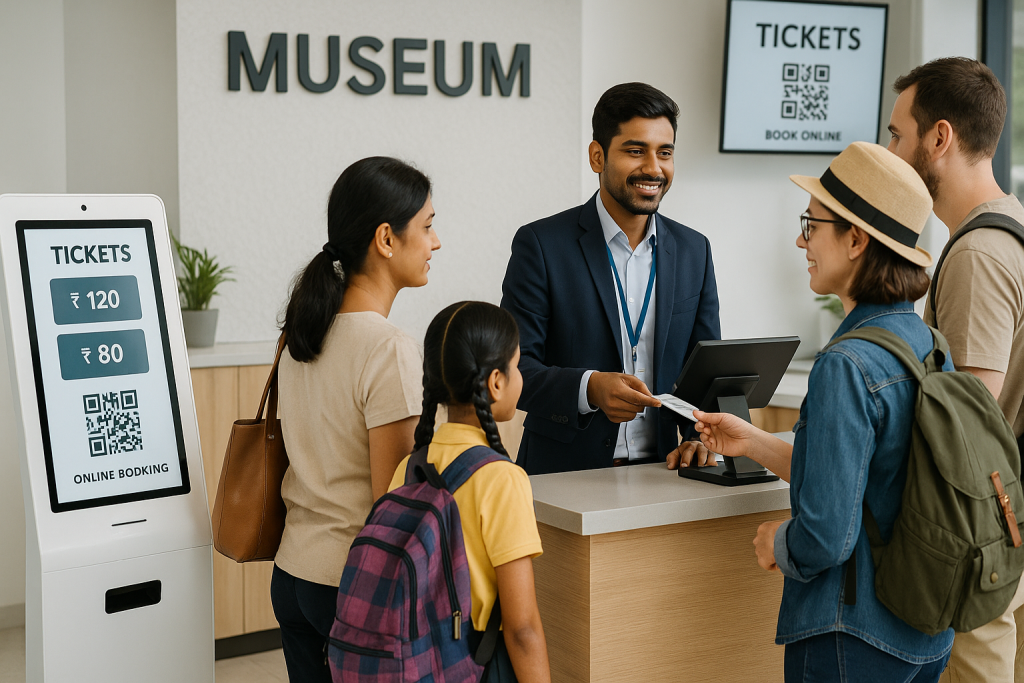
The visitor experience begins before a person enters the building. It starts with the online ticket booking process and continues through the digital tools available on-site. Technology is now one of the standard features of a museum.
Providing a seamless visitor experience requires removing friction at the entry point. Manual paper-based systems often lead to long wait times, which negatively impacts the public’s perception of the institution. Many museums now face challenges without digital ticketing, such as inaccurate visitor counts and slow entry speeds.
Integrating digital kiosks and mobile scanning improves the visitor experience by allowing for rapid access. These technical features of a museum also allow staff to collect real-time data on attendance. This information is vital for museum planners who need to justify budgets or report on the success of specific programs.
4. Accessibility and Universal Design
A modern museum must be accessible to all members of the public. This feature of a museum involves more than just physical ramps or elevators. True accessibility includes the design of information and the ease of the booking process.
Inclusive design ensures that visitors with different physical and cognitive needs can interact with the exhibits. This includes providing high-contrast labels for the visually impaired and audio guides for those who prefer auditory learning. The American Alliance of Museums notes that institutions prioritizing accessibility see more diverse audience participation.
Museum planners should evaluate if their digital interfaces are as accessible as their physical galleries. For example, certain features in museum ticketing software allow for multilingual support and easy navigation for all users. When the design of the digital and physical journey is inclusive, the museum fulfills its social mission.
5. Educational Programming and Community Engagement
The fifth feature of a museum is its capacity for education. Museums are centers for lifelong learning. This is achieved through workshops, guided tours, and interactive displays.
Educational design focuses on making complex historical or scientific facts easy to understand. Curators create programs that supplement the exhibits on display. These programs turn a passive viewing experience into an active learning session. By focusing on a visitor-centered museum model, institutions can build long-term relationships with their community.
Engagement also extends to how a museum tracks its impact. Useable data from educational events helps planners understand which topics interest their audience. Analyzing these trends allows for the creation of more successful exhibits in the future.
Integrate Modern Features for Museum Success
Solving the problem of outdated layouts requires a combination of physical design changes and digital upgrades. When curators implement the five features of a museum correctly, they create an environment that is both efficient and educational.
The primary goal is to ensure that the design of the building supports the exhibits within it. If the visitor experience is poor due to long lines or confusing layouts, the educational value of the museum is lost. Modern institutions use case studies from museum ticketing software to learn how technology solves operational hurdles.
Summary of Key Features:
- Design: The physical and logical arrangement of the museum space to facilitate movement and safety.
- Exhibits: The curated selection and presentation of artifacts to tell a coherent story.
- Visitor Experience: The total journey of a guest, from ticket purchase to the final exit from the galleries.
- Inclusivity: Ensuring the museum design and content are reachable by every demographic.
- Data Intelligence: Using tools to monitor how the features of a museum are being used by the public.
By focusing on these five features of a museum, planners can ensure their institution remains a relevant part of the cultural landscape. Each feature works with the others to create a stable operational environment. A museum with great exhibits but poor design will struggle with crowding. Similarly, a museum with excellent design but no digital visitor experience features will fail to meet modern expectations.
Curators who prioritize these features of a museum can effectively address engagement issues. They can move away from static, unresponsive models toward dynamic, data-driven management. This approach ensures that the visitor experience remains high and the institution continues to thrive.
Strategic planning involves looking at every touchpoint. From the initial design of a gallery to the final exhibits a guest sees, every detail contributes to the overall success. Implementing modern ticketing and management tools is a practical step toward optimizing these features of a museum. These tools provide the infrastructure needed to support sophisticated design and diverse exhibits while maintaining a high-quality visitor experience.