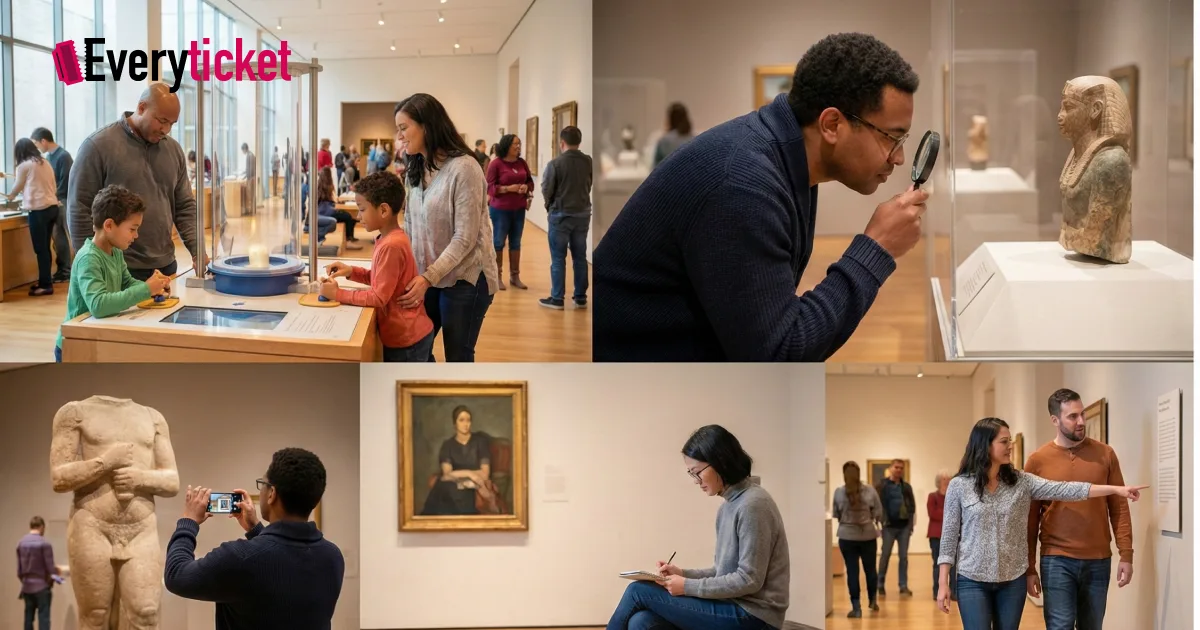
To understand museum visitor types, we must look at John Falk’s Identity-Motivated Model, which categorizes audiences into five distinct personas: Explorers, Facilitators, Experience Seekers, Professional/Hobbyists, and Rechargers.
Unlike traditional demographics, this segmentation focuses on the internal motivation of the visitor, allowing marketing heads to design exhibits and ticketing flows that cater to specific psychological needs.
The Museum is Not a Building, It’s an Experience
Walk into any museum in India on a weekend. You’ll see families rushing, students clicking selfies, researchers reading plaques, and elderly visitors sitting quietly in a corner.
Same building. Five completely different intentions.
Yet most museums still design for one.
That’s why
- engagement drops.
- layouts feel outdated.
- visitors don’t return.
For years, Indian museums have relied on “Footfall” as their primary metric. But if you are a marketing head or a visitor experience leader, footfall is a vanity metric. If you don’t know why they came, you can’t make them come back.
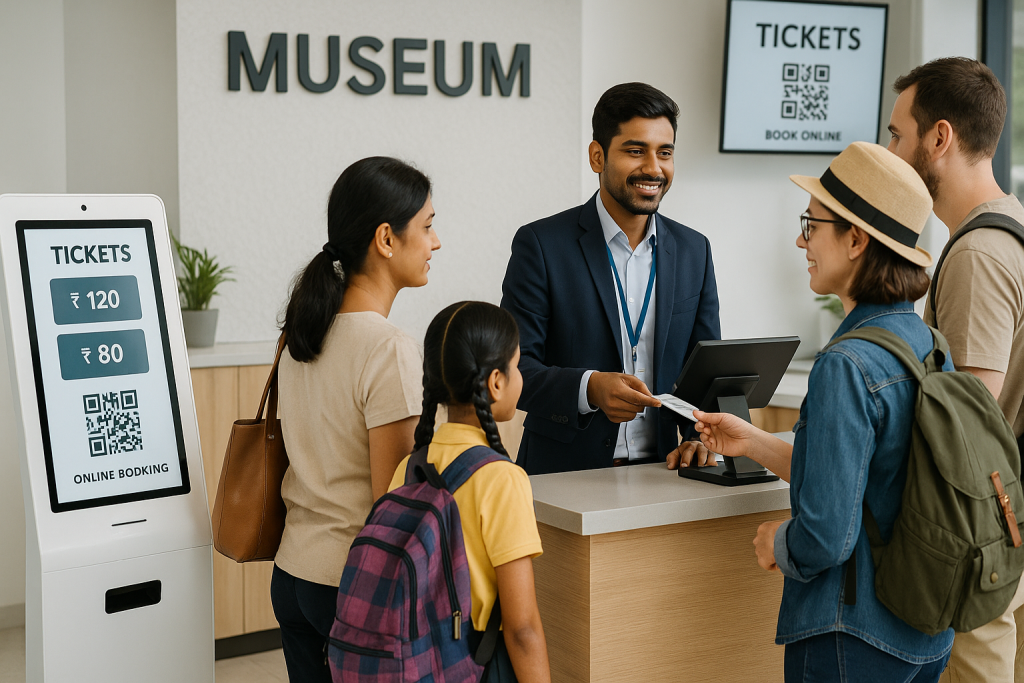
The traditional way of looking at visitors is completely obsolete. In the age of AI and hyper-personalization, we need to understand the “Why.” When we built EveryTicket, we realized that the friction in a visitor’s journey often starts at the gate because the museum didn’t recognize who was walking through it.
This guide is about shifting your perspective from “General Public” to “Specific Identities.”
FYI, Understand Visitor Segmentation in Museums
Visitor segmentation means grouping visitors based on:
- Motivation
- Behavior
- Emotional expectation
- Time spent
- Learning style
It goes deeper than:
- Age
- Gender
- Location
It answers “Why did they come here today?”
The real question has shifted to “Which visitor types did we serve well—and which did we ignore?” instead of “how many visitors came?”
The Five Personas: Why They Visit Your Museum
Understanding these five types is the key to solving the “outdated layout” problem. If your museum is a one-size-fits-all hallway, you are likely alienating 80% of your potential audience.
1. The Explorer (Curiosity-Driven)
Explorers are the “intellectual wanderers.” They visit because they have a general interest in the subject matter and a belief that the museum will provide something new and interesting.
- Behavior: They read almost every label. They spend more time in galleries than in the cafe.
- Design Fix: Create “Discovery Paths.” Use QR codes that lead to “Deep Dives” for those who want more than the surface-level plaque.
2. The Facilitator (Socially-Driven)
In India, this is your largest segment. These are parents taking children to the Science Centre or a group of friends visiting the CSMVS in Mumbai. Their primary goal is the social experience of someone else.
- Behavior: They focus on the reactions of their companions. They look for photo-ops and interactive “touch” zones.
- Design Fix: Open spaces, interactive kiosks, and “Instagrammable” heritage corners.
3. The Experience Seeker (The “Checklist” Visitor)
These are tourists. They are in Delhi for two days, and they must see the National Museum. They want to see the “hits.”
- Behavior: They head straight for the most famous artifact (e.g., The Dancing Girl). They stay for a short time and move on.
- Design Fix: A “Highlights Map” at the entrance and seamless, fast-track ticketing to avoid queues.
4. The Professional/Hobbyist (Knowledge-Driven)
These visitors have a specific objective. They might be an architect studying Mughal patterns or a history student.
- Behavior: High “dwell time” on specific objects. They often skip sections irrelevant to their niche.
- Design Fix: Access to digital archives or specialized “Expert Tours” bookable via your ticketing platform.
5. The Recharger (Spiritually-Driven)
These visitors see the museum as a sanctuary. They come to escape the noise of cities like Bangalore or Kolkata.
- Behavior: They prefer quiet galleries and benches. They often revisit the same favorite spot.
- Design Fix: Seating areas with views, low-ambient noise zones, and “Calm Pass” memberships.
Most museums fail because they try to serve everyone with one layout. By segmenting visitors into Explorers, Facilitators, Experience Seekers, Professionals, and Rechargers, you can tailor your physical and digital experience to meet specific emotional needs.
Why Most Museums in India Struggle with Visitor Types
Because their systems are still:
- Ticket-based
- Anonymous
- Non-personalized
They know “how many tickets were sold,” but they have no idea who the visitors actually were, and this is where technology changes the game.
How EveryTicket Enables Smart Visitor Segmentation
EveryTicket shifts museums from:
Ticket-based entry → Account-based visitor relationships
Instead of just a barcode, visitors become:
- Profiles
- Preferences
- Engagement histories
This enables:
- Personalized journeys
- Behavior-based segmentation
- Data-driven layout decisions
Museums Aren’t Competing with Museums Anymore
They are competing with:
- OTT platforms
- Theme parks
- Malls
- Mobile screens
Your market is not “museum visitors.” It’s attention seekers. And attention only stays where experience adapts.
Myths That Hurt Museum Engagement
- “Visitors all want the same experience”
- “Digital kills authenticity”
- “Museums are for education, not entertainment”
- “Segmentation is only for marketing”
Truth: Segmentation is for design, layout, storytelling, and emotion.
How to Apply Visitor Segmentation in Your Museum
- Identify visitor motivations
- Map current visitor behavior
- Classify into the 5 types
- Match design features to each
- Track engagement digitally
- Refine layouts continuously
Final Thoughts
To modernize the Indian museum experience, leaders must move beyond demographic data and embrace Identity-Motivated Segmentation. By designing spaces and digital journeys that cater to Explorers, Facilitators, Experience Seekers, Professionals, and Rechargers, museums can transform from static warehouses of the past into vibrant, responsive cultural hubs. The journey starts at the gate, ensure your ticketing and entry flow reflect the world-class experience you want to provide.
FAQs
1. What are the five types of museum visitors?
Explorers, Facilitators, Experience Seekers, Professionals/Hobbyists, and Rechargers.
2. Why is visitor segmentation important for museums?
It helps design experiences that match real visitor motivations.
3. How can museums in India modernize engagement?
By using digital identity, personalization, and adaptive layouts.
4. What is the role of audience personas in museums?
They translate visitor behavior into design strategy.
5. Can ticketing systems support segmentation?
Only if they are account-based, like EveryTicket.
6. How does segmentation improve museum layout?
It allows zoning based on visitor flow and intent.
7. Is personalization expensive?
Not compared to losing relevance.