A visitor-centered museum designs exhibitions, programs, and services around visitor needs, motivations, and behaviors rather than internal assumptions. By using personalization, experience design, and continuous feedback, museums can improve satisfaction, learning outcomes, and repeat visits. The shift requires understanding visitors deeply and aligning operations to serve them better.
Visitor-Centered Museums — Key Facts at a Glance
- Visitor-centered museums prioritize visitor needs over institutional convenience
- Personalization increases engagement, dwell time, and return visits
- Experience design treats the museum visit as a complete journey
- Visitor dissatisfaction often comes from confusion, fatigue, or irrelevance
- Data, feedback, and observation are critical inputs
- Small operational changes can significantly improve visitor satisfaction
What a Visitor-Centered Museum Really Means Today
What is a Visitor-Centered Museum?
A visitor-centered museum is an institution that intentionally designs its offerings around how visitors think, feel, move, and learn. Instead of asking, “What do we want to show?”, it asks, “What does the visitor need at this moment?”
This mindset shift impacts everything:
- Exhibition layout
- Interpretation style
- Program scheduling
- Ticketing and entry flow
- Digital and physical touchpoints
Personalization in Museums
Personalization means tailoring experiences based on visitor context such as age, interest, time available, or purpose of visit.
Examples:
- Family-friendly interpretation paths
- Short-form content for casual visitors
- Deep dives for enthusiasts
- Language or accessibility-based adaptations
Personalization does not require advanced AI. It starts with intentional choices.
Experience Design in Museums
Experience design treats the museum visit as a journey with stages:
- Before the visit
- Entry and orientation
- Exploration
- Reflection
- Exit and follow-up
Each stage should reduce friction and increase meaning.
Think of a museum like a story, not a storage room.
Read More: Museum Ticketing System That Boosts Revenue
How Museums Can Design Experiences Around Visitor Needs
Step 1: Understand Visitor Motivations
Not all visitors come to learn deeply.
Some come to relax.
Some come with children.
Some come for social reasons.
Actions:
- Conduct short exit surveys
- Observe visitor movement patterns
- Interview frontline staff
- Identify top 3 visitor goals
Step 2: Map the Visitor Journey
Create a simple journey map from entry to exit.
Identify:
- Confusion points
- Drop-off zones
- Fatigue moments
- Emotional highs and lows
Design interventions for each stage.
Step 3: Design for Multiple Experience Levels
Avoid one-size-fits-all exhibits.
Instead:
- Offer layered interpretation
- Use visual cues to guide depth
- Allow visitors to choose how much they engage
Choice increases satisfaction.
Step 4: Reduce Friction Everywhere
Common friction points:
- Ticket queues
- Unclear signage
- Overcrowded galleries
- Information overload
Fixing friction often improves experience more than adding new content.
Step 5: Close the Feedback Loop
Visitor-centered museums listen continuously.
Methods:
- Simple digital feedback
- Staff observations
- Repeat-visitor analysis
Use feedback to iterate, not just report.
Why Most Museums Fail at Being Visitor-Centered
- Mistake: Designing for experts
Do instead: Design for first-time visitors
- Mistake: Assuming visitors read everything
Do instead: Design for scanning and choice
- Mistake: Adding more content to fix boredom
Do instead: Improve clarity and pacing
- Mistake: Treating ticketing as a transaction
Do instead: Treat it as the start of the experience
- Mistake: Ignoring frontline staff insights
Do instead: Involve them in design decisions
Common Misconceptions About Visitor-Centered Museums
Myth 1: Visitor-centered means dumbing down
Truth: It means improving clarity and relevance
Myth 2: Personalization is expensive
Truth: Many changes are low-cost and operational
Myth 3: Curatorial authority is reduced
Truth: Authority increases when visitors understand more
Myth 4: Digital ruins authenticity
Truth: Poor design ruins authenticity, not technology
Real-World Signals That Visitor-Centered Design Works
- Museums that simplify entry and orientation report higher dwell time
- Personalized tours increase visitor satisfaction in mixed-age groups
- Clear wayfinding reduces staff intervention needs
- Programs designed around visitor needs see higher attendance
Example scenario:
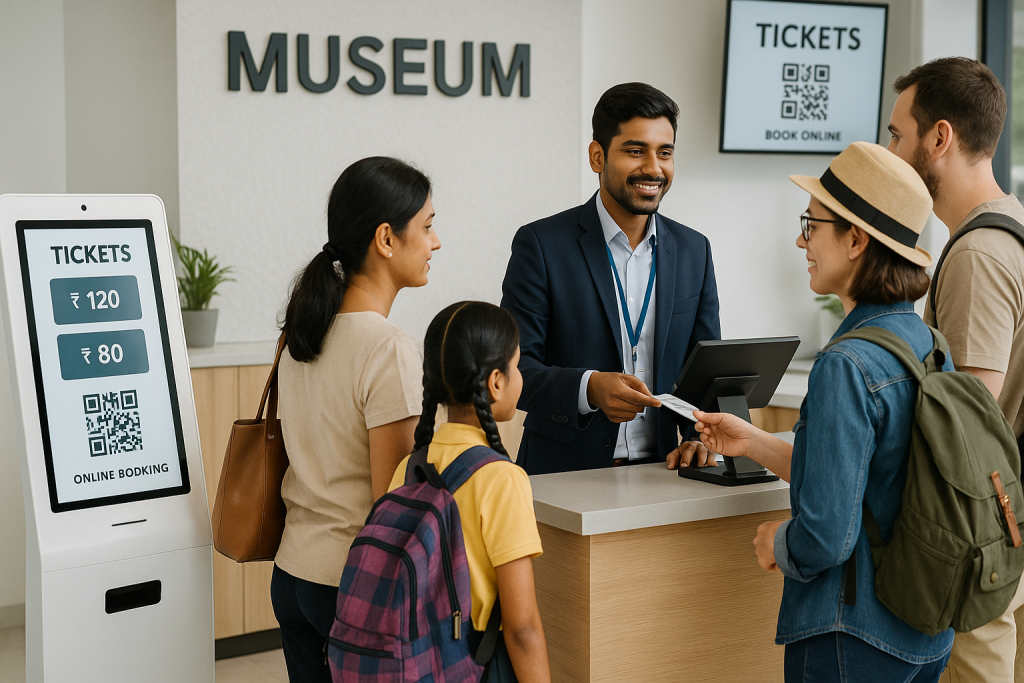
A city museum redesigned its ticketing and entry flow to reduce waiting time and confusion. Without changing exhibitions, visitor satisfaction scores improved significantly due to a calmer, clearer start to the visit.
V.I.S.I.T Framework for Visitor-Centered Museum Design
V — Visitor Intent
Understand why visitors came.
I — Interaction Design
Design how visitors engage, not just what they see.
S — Sensory Balance
Avoid cognitive overload and physical fatigue.
I — Iteration Loop
Continuously improve based on feedback.
T — Takeaway Value
Ensure visitors leave with something meaningful.
Why it works:
It aligns institutional goals with visitor outcomes.
When to use:
Exhibition planning, program redesign, operational audits.
Expert Guide: Effective Strategies for Museum Revenue Diversification
Untapped Opportunity Museums Are Overlooking
Most museums compete on collections.
Few compete on experience clarity.
The real opportunity lies in:
- Designing visits for time-poor audiences
- Supporting emotional journeys, not just education
- Treating operational systems as experience tools
Visitor-centered design is not a trend.
It’s a survival strategy.
Practical Tools to Build a More Visitor-Centered Museum
- Visitor journey mapping template
- Frontline staff observation checklist
- Post-visit feedback micro-survey
- Experience friction audit list
Ticketing and entry tools, such as EveryTicket, can also play a role by reducing friction and enabling smoother visitor flows, especially during peak hours.
Traditional Museum Design vs Visitor-Centered Design
Old Way
- Collection-first thinking
- Static interpretation
- Transactional ticketing
- Limited feedback
New Way
- Visitor-centered museum design
- Layered personalization
- Experience-led ticketing
- Continuous iteration
Wrap-up!
Becoming a visitor-centered museum means shifting focus from what is displayed to how it is experienced. Through personalization, experience design, and thoughtful operations, museums can reduce dissatisfaction and create visits that feel meaningful, welcoming, and memorable. The institutions that win in the future will be the ones designed around people, not just collections.
If you’re rethinking ticketing and visitor flow, platforms like EveryTicket can support smoother, visitor-first operations.
Fill the inquiry form to book a free demo with our expert team.
FAQs
1. What is a visitor-centered museum?
A museum designed around visitor needs and behaviors.
2. Why is visitor dissatisfaction rising?
Because experiences often prioritize institutions over visitors.
3. Does personalization reduce academic depth?
No, it improves comprehension and engagement.
4. How can museums start becoming visitor-centered?
By mapping visitor journeys and reducing friction.
5. Is technology required?
Helpful, but not mandatory.
6. Who should lead this change?
Directors and curators working with frontline teams.
7. Does ticketing affect visitor experience?
Yes, it sets the emotional tone for the visit.