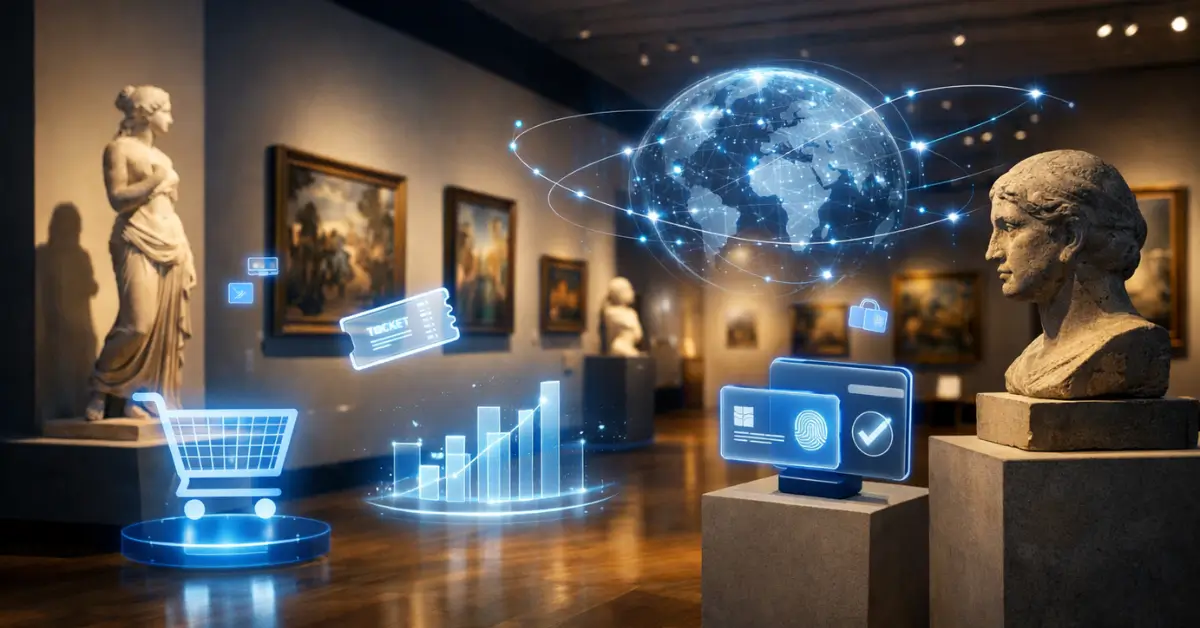
Museums are boosting online revenue in 2026 by shifting from static websites to ecommerce-driven digital experiences. By combining online ticketing, digital memberships, virtual content, and data-driven personalization, museums are turning their online presence into a consistent revenue channel rather than just a marketing asset.
Museum Online Revenue in 2026: Key Facts at a Glance
- Museums now treat online platforms as revenue centers, not brochures
- Ecommerce, digital ticketing, and memberships drive recurring income
- Personalized digital sales outperform generic campaigns
- Virtual experiences expand reach beyond physical visitors
- Data and analytics guide pricing, offers, and engagement
Why Museums Are Rethinking Digital Revenue Now
Museums no longer struggle because people don’t care.
They struggle because their digital presence doesn’t convert attention into revenue.
How Museums Turn Digital Attention into Revenue
Museum Online Revenue (Core Concept)
Museum online revenue refers to income generated through digital channels such as online ticket sales, ecommerce stores, digital memberships, virtual tours, donations, and exclusive online content.
In 2026, this revenue is no longer “extra.”
For many museums, it’s a core growth lever.
Expert Guide: Effective Strategies for Museum Revenue Diversification
Ecommerce for Museums
Museum ecommerce has evolved far beyond selling souvenirs.
Modern ecommerce includes:
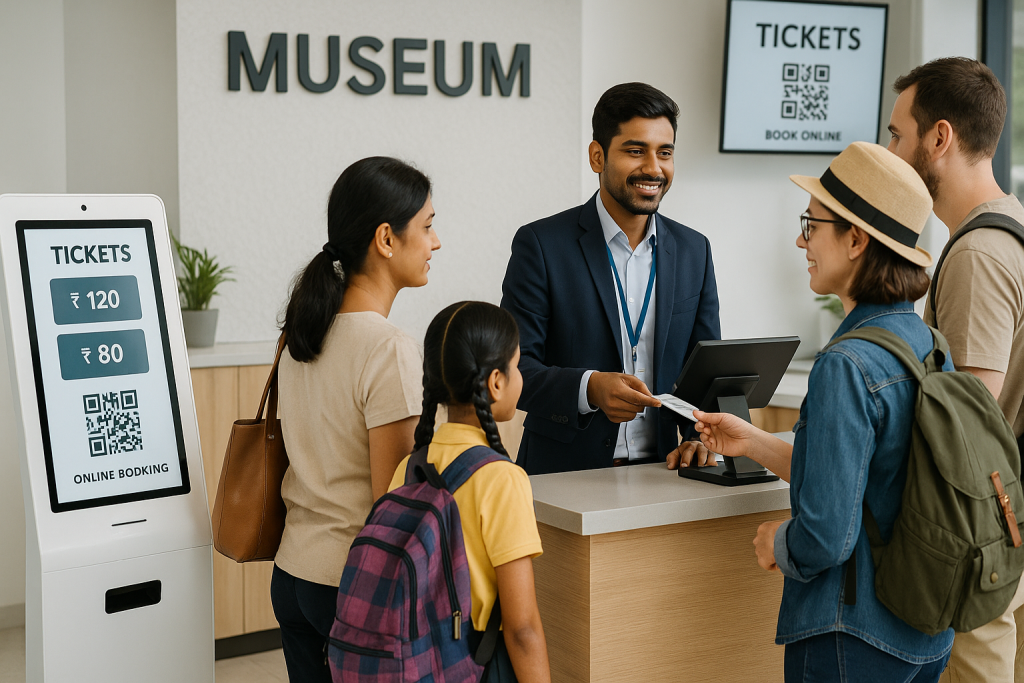
- Timed-entry ticket sales
- Event and exhibition passes
- Digital memberships and subscriptions
- Educational content and virtual programs
- Exclusive online merchandise
The key shift: buying without friction.
Digital Sales vs Physical Sales
Physical sales depend on footfall.
Digital sales depend on reach, relevance, and timing.
Digital sales:
- Scale globally
- Run 24/7
- Convert interest into immediate action
This makes them more predictable and measurable.
Weak Online Presence (The Core Pain Point)
Most museums still struggle with:
- Outdated websites
- Disconnected ticketing systems
- No ecommerce strategy
- Little to no data on visitor behavior
This leads to lost revenue opportunities, even when interest is high.
Step-by-Step Guide: How Museums Increase Online Revenue
Step 1: Turn the Website into a Sales Platform
Museums redesign websites to:
- Highlight ticketing and events
- Reduce checkout friction
- Optimize for mobile visitors
The goal is simple: make buying obvious and easy.
Step 2: Expand Ecommerce Beyond Tickets
High-performing museums sell:
- Digital memberships
- Online workshops and talks
- Educational content for schools
- Limited-edition merchandise
This diversifies income and reduces reliance on foot traffic.
Step 3: Introduce Virtual and Hybrid Experiences
Virtual exhibitions and hybrid events allow museums to:
- Reach global audiences
- Monetize content multiple times
- Extend exhibition lifecycles
One exhibition can now generate revenue long after it closes.
Step 4: Use Data to Drive Digital Sales
Museums track:
- Visitor journeys
- Drop-off points
- Purchase behavior
This data informs pricing, bundles, and promotions.
Step 5: Build Ongoing Relationships, Not One-Time Sales
Digital memberships, newsletters, and CRM tools help museums:
- Retain visitors
- Promote upcoming events
- Increase lifetime value
Revenue grows when relationships deepen.
Common Mistakes Museums Make (and What to Do Instead)
- Treating the website as a brochure→ Treat it as an ecommerce channel
- Selling only tickets online→ Add memberships, content, and experiences
- Ignoring mobile users→ Design for mobile-first buying
- No data-driven decisions→ Use analytics to refine offers
- One-size-fits-all pricing→ Personalize offers and bundles
- No follow-up after purchase→ Nurture visitors with digital communication
Myths About Museum Online Revenue
Myth 1: People won’t pay online for museum content
Truth: They already do—when the value is clear.
Myth 2: Online revenue replaces physical visits
Truth: It complements and often increases in-person attendance.
Myth 3: Ecommerce is only for large museums
Truth: Smaller museums often see faster digital ROI.
Myth 4: Virtual experiences reduce exclusivity
Truth: They expand reach without reducing value.
Evidence, Data, and Realistic Examples
- Museums offering digital memberships report higher repeat engagement
- Online ticket bundling increases average order value
- Virtual events reach audiences who may never visit physically
Example scenario:
A regional museum launches virtual curator-led tours at a low price point. Attendance triples compared to in-person sessions, generating new global revenue without increasing physical capacity.
Proprietary Framework: MUSEUM-D Model™
What it is:
A digital revenue framework for museums in 2026.
Steps:
- Monetize attention
- Unify ticketing and ecommerce
- Segment digital audiences
- Extend exhibitions digitally
- Use data for optimization
- Maintain long-term relationships
Why it works:
It aligns culture, technology, and revenue in one system.
When to use it:
When online interest is high but revenue is low.
Why Digital Experience is the New Competitive Edge
Most museums compete on exhibitions.
Very few compete on digital experience quality.
That’s the opportunity.
In 2026, the museums growing fastest are not those with the largest collections but those with the smartest digital sales strategy.
Modern Digital Stack Powering Museum Revenue
- Ecommerce-enabled ticketing platforms
- Digital membership systems
- CRM for visitor segmentation
- Analytics dashboards
- Automated email journeys
A modern digital stack turns insight into income.
From Static Websites to Digital Revenue Engines
Old Way
- Static websites
- Manual ticketing
- One-time visitors
- Limited reach
New Way
- Ecommerce-driven platforms
- Digital-first ticketing
- Repeat digital engagement
- Global audiences
Wrap-up!
In 2026, museums boost online revenue by embracing ecommerce, digital sales, and data-driven engagement. By transforming weak online presence into revenue-generating platforms, museums unlock sustainable growth beyond physical walls. The future belongs to museums that treat digital channels not as support but as strategy.
Fill the inquiry form to See how EveryTicket helps museums turn digital interest into measurable online revenue.
FAQs
1. How can museums increase online revenue?
By combining ecommerce, digital content, and data-driven engagement.
2. Is ecommerce expensive for museums?
Modern platforms reduce cost and complexity.
3. Do virtual experiences really generate revenue?
Yes, when packaged and priced correctly.
4. Can small museums benefit from digital sales?
Often more quickly than large institutions.
5. What role does ticketing play?
Ticketing is the entry point for broader digital monetization.
6. Is online revenue sustainable long-term?
Yes, with memberships and recurring digital offerings.
7. Do digital sales reduce in-person visits?
No, they often increase interest and attendance.