A white-label ticketing platform can be live for a museum in seven days. That is not a marketing claim. It is the operational reality I have walked through with museum chains and cultural trusts more times than I can count.
For years, museum directors have told me branded ticketing felt out of reach. Expensive. Complex. Tied to a six-month vendor process. None of that is fixed. Those constraints come from buying the wrong category of software. A white-label ticketing platform built for museums removes them.
This is the 7-day playbook I take new institutions through. By day seven, your branded portal sells tickets under your own domain.
Key Takeaways
– A white-label ticketing platform can be live for a museum chain in 7 days when assets, payment credentials, and ticket categories are ready before kickoff.
– Day 1–2 covers branding and configuration; Day 3–4 covers payments and GST; Day 5–7 covers entry, pilot transactions, and go-live.
– Indian museum chains gain the most when UPI, Pine Labs, and multi-category pricing are configured on day one, not added later.
– The Day 6 pilot transaction phase is the most-skipped step and the one that catches every misconfiguration.
– Branded ticketing is no longer a six-month enterprise project. It is a one-week operational rollout.
Why Museum Chains Need a Branded Ticketing Portal, Not a Generic One
The minute a visitor lands on a generic event ticketing page, they leave your brand. The URL changes, the design changes, the vendor captures the email address, and you receive a CSV file at the end of the month, and call it visitor data.
A branded ticketing solution keeps the visitor inside your identity from the first click to the QR ticket. The domain, the design, and the CRM record all sit in your account. For museum chains and cultural trusts, where institutional identity is the competitive position, this is not cosmetic. It is the product. Most museum ticketing software was built for arenas and concerts, which is why generic platforms still feel borrowed when a heritage institution uses them.
According to the Ministry of Culture, Government of India, the country’s institutional museum network includes hundreds of registered sites, most still routing digital ticketing through generic platforms.
The 7-Day Launch Playbook for a White Label Ticketing Platform
Day 1–2: Brand Setup and Portal Configuration
- Logo, colour palette, and typography uploaded
- Custom domain or subdomain pointed to the booking portal
- Gallery descriptions, visit hours, and admission rules populated
- One administrator account created and locked to your team
Day 3–4: Payment, GST, and Ticket Category Setup
- UPI configured through Pine Labs or PayU
- Card and cash payment modes are activated for counter operations
- GST invoice template loaded with your trust’s registration details
- Ticket categories created: general, student, senior citizen, foreign national, SAARC, complimentary
Day 5: Entry Management and Dashboard Testing
- QR scan flow tested on a staff smartphone
- Capacity rules and timed-entry slots are configured
- Counter POS installed at one gate as a pilot
- Role-based access is assigned to managers, counter staff, and finance
Day 6: Pilot Transactions and Counter Dry-Run
- Five real bookings processed online and at the counter
- GST invoice format verified by your finance lead
- Daily settlement report run and reconciled against the test transactions
- Counter staff complete a 60-minute walkthrough on the live system
Day 7: Go-Live and Visitor Communications
- The booking portal is announced on your website and social channels
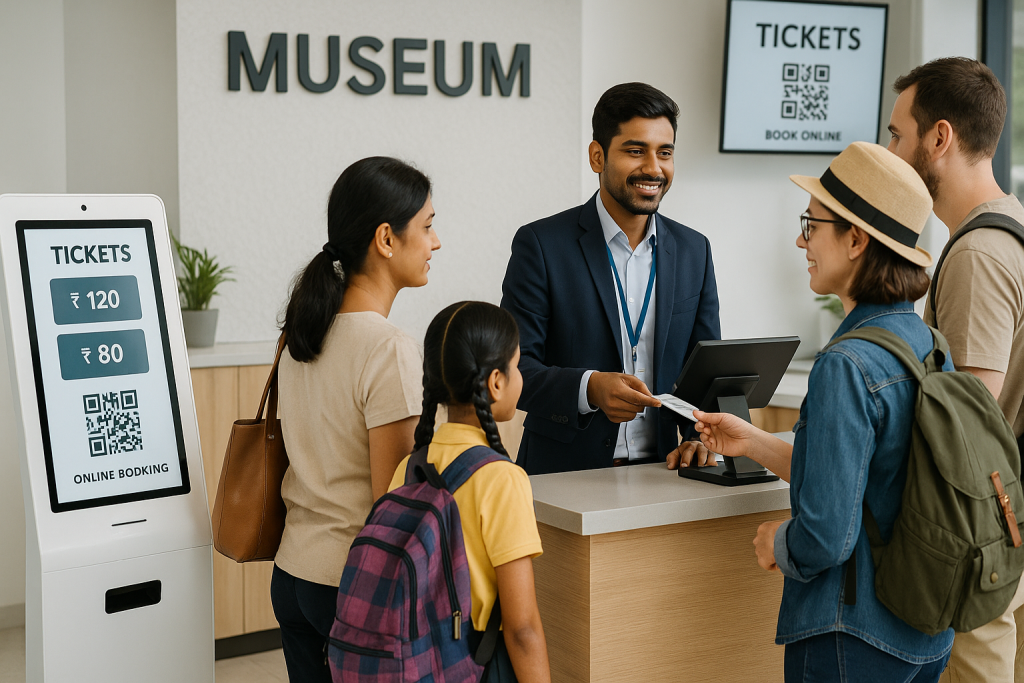
- Counter staff begin selling on the new system at all gates
- Live monitoring runs through the first 8 operating hours
- First-day report generated by close of business
What You Need Ready Before Day 1
This single checklist removes most of the delay I see in museum ticketing software rollouts.
- High-resolution logo (PNG and SVG)
- Three to four brand colour codes in hex
- Domain or subdomain access from your IT team
- One administrator nominated to own the rollout
- UPI merchant ID, payment gateway credentials, and GST registration number
- Approved ticket category list with prices, including Indian national, foreign national, student, senior, complimentary, and SAARC, where applicable
If your trust spans multiple sites, the same checklist applies to each, with a single dashboard tying them together. This is where multi-location museum ticketing earns its place.
Where 7-Day Launches Quietly Fail
I have seen the 7-day timeline overrun for predictable reasons. None of them is about software.
- Skipping the Day 6 pilot. Teams that jump from Day 5 to Day 7 invariably discover a wrong GST rate or a missed ticket category on opening day.
- Treating staff training as optional. Counter staff need 45 to 60 minutes on the live POS. Without it, the first weekend looks chaotic, and the system gets blamed for staff hesitation.
- Underestimating ticket category complexity. Indian museums often run six to twelve active categories during festival weeks, and these take longer to configure than the colour palette.
- Choosing the wrong platform category. Generic event platforms cannot be converted into a true white-label museum portal in seven days. The timeline assumes online ticketing solutions built for cultural institutions, with UPI and tax compliance built in.
The International Council of Museums frames the museum as an institution in service of society, which is why governance and visitor data ownership carry more weight here than in concert ticketing.
How We Launch Branded Portals in 7 Days at EveryTicket
At EveryTicket, we configure a branded booking portal in 60 minutes and complete the full entry management rollout, including POS and staff training, within 30 days. The 7-day milestone is the public go-live point within that window. We have followed this sequence at MAP Bangalore and across institutions that have processed more than 150,000 tickets on our platform. UPI, Pine Labs, GST-compliant invoicing, and multi-category pricing are configured during the standard deployment, not sold as paid extensions. Our online ticketing solutions are designed around museum operations from the first screen, which is why a 7-day public launch is the default and not the exception. The constraint is rarely the software. It is whether the checklist above is ready before Day 1.
Conclusion
A white-label ticketing platform is no longer a six-month decision for a museum chain. The work compresses into a 7-day sequence: brand setup, payments, entry management, pilot transactions, and go-live. The institutions that finish on schedule arrive with assets, payment credentials, and ticket categories ready. The ones that overrun almost always skipped the pilot or chose a platform that was never designed for museum ticketing software requirements. The real question is not whether seven days is realistic, but whether your internal preparation matches the playbook above. Get your branded portal live in 7 days.
Frequently Asked Questions
What is a white-label ticketing platform for museums?
A white-label ticketing platform is a branded booking and entry system that runs under your museum’s identity, domain, and visitor data ownership.
Can a museum chain really launch a branded portal in 7 days?
Yes. With logo, payment credentials, and ticket categories ready beforehand, a white-label ticketing platform can be live for public bookings within seven days.
Does the portal handle UPI and GST-compliant invoicing on day one?
Yes. A museum-focused platform integrates UPI through Pine Labs or PayU and generates GST-compliant invoices automatically on every transaction from launch.
Is white-label ticketing only suitable for large museum chains?
No. Single-site museums also gain a branded checkout, while museum chains add unified reporting across locations on the same online ticketing solutions stack.
What happens after the 7-day go-live milestone?
Full entry management, including self-service kiosks, deeper analytics, and staff training across every gate, is completed within a 30-day deployment window.