
Managing the physical and digital infrastructure of the largest museums in the world requires a focus on operational scalability and visitor experience.
For museum directors and educators, these institutions serve as primary benchmarks for administrative efficiency and the preservation of global heritage.
Operating a high-capacity cultural site involves balancing the flow of visitors with the security of the collection.
Here are five of the top museums globally by exhibition floor space and identifies the strategies they use to manage large-scale attendance.
By evaluating the infrastructure of the largest museums in the world, leadership teams can identify practical methods to improve their own facility’s performance and educational reach.
The Scale of Global Cultural Institutions
Size in the museum sector is often measured by the total floor area available for displays. This metric determines the capacity for educational programming and the volume of global heritage objects that can be viewed at any single time. For leadership teams, managing these vast spaces requires a robust museum IT infrastructure to coordinate security, climate control, and visitor services.
| Rank | Museum Name | Location | Exhibition Area (sq. m) |
| 1 | The Louvre | Paris, France | 72,735 |
| 2 | State Hermitage Museum | St. Petersburg, Russia | 66,842 |
| 3 | National Museum of China | Beijing, China | 65,000 |
| 4 | Metropolitan Museum of Art | New York, USA | 58,820 |
| 5 | Vatican Museums | Vatican City | 43,000 |
1. The Louvre (Paris, France)
The Louvre is the largest museum in the world, featuring over 72,000 square meters of gallery space. It manages a collection of approximately 38,000 objects on public display. As one of the top museums for annual attendance, the Louvre transitioned to a mandatory timed-entry system to regulate flow. This administrative decision reduces physical queues at the entrance.
Directors can learn from the Louvre’s use of digital pre-booking. By utilizing a museum ticketing system, institutions can distribute visitor loads across operating hours. This method prevents overcrowding in popular galleries, such as those housing the Mona Lisa.
2. State Hermitage Museum (St. Petersburg, Russia)
The State Hermitage Museum ranks second among the largest museums in the world. It consists of a six-building complex, including the Winter Palace. It holds the largest collection of paintings globally, representing a significant portion of global heritage. Managing a multi-building site presents specific logistical challenges regarding ticket validation and staff allocation.
For educators and directors managing multi-site facilities, the Hermitage model shows the necessity of centralized data. Integrating disparate entry points into a single reporting tool allows for real-time adjustments to staffing. Digital integration makes it easier to manage museum ticketing software across multiple historic structures without compromising the visitor experience.
3. National Museum of China (Beijing, China)
Located on Tiananmen Square, this institution is one of the largest museums in the world by building footprint. The facility focuses on Chinese history and art, serving as a primary site for preserving national and global heritage. According to UNESCO data, the museum’s role in cultural education is central to regional tourism.
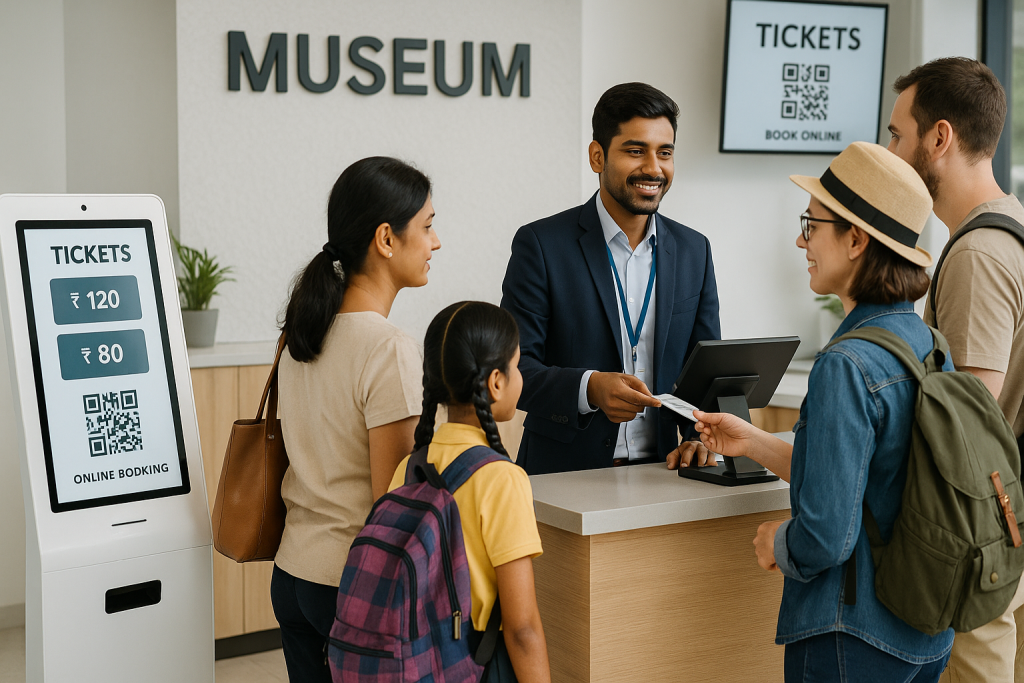
The National Museum of China utilizes high-capacity entry systems to process millions of visitors annually. For institutions aiming to scale, the focus should be on reducing friction at the gate. Implementing self-service kiosks can automate ticket issuance, allowing staff to focus on visitor education and safety rather than transaction processing.
4. Metropolitan Museum of Art (New York, USA)
The Metropolitan Museum of Art, known as “The Met,” is the largest art museum in the United States and one of the top museums for scholarly research. Its exhibition space covers nearly 59,000 square meters. The Met manages a diverse revenue model including memberships, donations, and special exhibition surcharges.
Directors should note how The Met integrates membership benefits with daily operations. A flexible ticketing platform allows for the seamless application of member discounts and early access privileges. Systems that support these complex tiers help museums maintain financial sustainability. Detailed online ticketing platforms for museums provide the backend support needed to handle these various visitor categories efficiently.
5. Vatican Museums (Vatican City)
The Vatican Museums comprise 54 galleries and roughly 7 kilometers of visitor routes. It is one of the largest museums in the world and holds some of the most famous works of the Renaissance. The primary challenge for the Vatican is managing the high density of visitors in narrow corridors leading to the Sistine Chapel.
To manage such constraints, the Vatican employs strict pathing and timed entry. The American Alliance of Museums highlights that data-driven visitor management is essential for preserving historic interiors. When museums use analytics to track peak times, they can implement dynamic pricing or adjusted entry windows to protect the global heritage they house.
Key Takeaways for Museum Directors
Analysis of these top museums reveals consistent operational patterns. Large institutions prioritize digital transformation to maintain order and security. Even for smaller museums, the following actions improve operational health:
- Implement Timed Entry: This reduces physical wait times and allows for better staff planning.
- Centralize Data: Use a single dashboard to monitor ticket sales across web, mobile, and on-site channels.
- Automate Check-in: QR code scanning and contactless entry accelerate the transition from the lobby to the galleries.
- Support Educators: Provide easy booking tools for school groups and large tours to ensure educational goals are met without disrupting general visitors.
Technological Support for Large-Scale Operations
Operating as one of the top museums requires a shift from manual processes to automated systems. The largest museums in the world use technology to bridge the gap between their vast physical size and the need for individual visitor attention. According to recent market reports, the global museum market is increasingly driven by investments in digital infrastructure.
By adopting a professional ticketing solution, directors can gain insights into visitor demographics and behavior. This data informs exhibition planning and marketing strategies. Whether managing the largest museums in the world or a local heritage site, the goal remains the same: the efficient preservation and presentation of our global heritage.
The transition to digital tools is a practical necessity for modern cultural institutions. These systems provide the scalability required to handle growth in visitor numbers while maintaining high standards of service. As institutions look to the future, the integration of smart ticketing and analytics will define the next generation of world-leading museums.