Efficient management of cultural institutions requires a reliable museum booking system to handle visitor flow and revenue. In 2026, museum admins face the challenge of coordinating multiple entry points, from online portals to on-site kiosks.
Modern institutions require a flexible museum booking system that integrates these channels into a single dashboard. This approach eliminates manual reconciliation and reduces the administrative burden on staff.
Why There Is a Need for a Unified Museum Booking System
Traditional paper-based or fragmented digital tools often lead to overbooking and long queues. A unified museum booking system provides real-time visibility into visitor numbers across all platforms. This ensures that the inventory remains consistent whether a ticket is purchased via a mobile device or a physical counter. Organizations that adopt a professional museum booking system report higher operational efficiency and improved financial tracking.
For a detailed look at essential tools, see the EveryTicket blog on museum operations software.
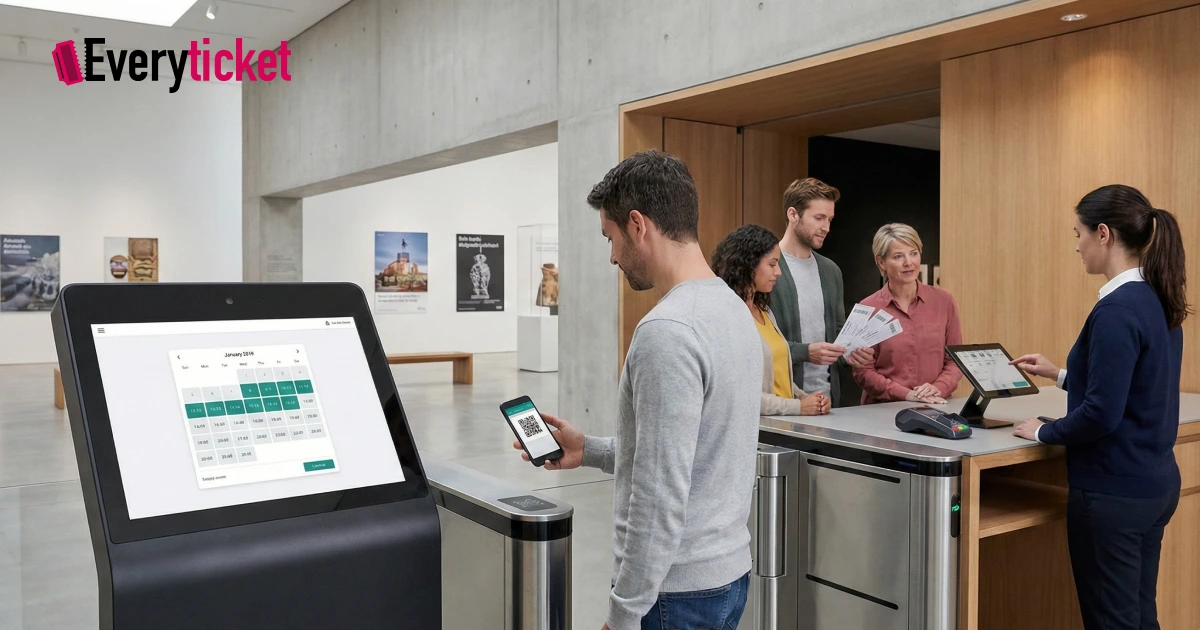
To Manage Visitor Flow with Timed Entry
Crowd management is a primary concern for museum administrators. Implementing timed entry allows an institution to distribute visitor arrivals throughout the day. This prevents overcrowding in specific galleries and ensures a safer environment for both artifacts and guests. A timed entry strategy works by assigning specific windows for admission, such as 10:00 AM to 10:30 AM.
According to the American Alliance of Museums (AAM), strategic foresight in visitor management helps institutions anticipate change and craft effective operational plans. When a museum booking system supports timed entry, the software automatically enforces capacity limits. This automation removes the need for security personnel to manually count every person entering the building.
Advanced systems allow admins to adjust these slots based on the popularity of specific exhibitions. For example, a high-demand art gallery may require shorter timed entry intervals than a general history wing.
You can learn more about these specific requirements in our guide on museum ticketing platform features.
To Coordinate Group Bookings and School Visits
Large groups require distinct administrative processes compared to individual visitors. Managing group bookings involves coordinating variable sizes, specific pricing tiers, and guide availability. A flexible system allows group leaders to reserve slots and manage payments through a dedicated portal. Efficiently handling group bookings is critical for maintaining revenue and ensuring that school tours do not conflict with public viewing times.
The table below outlines the differences in managing individual versus large-scale admissions:
| Feature | Individual Admissions | Group Bookings |
| Booking Source | Direct Online / POS | Portal / B2B Partner |
| Pricing | Standard / Concession | Bulk Discount / Institutional |
| Scheduling | Timed Entry Slots | Fixed Tour Windows |
| Payment | Instant Checkout | Invoicing / Deposit |
| Validation | Single QR Scan | Batch Verification |
Automation simplifies the financial aspect of these visits. Staff can track deposits, settle outstanding balances, and send automated confirmation emails to coordinators. Institutions often find that streamlining group bookings reduces phone inquiries and manual paperwork.
For insights into how automation saves costs, refer to this article on museum ticketing ROI.
Achieve Operational Efficiency Through Integrated POS and Kiosks
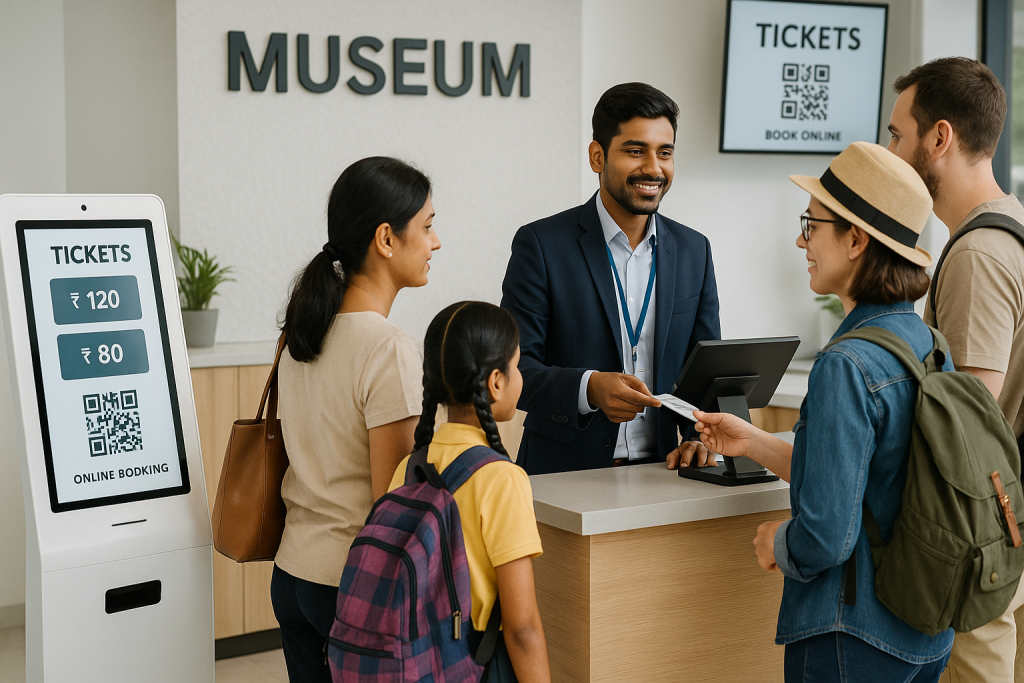
A modern museum booking system must work across multiple hardware environments. While online sales are increasing, on-site counters remain necessary for walk-in visitors.
Integrating a Point-of-Sale (POS) system ensures that on-site sales immediately update the digital inventory. This prevents the sale of tickets for slots that are already full.
Self-service kiosks provide an additional layer of efficiency. These units allow visitors to purchase tickets without staff assistance, which is especially useful during peak hours.
Each ticket issued, whether online or on-site, should include a unique QR code for instant validation at the gate. This process accelerates entry and improves the overall visitor experience.
- Online Sales: Increases reach and allows for 24/7 ticket availability.
- Smart Counters: Handles cash, card, and UPI payments with automated printing.
- Self-Service Kiosks: Reduces wait times and minimizes staffing requirements.
- Real-time Analytics: Provides data on peak hours and visitor demographics.
Digital transformation is a key focus for the International Council of Museums (ICOM), which emphasizes the role of technology in preserving cultural heritage and connecting with communities. EveryTicket supports these goals by providing tools that align with international standards.
To see how these systems integrate with broader technology stacks, read about advanced API integrations for museums.
Technical Infrastructure and API Integration
A robust system is not just a storefront; it is a foundation for data-driven decisions. An API-first architecture allows a museum to sync its booking data with other software, such as Customer Relationship Management (CRM) tools or accounting platforms. This connectivity ensures that data flows between departments without manual entry.
For example, when a member books a ticket via the timed entry module, the CRM can instantly verify their status and apply the correct discount. This level of automation improves the accuracy of visitor logs and revenue reports.
Museums in India also require systems that handle specific tax requirements and support popular payment gateways like Razorpay for UPI transactions.
For a comparison of how EveryTicket fits into the current landscape, view the best ticketing software for 2026.
EveryTicket Provides the Best Museum Booking System
Implementing a comprehensive museum booking system addresses the core pain points of administration and visitor satisfaction. By automating group bookings and enforcing timed entry limits, museum admins can focus on curation rather than logistics.
EveryTicket provides a modular platform designed specifically for the workflows of cultural institutions, offering features such as QR-based admissions, real-time analytics, and India-ready payment integrations.
EveryTicket offers a scalable solution that adapts to the size of your institution. Whether you manage a single gallery or a multi-site complex, the platform provides the flexibility needed for modern operations.
You can explore the full range of museum ticketing solutions to see how these tools apply to your specific needs.
Conclusion
Modern museums require digital tools that handle high volumes of data with precision. A reliable museum booking system combined with automated timed entry and streamlined group bookings creates a sustainable operational model. These technologies reduce the risk of revenue leakage and ensure a professional experience for every visitor. By centralizing management into a single platform, museum administrators gain the control and insights necessary to lead their institutions into the future.