The Indian heritage management is moving away from paper-based systems. As the Ministry of Culture pushes for the digitization of over 3.8 million artifacts, the focus has shifted toward the visitor experience. Modern museum ticketing software is now the primary tool for directors looking to professionalize operations and handle high footfall without the bottlenecks of the past.
India’s Push for Smarter Cultural Tourism
Government initiatives like the Indian Culture Portal have set a high benchmark for digital accessibility. To match this, physical sites must adopt a museum entry management system that syncs with national digital standards. Reliance on manual ticket counters often leads to long queues at major sites in Delhi, Mumbai, and Jaipur. By implementing museum ticketing software, institutions can distribute tickets through multiple digital channels, reducing the physical pressure on entry points.
The Archaeological Survey of India (ASI) has recently streamlined access to monuments by integrating with the Open Network for Digital Commerce (ONDC). This move confirms that digital ticketing for museum sites is no longer optional but a standard requirement for national heritage management.
How to Solve the Crisis of Manual Queues at Museums in India
Manual ticketing creates data gaps. When a visitor buys a paper ticket, the museum loses the opportunity to understand visitor demographics or peak hour trends. A robust museum entry management system captures this data in real-time. For directors, this means moving from “estimated” visitor counts to precise, auditable reports.
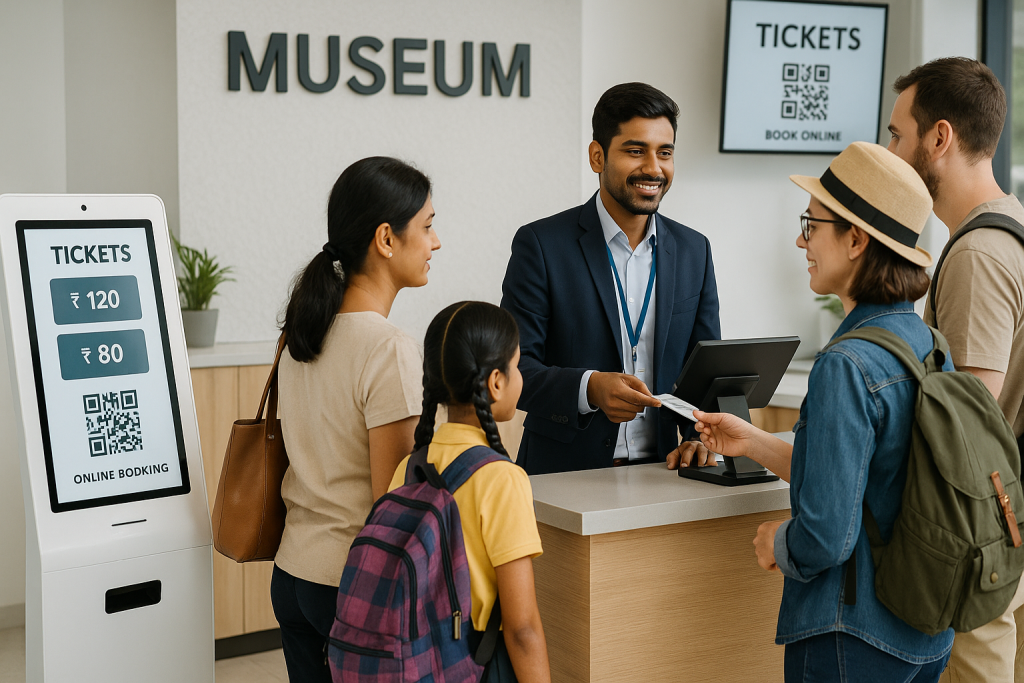
Automated systems allow visitors to book slots from their smartphones. This eliminates the need for physical cash handling at the gate, which is often a source of revenue leakage. EveryTicket provides specialized museum booking systems that integrate UPI and BharatQR, ensuring that the payment process is familiar and fast for the Indian public.
| Feature | Manual Ticketing | Museum Ticketing Software |
| Wait Times | 15–45 Minutes | Under 2 Minutes |
| Data Accuracy | Subject to human error | 100% Real-time sync |
| Payment Options | Cash dominant | UPI, Credit/Debit, Net Banking |
| Staffing | High (Multiple counters) | Low (Self-service kiosks) |
Infrastructure for High-Volume Visitor Traffic
Indian museums often face sudden surges in visitors during school holidays or festivals. A standard museum entry management system must be able to scale its server capacity to handle these spikes. Without museum ticketing software, these surges result in crowded lobbies and safety concerns.
Digital systems allow for “Timed Entry.” By limiting the number of tickets available for specific hourly slots, museums can prevent overcrowding in sensitive galleries. This preserves both the artifacts and the visitor’s comfort. For those looking to modernize their entire operational flow, exploring a complete museum operations software guide provides a roadmap for integrating ticketing with security and staff management.
Enhance Revenue with Digital Ticketing for Museum Shops
A museum entry management system does more than just open a gate. It acts as a point-of-sale (POS) for museum cafes and souvenir shops. When a visitor uses digital ticketing for entry, their digital profile can be used to offer discounts at the gift shop or send invitations for upcoming exhibitions.
Modern platforms like EveryTicket focus on becoming a visitor-centered museum by using data to improve services. If the software shows that 70% of visitors are families, the museum can adjust its programming or cafeteria menu accordingly. This level of insight is impossible with traditional paper stubs.
Technical Resilience in Low-Connectivity Zones
One challenge in India is inconsistent internet connectivity at historical sites. An effective museum ticketing solution must include an “offline mode.” This allows staff to continue scanning QR codes and issuing tickets even if the local network fails. The data then syncs to the central cloud once the connection is restored.
Security is another priority. Digital tickets utilize encrypted QR codes that prevent unauthorized duplication. This ensures that every person inside the facility has a valid, paid admission. Directors can learn more about these technical safeguards by reviewing features to look for in a museum ticketing platform, which highlights the importance of hardware-software compatibility.
Integrate With the National Digital Ecosystem
The Indian government’s JATAN software has already set the standard for digitizing collections. To complement this, a museum entry management system should be able to link visitor data with exhibit engagement. If a visitor spends a significant amount of time in a specific gallery, the museum ticketing software can trigger a digital feedback form or a link to the JATAN archive for that specific collection.
By using digital ticketing for museum programs, institutions can also manage memberships and annual passes. This creates a recurring revenue stream and builds a loyal community of patrons. Museums can further enhance this experience by implementing advanced API integrations to connect their ticketing data with external marketing and CRM tools.
The Future of Visitor Automation in India
The transition to museum ticketing software is a logistical necessity for the modern Indian curator. It replaces the friction of physical queues with a streamlined, digital-first approach. This shift allows museum staff to focus on curation and education rather than ticket printing and cash reconciliation.
As more institutions adopt digital ticketing for museum entry, the data collected will help shape the future of Indian cultural tourism. Directors who implement a comprehensive museum entry management system now will be better positioned to manage the growing influx of domestic and international tourists.
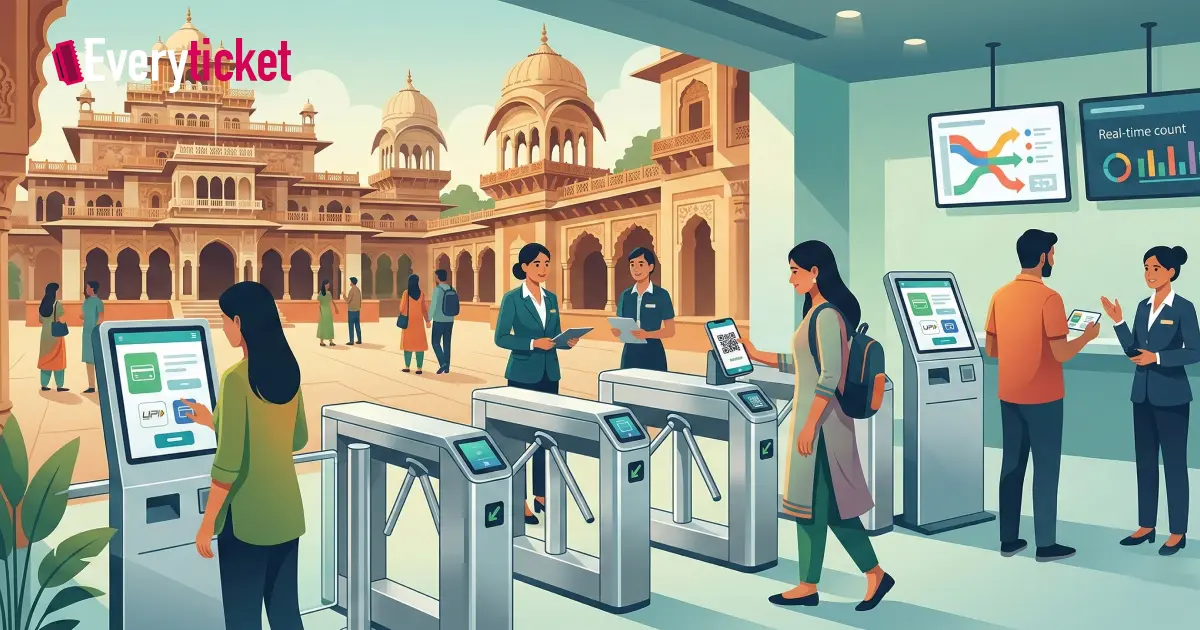
EveryTicket offers a suite of tools designed specifically for the unique requirements of Indian cultural institutions. From handling UPI payments to managing high-volume entry via QR-enabled turnstiles, our platform ensures that your museum operates at peak efficiency.
You can view the full range of EveryTicket’s museum solutions to see how these tools fit into your current facility.
The Bottom Line
Modernizing a museum requires a balance between heritage and technology. Implementing museum ticketing software is the most direct way to improve visitor satisfaction and operational transparency. By adopting digital ticketing for museum sites, institutions can eliminate manual queues and gain the data needed to thrive in a digital-first economy. A well-chosen museum entry management system is the foundation of a professional, efficient, and visitor-friendly institution.
Fill this form to get a call back from our team and discuss how quickly you can digitize your museum.
FAQs
How does museum ticketing software reduce visitor wait times?
The software enables visitors to book time-slots online, distributing footfall evenly. This prevents crowd surges, eliminates manual queues, and allows staff to scan QR codes for instant, contactless entry.
Can a museum entry management system handle offline ticket sales?
Yes. Advanced systems include offline-first POS capabilities. This ensures that ticketing staff can continue processing cash and local sales during internet outages, with data syncing once connectivity is restored.
Is digital ticketing for museum sites compatible with UPI payments?
Modern platforms integrate natively with UPI, BharatQR, and popular Indian gateways. This provides a familiar payment experience for domestic tourists while ensuring all transactions are recorded for automated reconciliation.
What data does a museum entry management system collect for directors?
It tracks real-time visitor volume, peak entry hours, and demographic trends. Directors use these insights to optimize staffing, manage gallery capacities, and evaluate the success of specific cultural exhibitions.
Does implementing museum ticketing software require expensive hardware?
No. Most cloud-based museum ticketing software runs on existing desktops, tablets, or smartphones. Institutions can also integrate self-service kiosks and handheld scanners to further automate the museum entry management system.