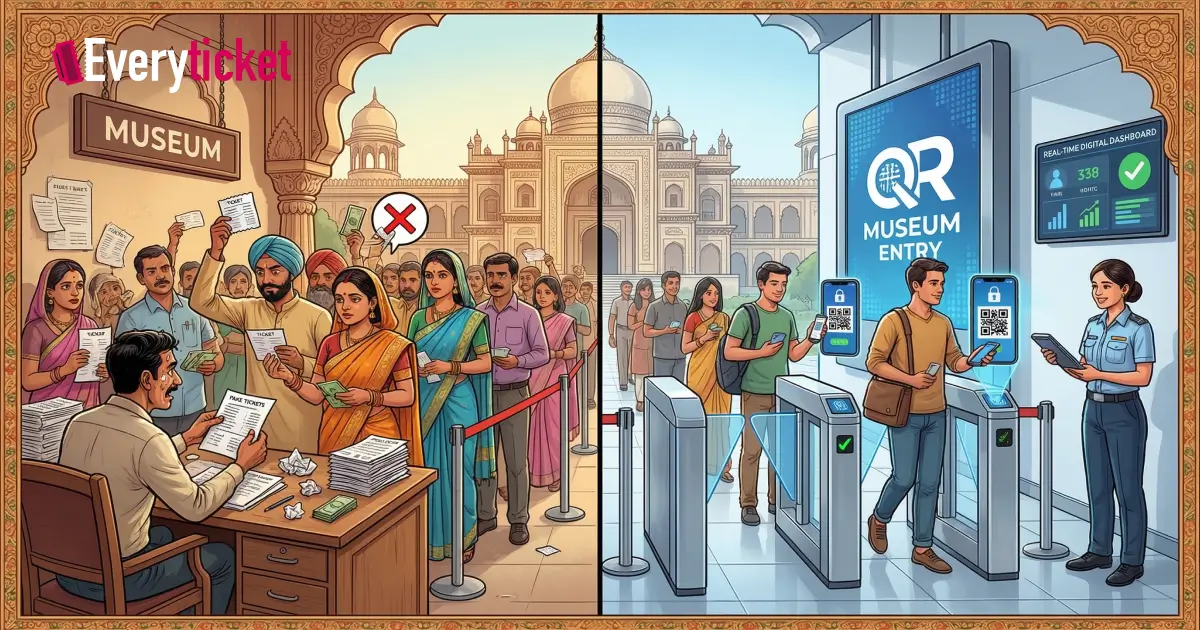
Indian museums face a persistent problem with counterfeit paper tickets. Fake tickets lead to inaccurate visitor counts and severe financial losses. An online ticketing system eliminates this issue by generating unique digital identifiers for every visitor. Administrators use this technology to track real-time entry and secure museum revenue. Let’s understand how digital systems secure museum access and stop revenue leakage.
Do Indian Museums Really Need an Online Ticketing System to Prevent Fraud?
Manual ticketing creates easy opportunities for ticket duplication and unauthorized access. Staff members struggle to accurately verify paper stubs during peak festival hours or school holidays. An online ticketing system provides a strict, automated control mechanism to stop fraud at the gate.
- Barcode Duplication: Scammers easily photocopy standard paper tickets and sell them to unsuspecting tourists.
- Cash Leakage: Physical cash handling at the ticket counter increases the risk of accounting errors and employee theft.
- Verification Speed: Manual visual checks slow down entry queues and reduce security accuracy at the main gate.
- Lack of Tracking: Paper tickets provide zero data on how many people are inside the building at any given time.
Implementing museum ticketing software solves these operational flaws immediately. Administrators issue time-stamped digital passes that expire immediately after the first scan. Read more about the benefits of a ticketing system for museums to understand the full operational impact on daily management.
How Does QR Museum Entry Secure Visitor Access?
A QR museum entry process relies on encrypted digital data. The software generates a completely new, unique QR code for each transaction.
The Security Mechanism
- Encryption: The QR code contains a unique cryptographic signature assigned to a specific payment.
- Single-Use Validation: Handheld scanners register the code upon entry and invalidate it instantly in the central database.
- Offline Scanning: Many remote heritage sites lack stable internet. Modern software syncs validation data locally to handheld devices.
- Time Constraints: Administrators set QR codes to work only during specific time slots.
The Government of India uses similar cryptographic standards for strict identity verification. For example, UIDAI utilizes digitally signed QR codes to ensure data remains secure, tamper-proof, and valid for offline verification. Museums apply this exact mathematical mechanism to prevent ticket fraud.
What Essential Features Should Museum Ticketing Software Include?
Effective museum ticketing software must handle high website traffic and integrate directly with existing access gates or turnstiles.
Core Platform Features
- Dynamic QR Generation: The software creates codes that refresh periodically to prevent screenshots.
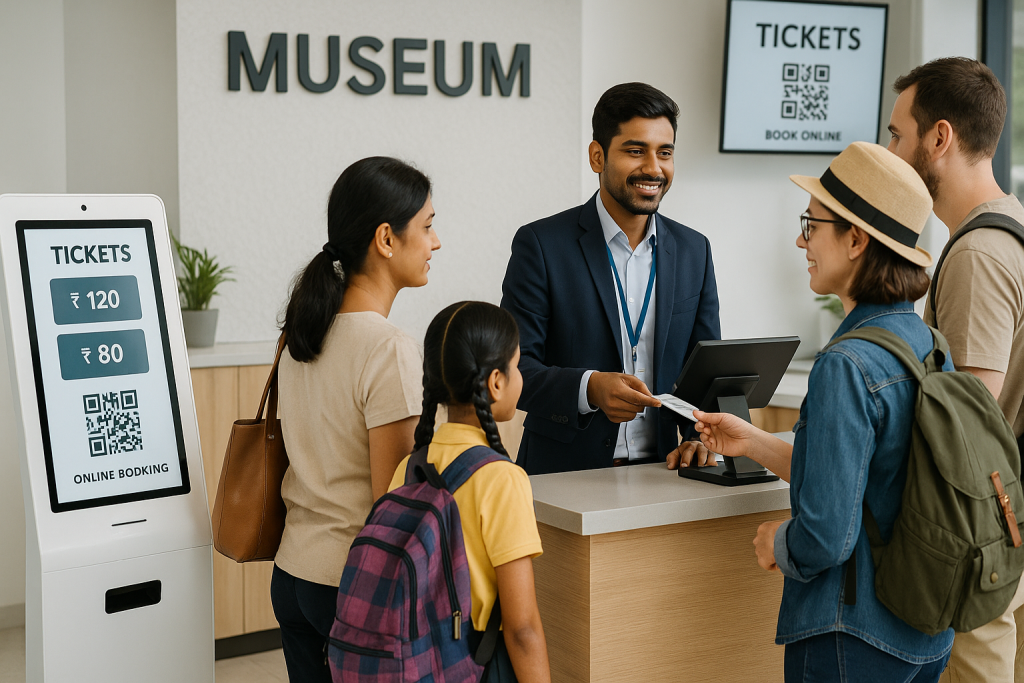
- Multi-Channel Sales: Visitors buy tickets through official websites, mobile apps, or automated on-site kiosks.
- API Integration: The platform connects directly with physical turnstiles to automate the opening mechanism.
- Instant Delivery: The system emails or texts the ticket to the buyer’s smartphone immediately after payment.
Managers often ask how to manage entry and ticketing online for a small museum. Scalable software allows small venues to activate these enterprise-level features without purchasing expensive on-premise servers.
How Do Online Ticket Services Compare to Manual Methods?
Museum operators see clear, measurable differences when they switch to online ticket services.
| Feature | Manual Ticketing | Online Ticket Services |
| Ticket Security | Low (Easy to copy) | High (Encrypted QR museum entry) |
| Data Collection | None | Captures visitor demographics and booking times |
| Queue Management | Slow and manual | Fast (Automated scanning at gates) |
| Fraud Prevention | Requires human inspection | System rejects duplicates automatically |
| Revenue Tracking | End-of-day physical counting | Real-time digital dashboard updates |
These services automate the entire verification process. Staff members focus strictly on crowd control and visitor assistance rather than inspecting paper stubs. You can review how these tools transform event management with an online ticketing platform by automating physical access control.
Can Small Heritage Sites Use an Online Ticketing System?
Small cultural sites often operate with highly limited budgets and minimal technical staff. An online ticketing system operates on remote cloud servers, removing the need for local IT maintenance and hardware.
- Low Initial Cost: Cloud platforms charge a small fee per transaction rather than requiring large upfront software licenses.
- Minimal Hardware: Staff scan a QR museum entry pass using their own standard smartphones or basic handheld Android scanners.
- Quick Deployment: Administrators set up the platform and start selling tickets in a few days.
India’s Smart Cities Mission encourages digital adoption across cultural venues of all sizes. Projects like the Major Dhyanchand Museum developed by Jhansi Smart City demonstrate how integrating digital ticketing, displays, and smart operational technologies modernizes visitor experiences.
How Will Museum Ticketing Software Change Future Operations?
Museum ticketing software provides operators with exact, real-time footfall data. This data determines daily staffing requirements, security deployment, and government funding allocations. The widespread use of QR museum entry gives administrators precise control over building access.
Operational Upgrades
- Capacity Management: Administrators set strict hourly ticket limits to prevent dangerous overcrowding in confined galleries.
- Predictive Analytics: The software identifies peak visiting hours based on historical scanning data.
- Auditing: Digital logs provide transparent, unalterable financial records for government or private financial audits.
Operators use online ticket services to manage diverse pricing tiers, such as student discounts or foreign tourist passes. Finding the right vendor is a critical business decision. Research the best event ticketing software with the lowest fees in 2026 to compare market options.
How Do You Implement Online Ticket Services Quickly?
Museum directors need software that complies with Indian tax regulations and supports regional languages. Setting up museum ticketing software requires minimal technical training. Choosing the right platform ensures a highly smooth transition from paper to digital systems.
- Vendor Selection: Look for platforms that support automatic GST billing and direct UPI payments.
- White-Label Options: Use systems that display your museum’s specific branding on the checkout page. Some white-label ticketing vendors in India offer the lowest setup fees, reducing capital expenditure.
- Platform Integration: EveryTicket provides customized, secure portals specifically for cultural venues. We offer immediate QR generation, offline scanning modes, and dedicated hardware support tailored for Indian heritage sites.
An online ticketing system fundamentally changes how museums handle visitors. The permanent shift to a QR museum entry process completely stops fake tickets. Museums protect their primary revenue streams and eliminate gate bottlenecks. Administrators rely on museum ticketing software to automate repetitive daily tasks and secure their site operations. Using online ticket services ensures that every scanned ticket represents a legitimate, paid visitor.