The Indian cultural sector is currently managing a significant human resource gap. Data from the Ministry of Culture indicates that nearly 42% of sanctioned positions across major national museums and the Archaeological Survey of India remain vacant as of early 2026.
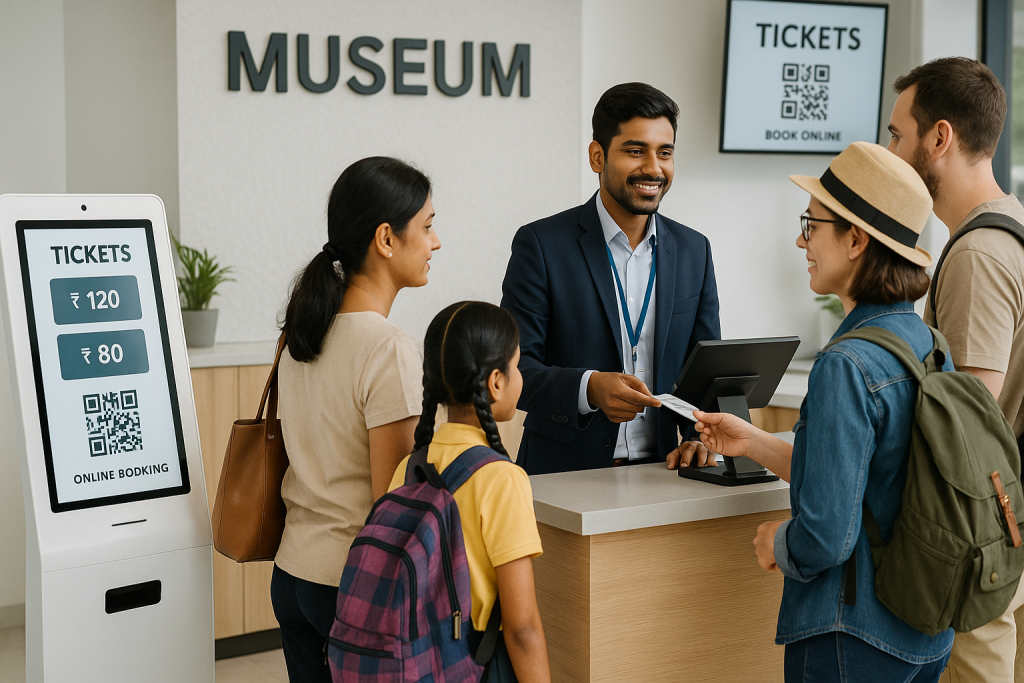
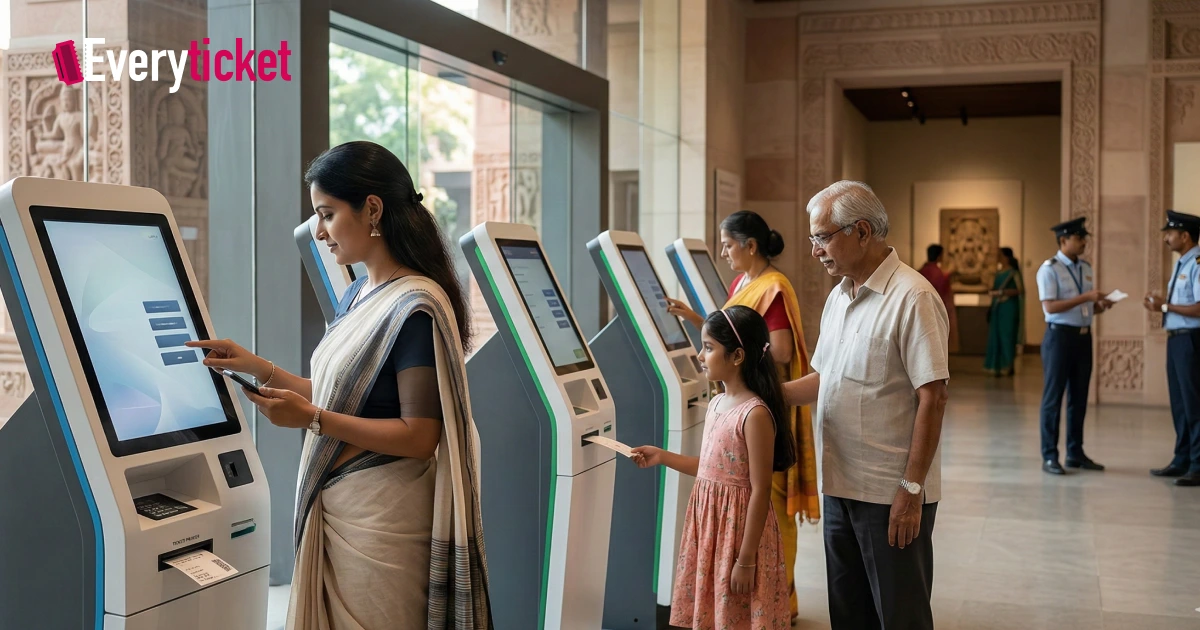
This shortage directly impacts visitor experience at entry points. High dependency on manual staff at ticket counters results in slow processing and high operational overhead. To address this, many institutions are turning to self-service kiosks for museums to automate onsite ticketing.
Automating the ticketing process allows limited staff members to move from behind glass counters to the museum floor. Instead of performing repetitive data entry and cash handling, employees can focus on actual visitor engagement and guided tours. This shift transforms the museum’s operational model from a labor-heavy administrative setup to a visitor-centric educational environment.
Why Is Onsite Automation Essential for High-Traffic Venues?
Manual ticketing systems create bottlenecks during peak hours, school trips, and tourist seasons. A digital transition through self-service kiosks for museums removes the reliance on a single point of human failure.
- Queue Management: Kiosks process transactions faster than manual counters by allowing visitors to select their own ticket types.
- Reduced Overheads: Digital systems reduce staffing costs by eliminating the need for multiple open windows during low-occupancy hours.
- Operational Resilience: Unlike manual counters that require shift rotations and breaks, museum IT infrastructure ensures 24/7 availability for onsite bookings.
- Data Accuracy: Automated systems eliminate human errors in fare calculation or category selection (e.g., Student vs. Foreigner).
Can Automated Ticket Printing Enhance the Visitor Journey?
The primary friction point for any museum visitor is the wait time at the entrance. Implementing automated ticket printing through standalone kiosks provides an immediate solution.
Efficiency Benefits
- Instant Fulfillment: Visitors enter their phone number, pay via UPI, and receive a physical ticket with a QR code in seconds.
- Payment Versatility: Modern kiosks support UPI, credit cards, and debit cards, catering to the digital-first Indian demographic.
- Multi-Language Support: Kiosks offer interfaces in Hindi, English, and regional languages, which is often difficult to maintain with a limited staff pool.
- Hybrid Integration: These units work alongside staff counters in a hybrid ticketing model to manage both digital-savvy and traditional visitors.
How Does Contactless Entry Improve Security and Flow?
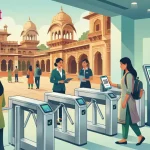
Staffing shortages often mean fewer guards at entry points to manually tear or check paper tickets. Contactless entry systems, integrated with self-service kiosks for museums, automate the validation process.
Security and Speed
- QR Validation: Scanners at turnstiles or handheld devices verify tickets instantly.
- Access Control: The system prevents ticket reuse, ensuring accurate headcounts for fire safety and occupancy limits.
- Revenue Protection: Digital validation ensures that every visitor has paid the correct fare, removing the possibility of manual “under-the-table” entries.
- Scalability: Smaller institutions can implement these tools as a perfect ticketing solution for small museums to maintain professional standards with minimal headcount.
What Role Does Museum POS Hardware Play in Revenue Growth?
Ticketing is only one part of the museum economy. Modern museum POS hardware allows institutions to unify their revenue streams into a single dashboard.
| Feature | Impact on Operations | Impact on Staffing |
| Unified POS | Manages tickets, gift shops, and cafes. | Reduces the need for separate accounting staff. |
| Real-time Reporting | Provides instant data on visitor demographics. | Eliminates manual end-of-day reconciliation. |
| Inventory Integration | Tracks stock levels for merchandise. | Automates reordering alerts for procurement teams. |
| Member Management | Handles renewals and special access. | Frees up administrative staff for marketing tasks. |
Reliable museum ticketing systems with POS ensure that every transaction is logged, providing the transparency required for government audits and private trust reporting.
Are Kiosks More Effective Than Traditional Ticket Counters?
The dependency on manual staff is a risk factor for museum directors. If a staff member is absent, the entire entry flow stops. Self-service kiosks for museums act as a permanent, reliable extension of the museum’s workforce.
- Consistency: Kiosks provide the same level of service at 9 AM as they do at 5 PM.
- Reduced Training Time: New staff do not need to learn complex ticketing software; they only need to monitor the kiosks and assist visitors with the must-have features in a ticketing platform.
- Space Optimization: A single kiosk takes up 70% less floor space than a traditional ticket booth.
- Cost Control: By using automation to reduce staffing costs, museums can divert funds toward conservation and artifact acquisition.
How Does Digital Infrastructure Prepare Museums for 2026?
As Indian tourism continues to grow, the pressure on cultural sites increases. The Press Information Bureau (PIB) notes that the modernization of Indian museums through digital collections and smart entry is a national priority.
Future-Proofing Actions
- API Integration: Link onsite kiosks with online booking platforms for a single inventory view.
- Analytics: Use data from automated ticket printing to identify peak hours and adjust staffing for security and guiding accordingly.
- Member Loyalty: Allow members to bypass lines by scanning their digital ID directly at the kiosk.
- Scalable Entry: Deploy more kiosks during special exhibitions without hiring temporary staff.
Museums must recognize why an online ticketing solution is necessary even for on-site visitors. A visitor who walks in and sees a long line may leave; a visitor who see a row of functional kiosks stays.
Is Your Museum Ready for a Digital Entry Transformation?
The transition to self-service kiosks for museums solves the immediate problem of staffing shortages while providing a foundation for better data collection and visitor service. Utilizing automated ticket printing and contactless entry ensures that your institution remains accessible and efficient regardless of workforce fluctuations.
Choosing the right museum POS hardware is the final step in creating a sustainable, modern cultural destination that can reduce staffing costs without compromising on the quality of the visitor experience.
EveryTicket provides the specialized hardware and software required to automate the on-site journey, allowing your team to focus on the history and culture that truly matters.
Connect with us for any inquiry by filling out this form.