
TL;DR
- Museum software for ticketing is an integrated digital system that manages visitor entry tickets, point-of-sale transactions, and memberships in one platform.
- It replaces manual ticketing, disconnected POS systems, and spreadsheet-based member records.
- Core outcomes include reduced entry queues, accurate revenue tracking, better visitor experience, and centralized operational control.
- This software is used by museums of all sizes to manage online ticketing, walk-in sales, memberships, and donations consistently.
Definition of Museum Software for Ticketing POS and Memberships
Museum software for ticketing is a specialized digital platform designed to manage museum visitor entry through online and on-site ticket sales, integrated POS billing, and membership lifecycle management from a single system.
It serves as the operational backbone for museums by coordinating ticket issuance, entry validation, payments, and recurring visitor relationships.
Related Systems That Support Museum Ticketing Operations
- Online museum ticketing: Selling and reserving museum tickets through a web or mobile interface.
- Museum POS system: Software used at physical counters for ticket sales, retail items, and donations.
- Museum membership management: Tools for issuing, renewing, and validating annual or recurring visitor memberships.
- Museum entry management system: Access control and validation mechanisms such as QR codes or scanners.
- Digital ticketing for museums: Paperless ticket issuance and verification.
- Museum ticket reservation system: Advance booking and time-slot allocation for visitors.
What is Museum Software for Ticketing?
Museum software for ticketing is a unified system that enables museums to:
- Sell tickets online and at physical counters
- Validate visitor entry digitally
- Process payments through POS
- Manage memberships and donor access
Unlike generic ticketing tools, this software is built specifically for museum workflows, including variable pricing, free-entry days, group visits, and member privileges.
Why Museums Use Dedicated Ticketing Software
Museums adopt ticketing software to solve operational and visitor experience challenges.
Core Reasons
- Manual ticketing causes long entry queues and revenue leakage
- Disconnected POS systems create reporting gaps
- Membership records are difficult to maintain accurately
- Visitor data is fragmented across tools
A dedicated system centralizes these functions, reducing administrative effort and improving reliability.
How Museum Ticketing Software Works
Ticket Creation and Pricing
Museums configure ticket types such as adult, child, student, group, or special exhibitions. Pricing rules and availability are defined centrally.
Online Ticket Sales
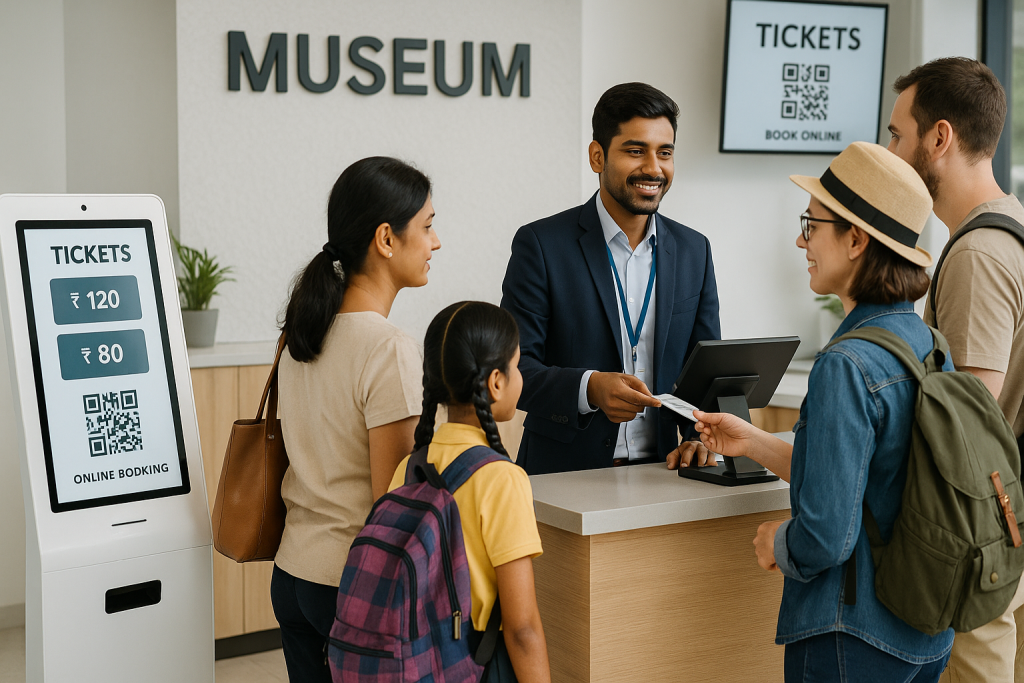
Visitors book tickets through an online interface. Tickets are issued digitally, usually with QR codes.
On-Site POS Sales
Walk-in visitors purchase tickets at counters using the POS module. Payments are recorded instantly in the system.
Entry Validation
At entry points, staff scan digital or printed tickets to validate access and prevent duplicate entry.
Membership Handling
Members are issued digital or physical identifiers. Their access privileges and visit history are tracked automatically.
Who Should Use Museum Ticketing Software
This software is designed for:
- National and state museums
- City and regional museums
- Private and trust-managed museums
- Small museums seeking simple digital ticket management
It is particularly useful for institutions managing both walk-in and online visitors.
Key Features of Museum Software for Ticketing
Online Museum Ticketing
Allows visitors to book tickets in advance, reducing congestion and manual handling.
Small Museum Ticket Management
Lightweight configurations support museums with limited staff and lower visitor volume.
Digital Ticketing for Museums
Paperless tickets reduce printing costs and simplify entry validation.
Museum Entry Management System
Controlled access ensures accurate visitor counts and security.
POS Integration
Ticketing, retail sales, and donations are recorded through a single billing system.
Membership Management
Supports issuing, renewing, and validating memberships without separate databases.
When Museums Should Implement Ticketing Software
Museums typically adopt ticketing software when:
- Visitor volume increases beyond manual handling capacity
- Multiple ticket counters create reconciliation issues
- Online bookings become necessary
- Membership programs expand
Early adoption prevents operational complexity as visitor numbers grow.
Limitations and Edge Cases
Offline Scenarios
Some systems require internet connectivity for validation. Museums should confirm offline support if connectivity is unreliable.
Complex Legacy Pricing
Highly customized legacy pricing models may require configuration effort during migration.
Staff Training
Even simple systems require basic staff training to ensure consistent use.
How Museum Software Improves Accuracy and Compliance
- Prevents duplicate ticket usage through digital validation
- Ensures accurate daily revenue reconciliation
- Maintains auditable records of ticket sales and memberships
- Supports reporting for internal audits and governance requirements
Difference Between Generic Ticketing Tools and Museum Software
| Aspect | Generic Ticketing | Museum Ticketing Software |
|---|---|---|
| Visitor flow | Event-based | Continuous daily entry |
| Memberships | Limited or absent | Built-in lifecycle management |
| POS integration | Often external | Native |
| Reporting | Sales-focused | Visitor and operational focused |
How Museums Manage Tickets Online Using One System
Museums manage tickets online by combining:
- Ticket reservation system for advance bookings
- Digital ticket issuance for entry
- POS-based on-site sales
- Central reporting dashboard
This eliminates the need for separate tools for each function.
Wrap-up!
Museum software for ticketing provides a centralized system to manage visitor entry, point-of-sale transactions, and memberships through one platform. By combining online ticket reservations, on-site POS sales, digital entry validation, and membership records, museums can reduce queues, improve revenue accuracy, and maintain consistent operational data.
This type of software is used by museums to replace manual processes and disconnected tools. It supports both walk-in and online visitors, enables controlled entry management, and creates a reliable record of ticket sales and member access. For small and large museums alike, dedicated museum ticketing software functions as the core operational system for daily visitor management.
Our solution EveryTicket is designed specifically for museums and cultural institutions, combining ticketing, POS, and membership management into a single operational system.
Fill the inquiry form to book a free demo with our museum experts.