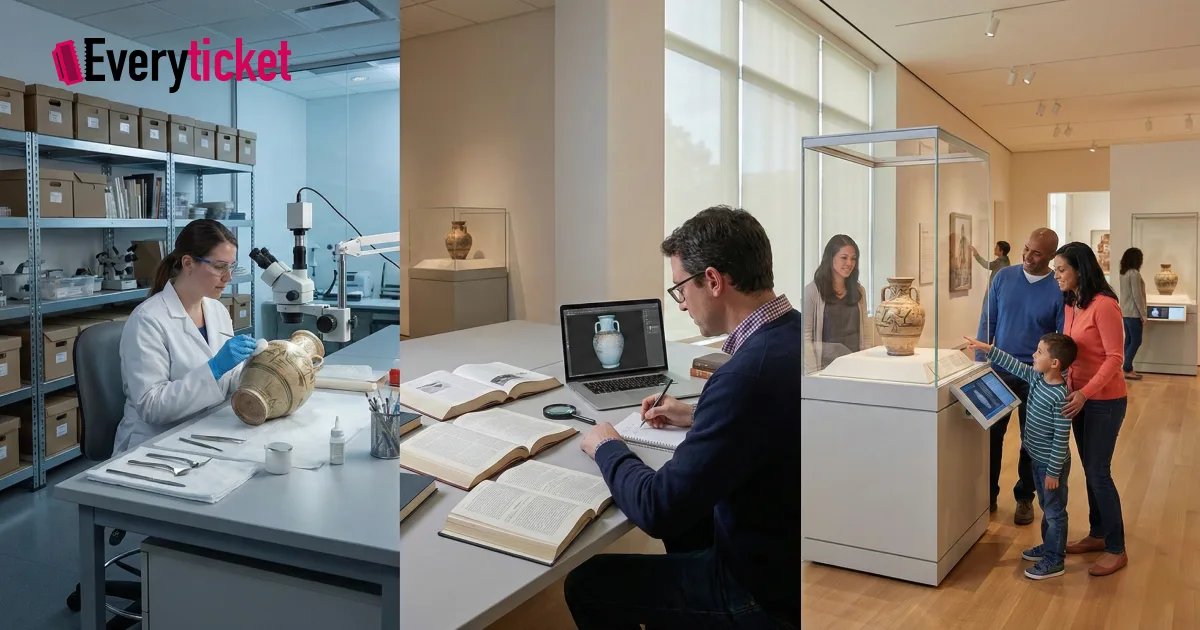
Museums serve as permanent institutions for the benefit of society. They do not merely house old objects; they perform specific operational roles to protect and share human history. For students and new museum staff, understanding the core purpose of these institutions is essential for effective management. To simplify museum fundamentals, we can categorize their work into three basic functions of a museum: preservation, research, and education.
1. Preservation and the Protection of Heritage
The first function of any museum is the preservation of heritage. This involves the acquisition, conservation, and storage of artifacts. Museums collect items that have historical, scientific, or artistic value. Once an object enters a collection, the museum takes on a legal and ethical responsibility to ensure its long-term survival.
Heritage preservation requires controlled environments. Staff must monitor light levels, humidity, and temperature to prevent the natural decay of organic and inorganic materials. Digital tools now assist in this process. For example, many institutions use museum management software to track the condition and location of items in their inventory.
In addition to physical care, preservation includes documentation. Each item receives a unique identification number and a detailed record of its origin. This documentation ensures that the heritage of the object is verifiable. Effective preservation is one of the main reasons for museum importance, as it prevents the permanent loss of cultural data. Without these efforts, the physical evidence of our shared heritage would disappear over time.
| Preservation Task | Description |
| Acquisition | Legally obtaining objects through gifts, purchases, or field research. |
| Conservation | Scientific treatment to stabilize or repair damaged artifacts. |
| Documentation | Creating detailed digital and physical records for every item. |
2. Research and the Foundation of Learning
The second function is research. A museum is a site for scientific and scholarly inquiry. Research involves studying the objects in the collection to discover new information about the past, nature, or technology. This activity transforms a collection of “things” into a source of knowledge.
Museum staff and visiting scholars analyze artifacts to understand their context. This includes carbon dating, chemical analysis, or historical cross-referencing. The goal is to provide a basis for learning. When a museum researches its collection, it adds value to the items by uncovering the stories behind them. This research then informs every exhibition and public program the museum hosts.
Research is a critical component of learning because it ensures the information shared with the public is accurate. For new staff, recognizing that research happens behind the scenes helps clarify why certain objects are displayed in specific ways. High-quality learning experiences are only possible when the underlying research is robust. Museums often use visitor tracking software to understand which research topics interest their audience the most, allowing them to align their scholarly work with public curiosity.
According to the International Council of Museums (ICOM), research is a fundamental pillar that allows museums to communicate ethically and professionally with the public. By prioritizing research, museums maintain their status as trusted sources of information, which further highlights the importance in a modern society.
3. Education and Public Engagement
The third function is education. This is the most visible role of a museum. It involves interpreting the collection and the research for a general audience. The primary goal of museum education is to make knowledge accessible and engaging for everyone, from school students to adult learners.
Education happens through several channels:
- Exhibitions: Curating objects in a way that tells a clear, factual story.
- Workshops: Providing hands-on activities that encourage active participation.
- Digital Outreach: Offering online archives or virtual tours for those who cannot visit in person.
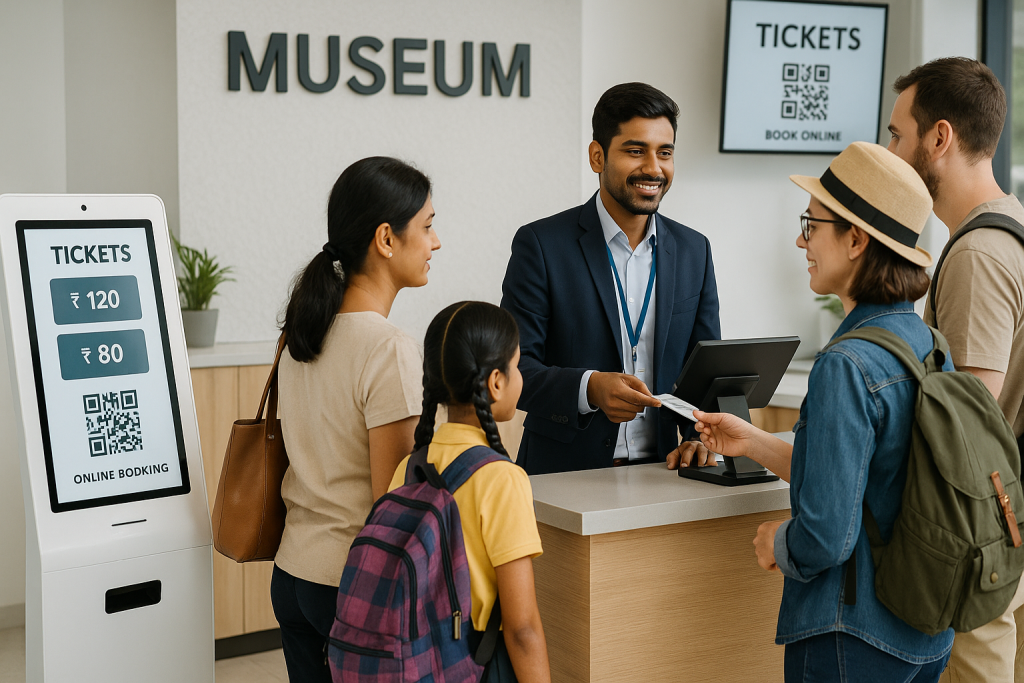
Modern education in museums focuses on the visitor experience. To fulfill this mission, institutions must remove barriers to entry. This includes physical accessibility and operational efficiency. For instance, integrated museum ticketing software helps manage crowds, ensuring that the environment remains conducive to learning. When visitors spend less time in queues, they have more time to engage with the educational content.
The museum importance lies in its ability to act as an informal classroom. Unlike traditional schools, museum education allows individuals to choose their own paths and pace. This self-directed learning fosters a deeper connection to the subjects on display. Many Indian institutions are now adopting smart museum solutions to streamline the entry process, directly supporting their educational goals by improving the first point of contact with the visitor.
The Interconnection of Functions
These three functions do not operate in isolation. They form a continuous cycle that supports the institution’s mission.
- Preservation protects the heritage so it can be studied.
- Research uses that heritage to create new opportunities for learning.
- Education shares the results of that research with the public.
If a museum fails in preservation, it has nothing to research. If it fails in research, its education programs lack substance. If it fails in education, the public loses its connection to the institution, and the museum importance diminishes.
Britannica notes that the true significance of a museum is its responsibility to maintain collections as a universal heritage for all humankind. This responsibility requires a balance between keeping objects safe and making them available for public education.
Digital Transformation in Museum Operations
Technology now plays a vital role in how museums execute these functions. Digital archives assist in preservation, while data analytics support research into visitor behavior. In the realm of education, digital ticketing and entry systems are essential.
Institutions that digitize their ticketing process see a significant reduction in administrative workload. This allows staff to redirect their energy toward core tasks like gallery maintenance and student tours. By optimizing the visitor journey, museums can ensure that their primary focus remains on education and the promotion of cultural heritage.
Understanding these fundamentals is the first step for any student or professional entering the field. Museums are complex organizations that require careful management of both objects and people. By focusing on preservation, research, and education, these institutions continue to serve as vital pillars of society.
For museum administrators looking to improve their public-facing operations, EveryTicket offers tools designed to simplify visitor management. Our platforms assist in managing entry and data, allowing you to focus on the essential functions of your institution. You can learn more about our smart solutions for cultural spaces on our website or contact us by filling out this form.