Defining the role of museum institutions is a priority for students and new staff entering the heritage sector. While the public often views these spaces as buildings that hold old objects, their functional purpose is much broader.
A museum serves as a memory system for humanity. It follows a specific operational path to ensure that history and knowledge remain accessible to the public.
The International Council of Museums (ICOM) established a formal definition in 2022 to guide global standards. This definition states that a museum is a permanent institution in the service of society that researches, collects, conserves, interprets, and exhibits heritage. Following these standards ensures that the role of museum organizations remains relevant in a changing society.
The Foundation of Preservation
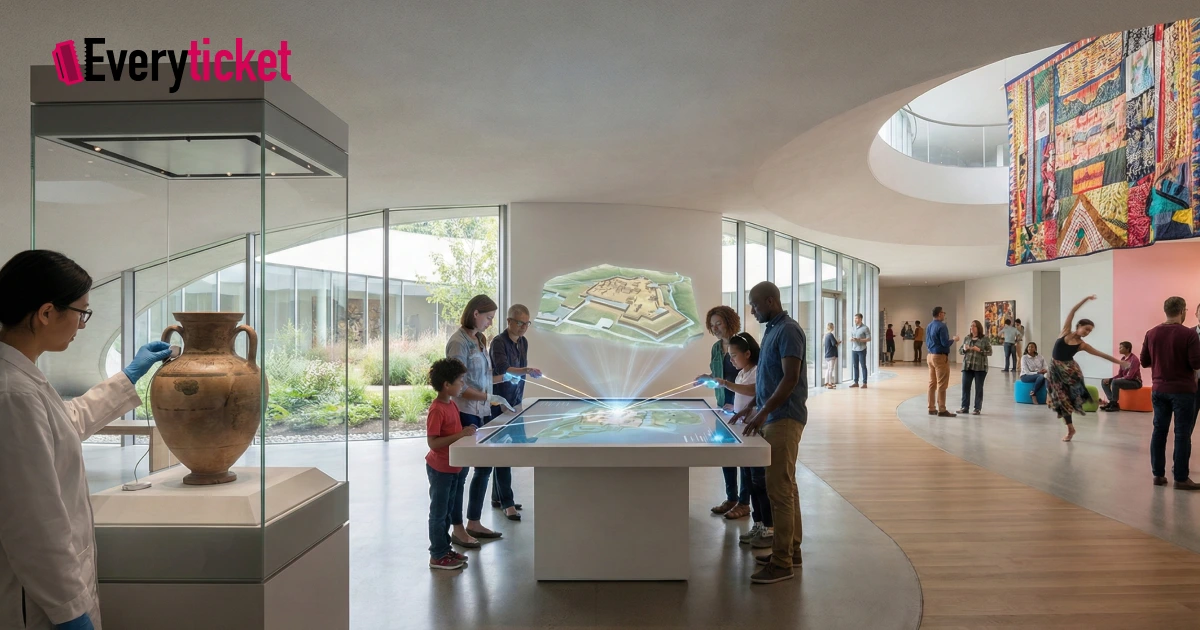
Preservation is the first core pillar of museum work. It involves the physical care and protection of artifacts to prevent their loss. Without active preservation, historical evidence would disappear due to decay, theft, or environmental damage. Museum professionals use scientific methods to control light, temperature, and humidity levels in storage and display areas.
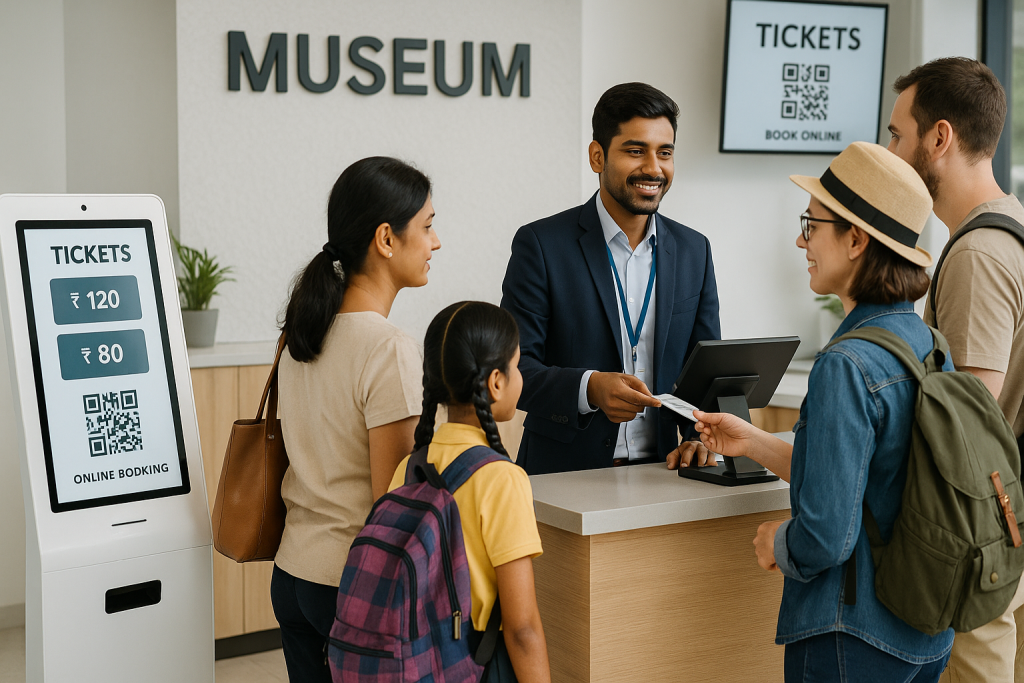
In the modern context, preservation also includes digital archiving. This ensures that a record of the object exists even if the physical item faces risks. Efficient management is necessary to fund these conservation efforts. For instance, museums often use digital museum ticketing to manage visitor numbers. This prevents overcrowding, which reduces the physical wear and tear on sensitive exhibit floors. Successful preservation ensures that the collection remains available for future generations to study.
The Function of Education
Education is the process of turning physical objects into understandable knowledge. A museum provides a unique learning environment that is different from a traditional classroom. Visitors engage in object-based learning where they see the actual evidence of historical events or scientific theories. The role of museum educators is to interpret these items so that the public can find meaning in them.
Museum education takes many forms, including guided tours, school workshops, and interactive displays. To facilitate this, institutions must plan their visitor flow carefully. Using visitor-centered design helps staff organize information in a way that aligns with how people learn.
When a museum prioritizes education, it moves beyond being a storage facility. It becomes an active resource for lifelong learning. Effective education programs encourage schools and students to visit repeatedly, which supports the long-term mission of the institution.
The Role of Culture
Museums serve as the primary guardians of human culture. They collect and display items that represent the identity and traditions of different groups. By doing this, the role of museum staff is to foster social cohesion and mutual respect. Culture is shared through exhibitions that tell the story of a community or a specific period in history.
Protecting and sharing culture requires the museum to be accessible to all parts of society. This includes removing physical and financial barriers to entry. Many institutions now use custom ticketing solutions to offer various pricing tiers or free entry days for the local community. These tools help the museum fulfill its social responsibility to promote culture. According to the American Alliance of Museums, museums are among the most trusted sources of information in society. This trust is built through the accurate and inclusive representation of global and local culture.
The 3C Framework for Museum Staff
To simplify the fundamentals of museum work, new staff can use the 3C Framework: Collect, Care, and Connect. This framework ensures that every task contributes to the overall role of museum operations.
| Component | Definition | Primary Activity |
| Collect | Gathering items of historical or scientific value. | Acquisition and Research |
| Care | Implementing preservation standards to protect the collection. | Conservation and Security |
| Connect | Using education and culture to engage the public. | Exhibitions and online ticketing |
Modern Challenges and Opportunities
The current role of museum professionals includes competing for public attention in a digital world. Museums now compete with digital entertainment and social media platforms for a visitor’s time. To succeed, they must provide experiences that digital platforms cannot replicate, such as the physical presence of authentic artifacts.
Museums use technology to enhance their traditional roles. For example, online ticketing solutions reduce the time visitors spend waiting in line. This allows the visitor to spend more time on education and engaging with the displays.
Research from MuseumNext indicates that the modern museum is shifting from a passive collection of objects to an active hub for community engagement. This shift requires staff to be skilled in both traditional curation and modern operational technology.
What Are Common Misconceptions
Several myths exist regarding the role of museum institutions. Addressing these helps staff communicate the value of their work to the public.
Myth: Museums are only for historical objects.
Fact: Museums also cover contemporary art, science, nature, and technology.
Myth: The role of museum work is only for researchers.
Fact: Museums exist for the benefit of all society, including families and casual tourists.
Myth: Preservation is just about keeping things in boxes.
Fact: It is an active scientific process that allows for public exhibition.
Myth: Education is only for school groups.
Fact: Museums provide learning opportunities for visitors of all ages through different mediums.
How to Enhance Operational Impact
The effectiveness of a museum’s education and culture programs depends on its operational health. If the administrative processes are slow, the visitor experience suffers. Staff can use a complete operations guide to streamline their daily tasks. By automating ticketing and data collection, the staff can focus on the core mission of preservation and public service.
Selecting the best ticketing software provides the data needed to understand visitor demographics. This information helps curators design exhibitions that reflect the interests and culture of their audience. When the operational side of a museum is efficient, it supports the institutional goals of teaching and preserving heritage.
The role of museum institutions remains vital in the 21st century. By balancing the pillars of preservation, education, and culture, museums act as a bridge between the past and the future. Students and new professionals who understand these fundamentals can contribute more effectively to their organization’s success. The combination of historical expertise and modern technology ensures that museums continue to serve as essential memory systems for society.
FAQs
1. What is the primary role of a museum?
To preserve heritage, educate society, and protect cultural identity.
2. Why is education important in museums?
It turns collections into meaningful knowledge.
3. How do museums preserve culture?
By safeguarding traditions, artifacts, and stories.
4. Are museums only for historical objects?
No. They serve science, art, nature, and society.
5. What is the role of a museum in education?
To provide experiential, visual, and emotional learning.
6. What is the difference between a gallery and a museum?
Galleries show. Museums preserve, educate, and contextualize.