Museum operations managers face specific daily logistical challenges. Visitors arrive in large groups at unpredictable intervals. Front desk staff must process payments, print physical admission passes, and manually verify entry times. This mechanical process creates immediate long queues.
Paper tickets slow down the entry speed and require constant printer maintenance. Implementing mobile ticketing software solves these operational bottlenecks by transferring the workload to digital systems.
The shift to digital formats removes the physical barriers at the main entrance. Visitors purchase access on their smartphones before arrival. They bypass the main ticketing desk entirely.
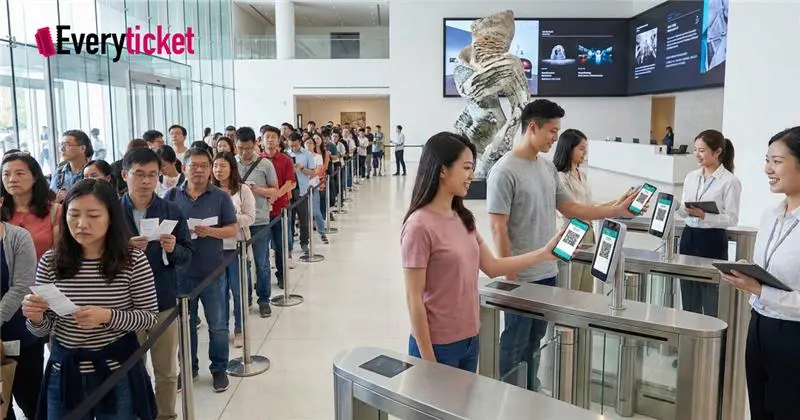
Staff members scan QR tickets at the exhibit doors. This direct process utilizes mobile check-in to process visitors rapidly. Operations managers gain immediate control over the facility’s crowd capacity.
Paper Systems Cause Delays at Museum Entrances
Legacy admission methods rely entirely on physical hardware. Printers jam, run out of ink, and require frequent mechanical repairs. Staff members spend valuable time troubleshooting equipment instead of verifying admissions.
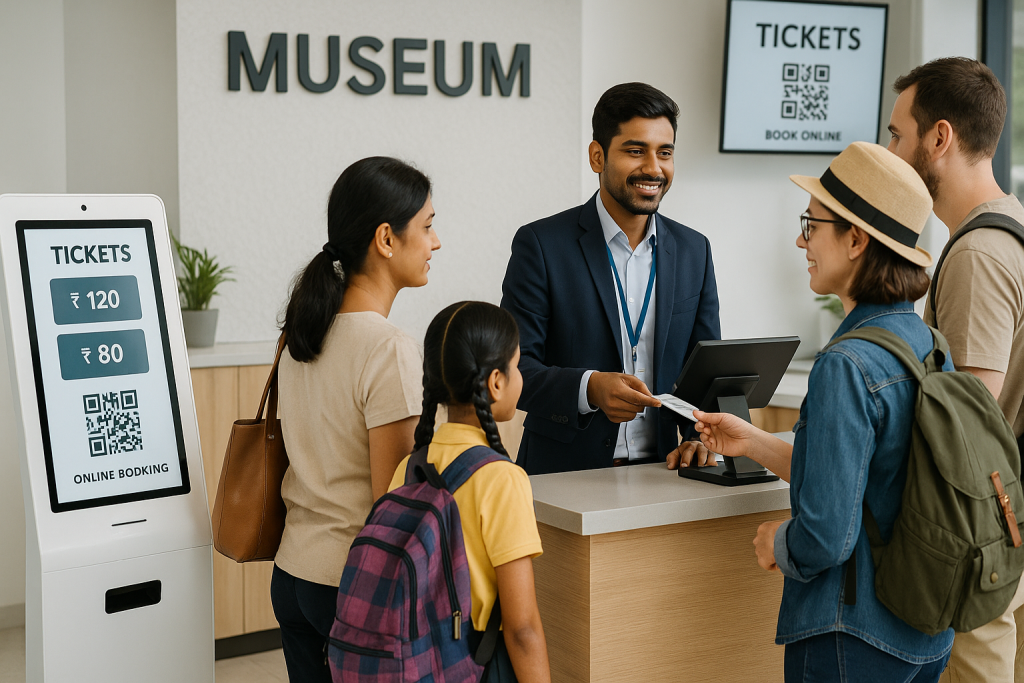
Visitors wait in line to buy tickets. They wait in a secondary line to hand their paper tickets to a collector. Staff must physically hand the ticket to the visitor. The visitor must hold the ticket until they reach the entry point. A second staff member must tear or hole-punch the paper.
Long queues frustrate visitors before they even view an exhibit. Operations managers must assign extra staff to the front desk to manage these crowds during peak morning hours. This requirement drains resources from other areas of the museum, such as security details or floor assistance.
According to consumer data from Statista, massive global smartphone adoption means the vast majority of visitors already carry the hardware necessary to manage their own admission. Implementing mobile ticketing software transfers the transaction and storage process directly to the visitor’s device.
Digital Infrastructure Accelerates Visitor Access
Mobile-first ticketing eliminates the primary purchase line. Visitors buy their admission online before they arrive or while standing outside the building. The system sends digital passes directly to their email or digital wallets.
This digital framework resolves three specific operational bottlenecks:
- Front desk payment processing delays
- Manual ticket verification queues
- Lost or damaged physical admission passes
Staff use mobile check-in systems to scan visitor devices. The scanning software verifies the ticket validity in a fraction of a second. This speed prevents congestion at the main entrance and at individual gallery doors. Processing speed increases significantly when you adopt a museum ticketing system with powerful benefits tailored specifically for operational efficiency.
The use of QR tickets ensures absolute accuracy. The unique barcode prevents duplication and entry fraud. Staff do not need to manually inspect a printed date or time stamp on a torn piece of paper. The scanner reads the code and instantly records the entry.
Data Collection Improves Operational Resource Allocation
Paper systems provide limited, delayed data. Managers count torn stubs at the end of the day to calculate total attendance. This manual counting process leaves room for human error. It provides zero real-time information about the current building capacity.
Mobile ticketing software continuously syncs with the central museum database. Operations managers view live dashboards showing exactly how many people have entered and exited the building.
The International Council of Museums (ICOM) publishes standards emphasizing that digital transformation helps cultural institutions manage their resources and secure their collections more effectively. Real-time capacity tracking directly supports these security and operational goals.
Managers use this historical data to predict future staffing requirements. If the data shows consistent crowding on Tuesday mornings, the manager schedules additional floor staff for that specific time.
| Operational Metric | Paper Ticket System | Mobile Ticketing Software |
| Capacity Tracking | Manual counting at closing | Real-time digital dashboard |
| Staff Allocation | Static daily assignments | Dynamic deployment based on data |
| Entry Speed | Slow manual verification | Instant scanning |
| Hardware Needs | Printers, ink, paper rolls | Smartphones or tablet scanners |
Reduce Hardware Costs with Smartphone Integration
Physical admission materials cost money. Museums spend portions of their operating budget on specialized thermal ticket paper, printer maintenance contracts, and specialized ink cartridges. Eliminating paper tickets directly reduces these ongoing overhead expenses. Mobile check-in relies on software, not physical consumables.
When managers utilize QR tickets, they remove the physical product from the transaction. The visitor’s smartphone becomes the ticket. The museum’s operational budget shrinks because the institution no longer pays to manufacture the admission pass. This reduction in administrative overhead makes digital integration an ideal ticketing solution for small museums that operate on strict budgets.
Thermal ticket printers require specialized maintenance. When a printer fails, the entire entry line stops. Smartphone scanning devices are interchangeable. If a scanning device fails, the manager simply replaces it with a backup device and logs into the software.
Visitor Flow Optimization Generates Financial Stability
Efficient entry processes impact museum revenue. When visitors enter the facility quickly, they have more time to spend inside. Visitors who bypass a thirty-minute ticketing queue are more likely to visit the museum cafe or the gift shop. Faster entry translates to more time available for secondary spending.
Operations managers use mobile ticketing software to set timed entry slots. Timed entry distributes the visitor arrival rate evenly throughout the day. This distribution prevents morning bottlenecks and fills quiet afternoon hours. Facilities easily maximize revenue with EveryTicket museum ticketing software by implementing these strictly timed entry controls.
When the building avoids severe overcrowding, the physical wear and tear on the facility decreases. Custodial staff manage cleaning schedules more effectively when visitor flow remains steady and predictable. QR tickets enable this precise control over arrival times.
Transform Operations to Digital Formats with EveryTicket
Museum operations managers require tools that solve the specific pain points of long queues and paper-based inefficiency. Transitioning to a digital framework standardizes the entry process. Staff scans QR tickets, the central system records the entry, and the visitor proceeds to the exhibits without delay.
EveryTicket provides the specialized mobile ticketing software required to modernize admission operations. The platform generates the necessary digital passes and facilitates rapid mobile check-in at all entry points. Upgrading entry infrastructure removes the administrative burden of paper systems and establishes a highly efficient, data-driven operational workflow for the institution.
Fill this form and set up a consulting call with our team to transform your museum today.