Government museums in India record millions of visitors annually. Administrators manage high footfall across national heritage sites. This high volume creates operational vulnerabilities. Manual paper tickets lead to revenue leakage. Unauthorized vendors duplicate paper tickets.
Staff members sometimes resell unpunched tickets. Government authorities require secure issuance protocols to stop these financial losses. Implementing digital ticketing solutions provides the necessary infrastructure to track sales, validate entry, and prevent fraud.
Why Do Traditional Ticket Counters Expose Museums to Fraud?
Paper-based entry systems lack modern security features. Counterfeiters replicate printed tickets easily. Fraudsters sell these fake passes to unsuspecting tourists.
- Lack of Digital Validation: Paper tickets do not connect to a central database. Gate staff cannot verify if a ticket is legitimate or duplicated.
- Ticket Resale Scams: Fraudsters buy manual tickets in bulk. They bribe staff to skip stamping the tickets at the gate. The unstamped tickets return to the counter for resale. The Archaeological Survey of India identified this exact ticket scam at the Taj Mahal, prompting a shift toward digital ticketing solutions.
- Cash Mishandling: Physical cash transactions create discrepancies between actual footfall and recorded revenue.
- Data Obscurity: Manual counting processes cause delays in financial reporting. Administrators wait days to reconcile cash deposits with ticket stubs. This time gap allows bad actors to manipulate the final attendance numbers.
Administrators solve these issues by adopting secure museum ticketing protocols. Digital entry methods remove the physical ticket from the equation entirely.
What Role Does Museum Ticketing Software Play in Secure Issuance?
To establish secure museum ticketing, government museums deploy specialized software. General event platforms fail to meet the complex requirements of heritage sites. Museum ticketing software authenticates every visitor transaction in real time.
Dynamic QR Code Generation
The system generates a unique QR code for every transaction. The code refreshes dynamically on the visitor’s mobile device. This prevents tourists from taking screenshots and sharing a single ticket with multiple people.
Hardware Integration
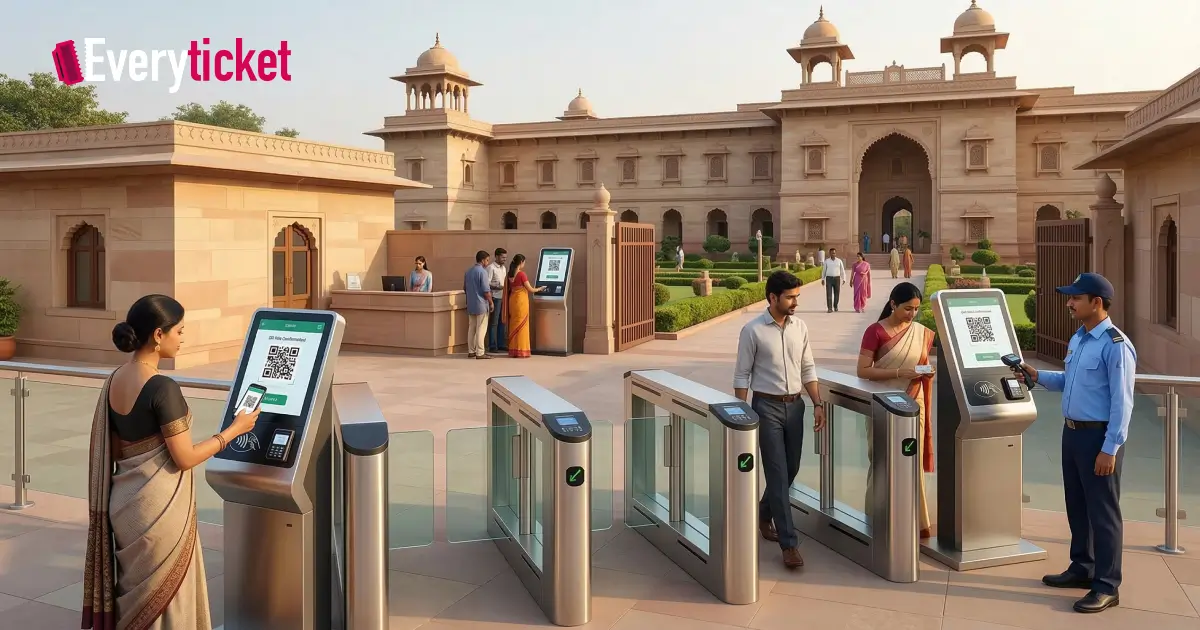
Museum ticketing software connects directly to physical turnstiles and handheld scanners. When a visitor scans their code, the system validates the entry instantly. The software marks the QR code as “used” in the central database. The system rejects any subsequent scan of the same code. This immediate invalidation prevents tourists from passing their phone back through the gate to another person.
Automated Pricing Tiers
Government sites use tiered pricing for citizens, foreigners, and students. Museum ticketing software calculates exact entry fees automatically. Staff cannot manipulate ticket prices or issue the wrong ticket type to pocket the difference. The system requires valid identification inputs for discounted rates and generates a digital audit trail for every transaction.
How Is the Government Mandating Online Ticket Services?
The Indian government requires cultural institutions to modernize their infrastructure. The push for digital public infrastructure includes heritage sites.
- ONDC Integration: In January 2026, the Ministry of Culture enabled online ticket booking for over 170 ASI monuments on the Open Network for Digital Commerce (ONDC). The mandate aims to standardize the entry experience across all states.
- Interoperable Systems: This directive requires museums to use interoperable online ticket services. Visitors’ book entry passes through multiple government and consumer applications.
- Data Centralization: Secure museum ticketing networks send transaction data directly to central government servers. This prevents local administrative tampering. The central dashboard provides authorities with accurate, minute-by-minute footfall analytics.
Government authorities must procure online ticket services that comply with these national digital standards. The platform must process UPI transactions natively and generate GST-compliant invoices.
What Infrastructure Do Digital Ticketing Solutions Require?
Switching from manual operations to digital ticketing solutions requires specific hardware and software components. Administrators must install physical access control devices at the entry gates. They also need cloud-based management dashboards.
| Infrastructure Component | Manual System | Digital Ticketing Solutions |
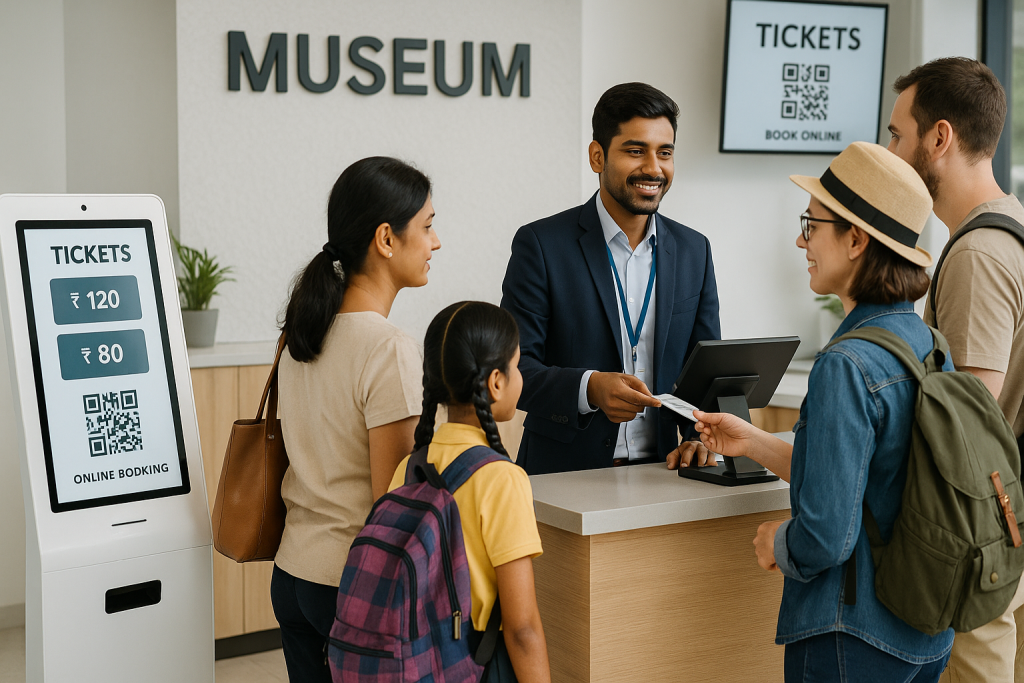
| Point of Sale | Cash registers, pre-printed paper booklets | Touchscreen POS, direct UPI integration |
| Entry Gates | Staff manually tearing paper tickets | Automated turnstiles with QR scanners |
| Visitor Purchase | Physical queues at the venue | Web portals, mobile apps, self-service kiosks |
| Data Tracking | End-of-day manual ledger counting | Real-time cloud analytics and attendance logs |
Implementing secure museum ticketing involves syncing these components. The POS terminals, self-service kiosks, and online ticket services must communicate with the same inventory database. If a visitor buys a ticket online, the on-site kiosk registers the sale instantly.
How Does Real-Time Inventory Control Prevent Overcrowding?
Government museums face severe overcrowding during national holidays. Physical ticket counters continue selling passes even when the venue reaches maximum capacity. This creates safety hazards. Digital ticketing solutions solve this problem through real-time inventory control.
- Capacity Limits: Administrators set a maximum visitor limit in the museum ticketing software.
- Timed Entry Slots: The system divides the daily capacity into specific hourly time slots. Visitors select a designated entry time during the booking process.
- Automatic Shutoffs: Once a time slot sells out, the online ticket services block further purchases for that hour. The on-site kiosks update instantly to reflect the sold-out status.
This ensures secure museum ticketing while maintaining physical safety standards inside the galleries.
How Can Administrators Implement Museum Ticketing Software?
Museum directors need a clear deployment strategy. Procurement teams evaluate vendors based on local compliance, hardware compatibility, and deployment speed. You must select a platform built for Indian regulatory frameworks.
Select Specialized Vendors
Choose vendors that focus on cultural heritage sites. Reading an operational guide on an online ticketing service for museums helps procurement teams finalize their technical requirements. The vendor must provide immediate technical support during public holidays and weekends.
Install Access Hardware
Contractors install physical turnstiles at the entry points. IT staff connect handheld validation scanners to the local network. The secure museum ticketing system communicates directly with this hardware to control physical access.
Train Counter Staff
Administrators provide training sessions for front-line employees. Staff learn to operate the digital point-of-sale systems. They practice scanning QR codes and troubleshooting failed validations.
Launch Public Portals
Publish the booking links on the official museum website. The portal connects to the central digital ticketing solutions. Visitors use UPI or credit cards to buy tickets in advance.
Final Words
Museum ticketing software eliminates the vulnerabilities of paper tickets. Online ticket services automate the payment collection process. Authorities achieve secure issuance and protect their revenue streams. For a system built specifically for the needs of Indian heritage sites, government administrators utilize EveryTicket’s specialized platform to transition their operations online quickly and securely. Digital ticketing solutions guarantee that every visitor contributes correctly to the preservation of India’s cultural history.