Museums regularly organize cultural events to attract visitors. These events include heritage walks, art workshops, and pop-up exhibitions. Managing these activities creates significant event management complexity. Museum event teams process registrations, track payments, and control venue capacity.
Manual methods fail to handle these tasks efficiently. Institutions require ticket automation to streamline operations. The best event ticketing software removes administrative burdens and provides a seamless booking experience for attendees.
Here, we have evaluated the necessary features that museum administrators must prioritize to finalize their buyer decision.
Current Trends Demand Force Museums to Rethink Event Operations
Modern museums do more than display artifacts. They host interactive sessions and limited-capacity cultural events. These changing operational requirements demand precise planning and execution.
- Capacity Restrictions: Cultural events often take place in confined spaces. Staff must monitor attendee numbers to prevent overcrowding and protect sensitive exhibits.
- Time Slot Allocation: Workshops require specific start and end times. Museums need systems that manage staggered entry efficiently.
- Visitor Expectations: Modern attendees expect instant digital tickets and easy entry processes.
- Resource Allocation: Specialized events require dedicated tour guides, security personnel, and maintenance staff. Automated ticketing provides accurate headcount forecasts. Administrators use this data to schedule staff efficiently.
- Government Guidelines: The Ministry of Culture outlines strict guidelines for modernizing museum operations to maintain heritage relevance and improve the visitor experience.
- Diverse Requirements: Different types of museums organize vastly different events. An open air history park needs different ticketing structures compared to an indoor contemporary art gallery.
Museum event teams must adopt technology to handle these specific demands.
Manual Systems Fail Against Modern Ticket Automation Standards
Many institutions still use paper tickets and basic spreadsheets. These outdated tools create bottlenecks and frustrate visitors. Comparing legacy methods with modern solutions reveals major operational gaps.
High Error Rates in Manual Processing
Staff members make data entry mistakes during peak hours. These errors lead to double bookings and financial discrepancies. Ticket automation eliminates these risks by recording transactions accurately in real time.
Inefficient Queue Management
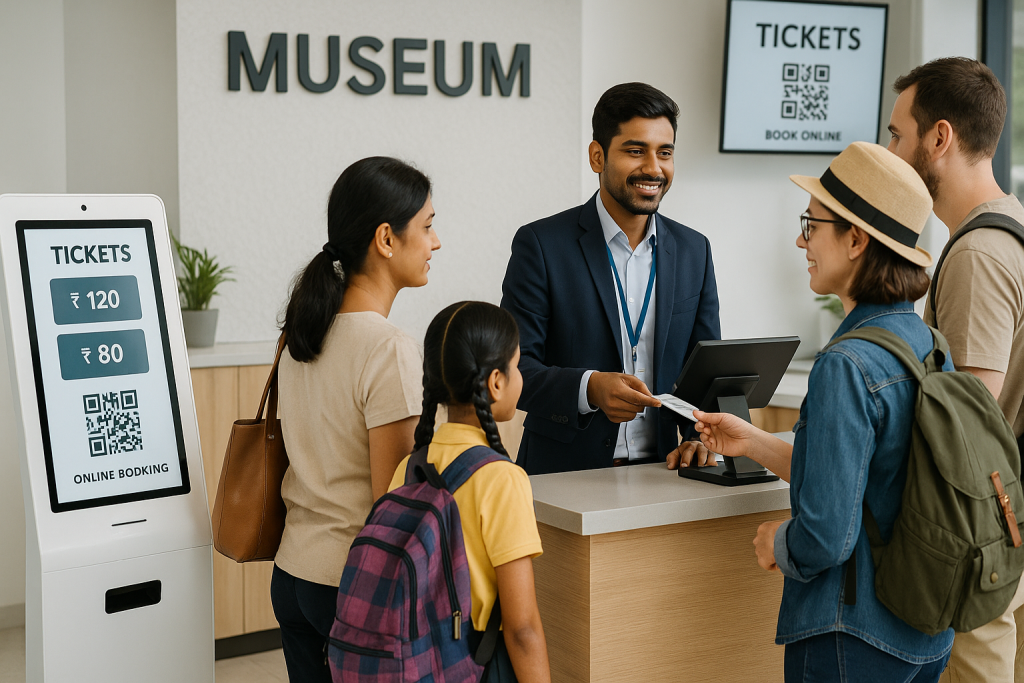
Paper ticketing forces visitors to wait in long lines. Modern institutions implement advanced booking to process payments online before the event begins. This approach stops the walk-in rush and smooths the entry process.
Lack of Communication
Manual systems cannot notify attendees about schedule changes. Automated systems send instant email confirmations and SMS reminders. This direct communication reduces no-show rates and keeps visitors informed.
Museums cannot rely on legacy methods to scale their cultural programs. Upgrading to the best event ticketing software resolves these operational flaws instantly.
General Event Ticketing Platforms Lack Museum Specificity
Museum administrators often test generic tools first. General event ticketing platforms work well for concerts or sports matches. They fail to meet the complex requirements of daily museum operations and specialized cultural events.
Membership Integration Issues
Museums rely on members for steady revenue. Generic event ticketing platforms do not recognize existing museum membership tiers. They cannot apply automatic discounts for members during the checkout process.
Recurring Schedule Limitations
A standard platform treats every event as a single occurrence. Museum events often run daily across multiple weeks. Staff must recreate the same event repeatedly on generic platforms. Specialized software handles recurring schedules easily.
Educational Program Support
Museums fulfill specific core functions , including education and public outreach. They need software that groups school tours, academic lectures, and cultural workshops into specific reporting categories. General platforms lack this detailed categorization.
Museums require purpose-built solutions rather than generic event ticketing platforms.
Core Capabilities: Define the Best Event Ticketing Software
Evaluating software requires a strict review of features. The best event ticketing software provides specific tools designed for cultural institutions.
Centralized Dashboard Control
Museum event teams need one platform to view all activities. A centralized dashboard displays ticket sales, remaining capacity, and revenue across all active events. This visibility allows staff to make quick decisions regarding marketing and resource allocation.
Mobile Device Compatibility
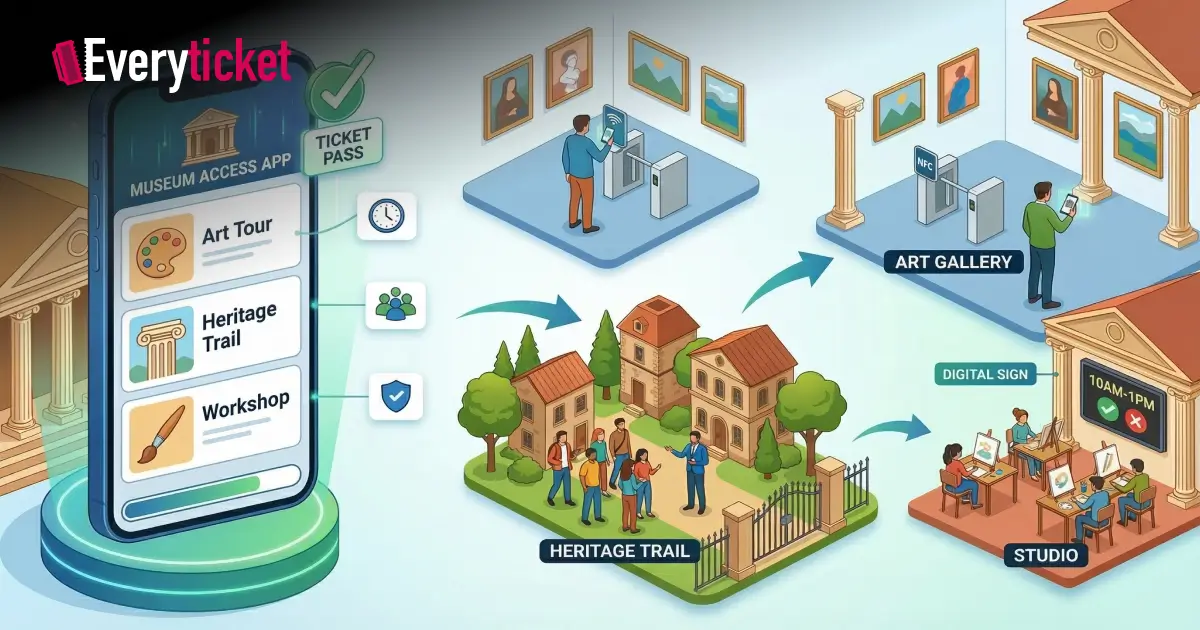
Staff must validate tickets at various entry points. The software must function on mobile devices and portable scanners. This mobility allows museums to set up temporary check-in stations for outdoor heritage walks or pop-up exhibitions.
Granular Reporting Features
Administrators need accurate data to secure funding and plan future events. The system must generate reports on attendance demographics, peak entry times, and financial performance. These insights prove the success of cultural programs.
Visitor Relationship Management
Museums build long-term relationships with their attendees. The software must store visitor contact details and past purchase history securely. Museum event teams use this data to market future cultural events directly to interested individuals.
Scalability for Growth
The software must handle sudden spikes in web traffic during major event announcements. Even small museums require robust infrastructure to prevent website crashes when ticket sales go live.
The right system combines all these features to remove event management complexity.
Financial Integration Secures Museum Event Revenues
Payment processing is a critical component of any digital system. Event ticketing platforms must process transactions securely and quickly to prevent cart abandonment.
- Local Payment Gateways: Visitors prefer familiar payment methods. The software must integrate with local banking networks and UPI interfaces to ensure successful transactions.
- High Volume Processing: Data from the Ministry of Tourism indicates millions of domestic visitors travel to cultural sites annually. Ticketing systems must process thousands of micro transactions simultaneously without failure.
- Automated Refund Processing: Cultural events sometimes face cancellations due to weather or instructor illness. The software must reverse charges automatically and return funds to the original payment source.
- Financial Auditing: Finance departments require clean data ledgers. The software must export daily transaction logs directly into the museum accounting software.
Secure financial integration is a mandatory requirement for the best event ticketing software.
EveryTicket Eliminates Event Management Complexity for Museums
Museum event teams need a reliable partner to manage their cultural programs. EveryTicket delivers purpose-built solutions for cultural institutions. Our platform provides full ticket automation to streamline your entire booking process.
Our solution replaces outdated manual methods and generic event ticketing platforms. The system handles complex recurring schedules, automatic membership discounts, and precise capacity limits. Staff can deploy mobile scanners to validate digital QR codes at any venue entrance.
By adopting EveryTicket, museums resolve event management complexity and focus entirely on delivering exceptional cultural experiences. We provide the tools necessary to make your next cultural event a complete success.
Contact us now to understand how we can resolve your museum events ticketing queries.
Final Words
Museums face unique challenges when organizing cultural events. Generic tools and manual spreadsheets create operational bottlenecks. Institutions must adopt specialized technology to meet modern visitor expectations. The best event ticketing software provides complete ticket automation, secure payment processing, and precise capacity control. Implementing the right platform removes event management complexity entirely. Museum event teams can then focus on their primary goal of preserving and sharing culture.
FAQs
What is the best event ticketing software for museums?
The ideal software offers ticket automation, capacity control, and membership integration designed specifically for complex cultural institutions.
How do event ticketing platforms handle museum workshop bookings?
Specialized platforms use recurring time slots and strict capacity limits to manage daily workshop schedules seamlessly.
Can ticketing software automate cultural event reminders?
Yes. Modern systems automatically send SMS and email reminders to attendees prior to the scheduled cultural event.
Why do Indian museums need specialized event management software?
Museums have unique requirements like membership discounts, complex daily scheduling, and specific educational program tracking.
Does museum ticketing software integrate with local payment gateways?
Reliable ticketing systems integrate with local payment processors and UPI to capture domestic visitor revenue securely.