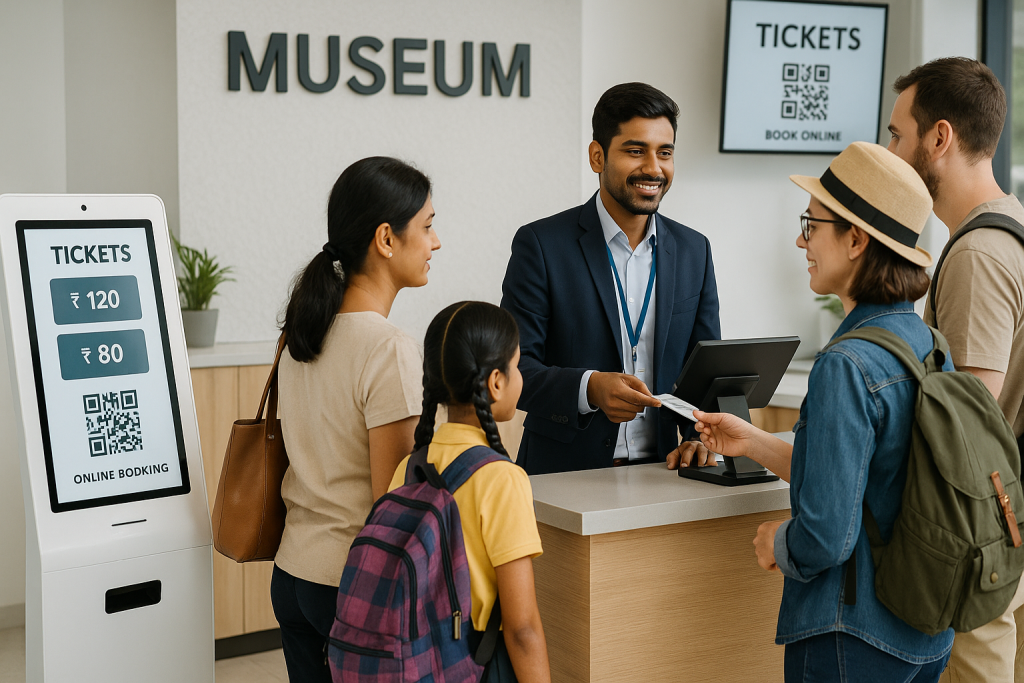

Diversifying museum revenue means building multiple predictable income streams beyond admissions such as memberships, events, retail, digital experiences, and partnerships supported by the right ticketing and financial systems.
Done well, it stabilizes cash flow, funds programming, and protects museums from seasonal or visitor volatility.
Hidden Risk Behind Ticket-First Museum Business Models
Ticket sales are a spike, not a foundation.
If admissions dip, weather, tourism cycles, school calendars, your entire budget feels it. A modern museum revenue strategy doesn’t remove tickets; it de-risks them.
Why Museum CFOs Can’t Afford a Single-Stream Revenue Model Anymore
I’ve worked with museums where a single rainy quarter forced cuts to exhibitions and staff. The problem wasn’t demand, it was concentration risk. When 70–90% of revenue comes from admissions, planning becomes reactive.
For Museum CFOs, diversifying museum revenue isn’t about chasing novelty. It’s about predictability, sustainability, and growth without compromising mission.
Ticket sales are essential, but overdependence turns budgeting into guesswork.
Real Cost of Overdependence on Ticket Sales
Volatility You Can’t Control
Admissions fluctuate with:
- Tourism cycles
- School schedules
- Weather and local events
- One-off closures or renovations
Planning Blind Spots
When tickets dominate:
- Forecasting becomes short-term
- Programming competes with payroll
- Capital investments get delayed
Tickets are variable income. CFOs need stabilizers.
A CFO-First View of Museum Revenue Streams
Core Categories (Beyond Admissions)
A balanced museum revenue strategy blends:
- Predictable Recurring Revenue
- Memberships
- Annual passes
- Corporate sponsorships
- High-Margin Earned Income
- Retail (gift shop, catalogs)
- Food & beverage
- Venue rentals
- Scalable Digital Revenue
- Virtual tours
- Online workshops
- Hybrid events
- Philanthropic & Institutional
- Donations
- Grants
- Endowments
What CFOs Should Measure
- Margin by stream
- Seasonality impact
- Cash flow timing
- Operational complexity
Diversification isn’t adding chaos, it’s balancing margin, predictability, and mission.
Read Expert Guide: Museum Self-Service Kiosks: Streamlining Operations Guide
Why Most Revenue Diversification Efforts Fail Inside Museums
Adding Streams Without Systems
Common mistake:
“Let’s add memberships”
…but no integration with ticketing, POS, or CRM.
Result:
- Manual reconciliation
- Data silos
- Underreported revenue
Treating Digital as Marketing Only
Virtual experiences often stop at awareness. CFOs should ask:
- Can this be ticketed?
- Can it bundle with memberships?
- Can it reach global audiences?
New revenue fails without operational alignment.
How Museum CFOs Should Forecast Diversified Revenue Without Overcomplicating It
Revenue diversification only works if it can be forecasted simply and defensibly.
A practical approach:
- Start with your last 12–24 months of ticket revenue as the baseline
- Model each new stream independently (memberships, events, retail, digital)
- Use conservative assumptions for adoption and ramp-up
- Track whether each stream improves monthly predictability, not just annual totals
The goal isn’t perfect accuracy.
It’s reducing volatility and planning with confidence.
If a new revenue stream can’t be forecasted cleanly, it adds risk—not resilience.
Role of Ticketing Systems in Revenue Diversification
Ticketing Is Now a Revenue Engine
Modern ticketing systems for museums do more than sell tickets. They enable:
- Dynamic pricing
- Bundled offers
- Membership upsells
- Event monetization
What to Expect from a Modern Museum Ticketing System
A future-ready museum ticketing solution should support:
- Multiple ticket types (onsite, online, hybrid)
- POS integration (retail + F&B)
- Membership and pass logic
- Financial reports by revenue stream
This is where platforms like EveryTicket shift the equation from “ticket seller” to revenue orchestrator.
Your ticketing system determines how easily revenue can diversify.
A Practical Step-by-Step Plan to Diversify Museum Revenue
Step 1: Map Current Revenue Mix
Create a simple breakdown:
- % from admissions
- % from memberships
- % from retail/events/digital
Step 2: Identify One Stabilizer
Choose one predictable stream to strengthen first:
- Memberships
- Annual passes
- Venue rentals
Step 3: Attach It to Ticketing
Ensure your museum ticketing system can:
- Sell it
- Report it
- Bundle it
Step 4: Pilot, Don’t Overbuild
Run a 90-day pilot:
- Limited scope
- Clear KPIs
- CFO-owned dashboard
Diversification works best in controlled, system-backed pilots.
A Practical Guide: Why EveryTicket is India’s #1 Choice for Museum Revenue Growth
Key Frameworks for Museum CFOs
Framework 1: 40-30-20-10 Rule
A healthy long-term mix:
- 40% admissions
- 30% recurring (memberships, passes)
- 20% earned income (retail, events)
- 10% digital/philanthropic
Framework 2: Revenue Elasticity Test
Ask for each stream:
- Does demand drop sharply with price?
- Can it scale without staffing?
- Is it seasonal?
Framework 3: System Readiness Score
Rate 1–5:
- Ticketing flexibility
- POS integration
- Financial reporting clarity
Frameworks turn strategy into CFO decisions.
Why Your Ticketing System Determines How Easily Revenue Can Diversify
Most diversification efforts fail at execution, not strategy.
If your museum ticketing system can’t:
- Support multiple ticket types and memberships
- Bundle experiences and events
- Report revenue by stream clearly
…then every new revenue idea increases operational friction.
Modern ticketing systems for museums act as a revenue hub connecting admissions, events, memberships, and POS into one financial view. Platforms like EveryTicket make diversification easier to launch, measure, and scale.
Diversified revenue requires flexible systems, not manual workarounds.
Untapped Revenue Opportunity Museums Rarely Model Financially
Most museums think locally. Revenue doesn’t have to.
Digital experiences, curated tours, expert talks, school programs can reach:
- International audiences
- Remote institutions
- Corporate learning programs
This isn’t cannibalization. It’s market expansion.
Diversifying museum revenue often means expanding who you serve.
Common Myths That Hold Museums Back
- “We’ll lose focus on mission.”
→ Financial stability protects mission.
- “Digital devalues the onsite experience.”
→ Digital often increases onsite demand.
- “Our audience won’t pay.”
→ They already do, just not through structured offers.
Final Takeaway for Museum CFOs Planning Long-Term Sustainability
A resilient museum revenue strategy goes beyond admissions to build predictable, scalable income streams that protect mission and growth. By aligning diversification efforts with modern museum ticketing solutions and clear financial frameworks, Museum CFOs can move from reactive budgeting to confident, long-term planning. The goal isn’t fewer tickets, it’s smarter revenue.
If your ticketing setup limits growth, explore how EveryTicket helps museums:
- Unify ticketing, POS, and events
- Launch new revenue streams faster
- Report accurately across all income sources
Fill the inquiry form to Book a demo and see your revenue model clearly.
FAQs
1. What is a museum revenue strategy?
A structured plan to balance admissions with recurring, earned, digital, and philanthropic income.
2. Why is diversifying museum revenue important?
It reduces financial risk and improves long-term sustainability.
3. What revenue streams work best beyond ticket sales?
Memberships, events, retail, and digital experiences are common high-impact options.
4. How does a museum ticketing system support diversification?
It enables bundled pricing, memberships, reporting, and new product launches.
5. Can small museums diversify revenue?
Yes, starting with memberships or small-scale events.
6. Is digital revenue realistic for museums?
Yes, especially for education, tours, and global audiences.
7. How long does diversification take?
Most pilots show results within 3–6 months.