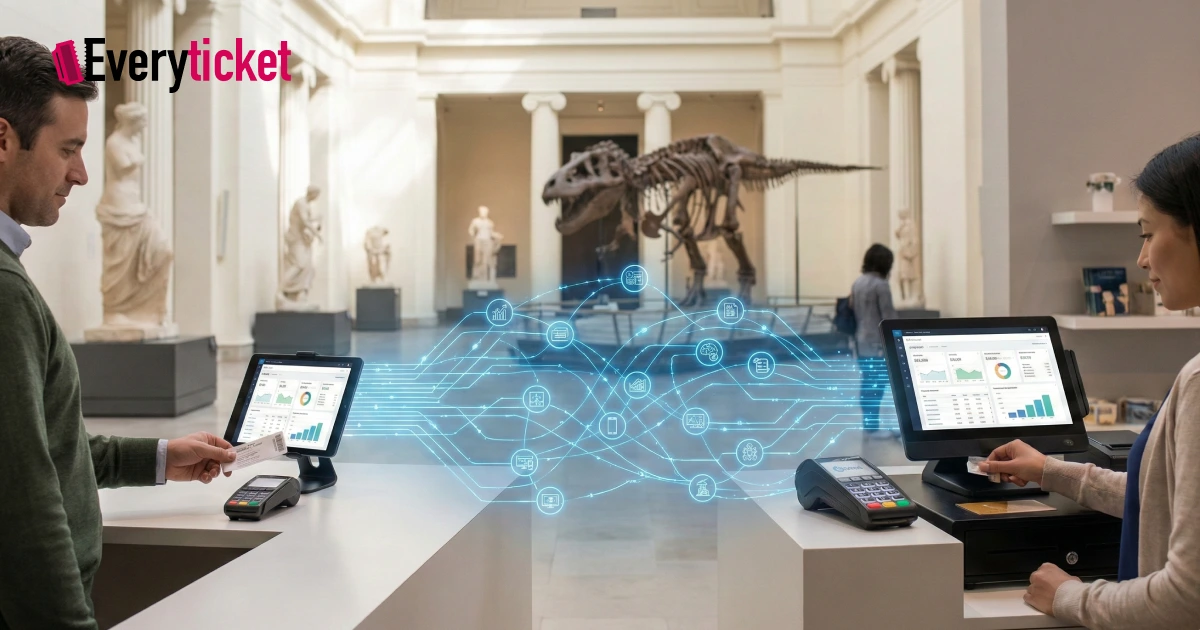
Museum finance and operations teams often face difficulties when reconciling daily revenue. When a museum uses separate systems for admissions, gift shops, and cafes, data remains siloed. This lack of communication between platforms leads to manual data entry and increased error rates in financial reporting. Adopting a unified museum EPOS system addresses these challenges by centralizing all transaction data into a single dashboard.
Centralize Financial Data for Finance Teams
The primary goal of a finance department is to maintain accurate records of all income streams. In many institutions, staff must manually combine reports from the ticket counter with those from the retail shop. This process is time-consuming and prone to human error. A museum EPOS system automates this consolidation by recording every transaction—whether a ticket or a souvenir—in real-time.
Manual reconciliation often masks “hidden” operational costs. When staff spend hours each week matching bank statements to physical receipts, the museum loses productive time. According to the International Council of Museums (ICOM), modern cultural institutions are increasingly moving toward self-financing models. This shift requires precise tracking of every rupee to ensure long-term sustainability. By implementing a system that handles POS integration natively, finance teams can generate audit-ready reports with one click.
Comparison of Siloed vs. Integrated Financial Tracking
| Feature | Siloed Systems | Integrated Museum EPOS System |
| Data Entry | Manual cross-referencing | Automated synchronization |
| Reporting | Delayed (usually weekly) | Real-time dashboards |
| Error Risk | High (manual typing errors) | Low (direct system logs) |
| Staff Time | 10–15 hours/week on admin | Under 1 hour/week on admin |
| Audit Trail | Fragmented | Centralized and timestamped |
Improve Operational Flow with POS Integration
Operations teams focus on visitor movement and resource allocation. A significant bottleneck occurs when the ticket counter cannot communicate with other sales points. For example, if a museum sells a “Ticket + Guided Tour” bundle at the front desk, the inventory for that tour must update immediately across all platforms. Effective POS integration ensures that capacity management is accurate across the entire site.
When a museum uses POS integration, staff can use handheld devices to process payments anywhere in the building. This flexibility is essential during peak hours or special exhibitions when the main entrance becomes crowded. Instead of forcing visitors to wait in a single line, staff can scan QR codes and sell additional items on the move. Detailed guides on how to integrate museum ticketing software easily highlight that this connectivity reduces wait times and improves the first impression for every visitor.
Accurate Tracking of Ticket Sales
Tracking ticket sales involves more than just counting the number of people who entered the building. It requires understanding when they arrived, which ticket types they purchased, and how they paid. If ticket sales data is not linked to the retail system, the museum cannot identify visitor spending patterns. For instance, knowing that a high volume of student ticket sales occurs on Tuesdays can help the gift shop stock relevant, lower-priced items on those days.
A modern system provides deep insights into these patterns. By analyzing ticket sales through a centralized dashboard, managers can adjust staffing levels based on historical attendance. Research by MuseumNext indicates that integrated digital-physical experiences are now the baseline for visitor expectations. If a visitor buys a ticket online, they expect the on-site museum EPOS system to recognize their membership or pre-paid add-ons instantly.
Enhance Revenue Through Systematic Sales Tracking
Fragmented systems often lead to “revenue leakage.” This happens when discounts are applied incorrectly or when cash transactions are not properly logged. A robust museum EPOS system prevents this by using pre-configured price lists and automated tax calculations. Every sale is tied to a specific user login, providing clear accountability for every staff member at the counter.
Furthermore, tracking ticket sales and retail transactions in one place allows for better upselling. When a staff member scans a ticket, the system can prompt them to offer a specific exhibition catalog or a museum membership. This type of data-driven interaction is only possible when there is deep POS integration between the ticketing engine and the retail software. To understand the full range of possibilities, museums should look for the 5 must-have features in museum ticketing software to ensure they are not missing key revenue opportunities.
Technical Considerations for Operations Managers
Operations managers must ensure that the chosen technology is resilient. A museum EPOS system should work offline-first. In many historical buildings, internet connectivity can be inconsistent. An offline-ready system allows staff to continue processing ticket sales and shop purchases without interruption. Once the connection returns, the data syncs automatically with the central server.
System reliability directly impacts visitor satisfaction. If a system crashes during a busy weekend, the resulting queues can lead to lost revenue and poor reviews. Implementing a museum ticketing system that boosts revenue requires a platform that balances ease of use with powerful backend capabilities. The interface must be simple enough for seasonal staff to learn in minutes, while the data output must be detailed enough for a CFO’s monthly review.
Streamline the User Experience
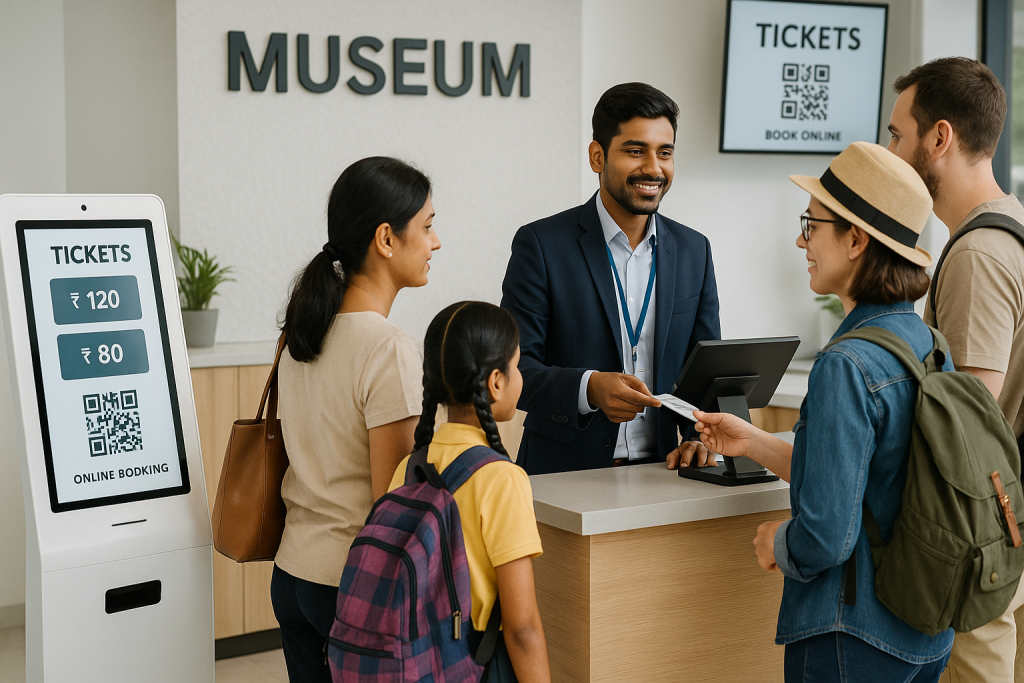
The visitor journey should be frictionless. This starts with online booking and continues through the physical entrance and the gift shop. By focusing on the benefits of a ticketing system for museums, institutions can see how digital transformation removes physical barriers. When ticket sales are managed through the same platform as the shop, a single QR code can serve as a ticket, a discount voucher for the cafe, and a digital receipt for retail purchases.
This unified approach also simplifies membership management. When a member visits the museum, their status is verified at the entrance. Because of the POS integration, that same member automatically receives their 10% discount at the gift shop without needing to show a physical card. This seamless transition between departments is a hallmark of a well-managed institution.
Choose the Right Infrastructure
Selecting a museum EPOS system requires a clear understanding of the museum’s unique workflows. Some institutions prioritize school group bookings, while others focus on high-volume walk-in traffic. In either case, the ability to manage museum ticket software benefits depends on how well the software matches the daily reality of the floor staff.
For many finance teams, the move to an integrated platform is about risk management. Moving away from manual spreadsheets to automated POS integration reduces the chance of financial discrepancies during audits. It also provides a clear history of ticket sales that can be used to justify future funding or grant applications. The goal is to move from reactive troubleshooting to proactive financial planning.
EveryTicket is a Unified Solution for Museum Operations
EveryTicket provides a specialized platform designed to handle the specific complexities of museum revenue management. The system offers a native museum EPOS system that connects online bookings with on-site sales points without requiring third-party plugins.
By centralizing ticket sales and retail data, EveryTicket enables finance teams to automate reconciliation and eliminate manual entry errors. The platform’s robust POS integration supports UPI, cards, and cash, ensuring that every transaction is recorded accurately in real-time.
For operations teams, EveryTicket provides handheld scanning capabilities and offline-first functionality, allowing for a smooth visitor flow even in challenging environments.
Conclusion
Integrating ticketing with an EPOS system is a strategic move toward operational maturity. By removing the silos between departments, museums can ensure financial accuracy and improve the visitor experience. When finance and operations teams have access to the same “single source of truth,” the museum can focus its resources on its core mission of preservation and education rather than administrative troubleshooting.