Museums historically manage ticket sales through separate systems for online bookings and on-site admissions desks. This separation creates disparate data silos. These silos inevitably lead to manual administrative work, significant errors in tallying, and financial discrepancies.
An integrated museum ticketing system solves these critical operational issues by unifying all sales channels into one cohesive platform. This guide outlines the essential components of centralized ticketing and how it benefits financial oversight for administrators and finance directors.
What Constitutes a Fully Integrated Ticketing Ecosystem?
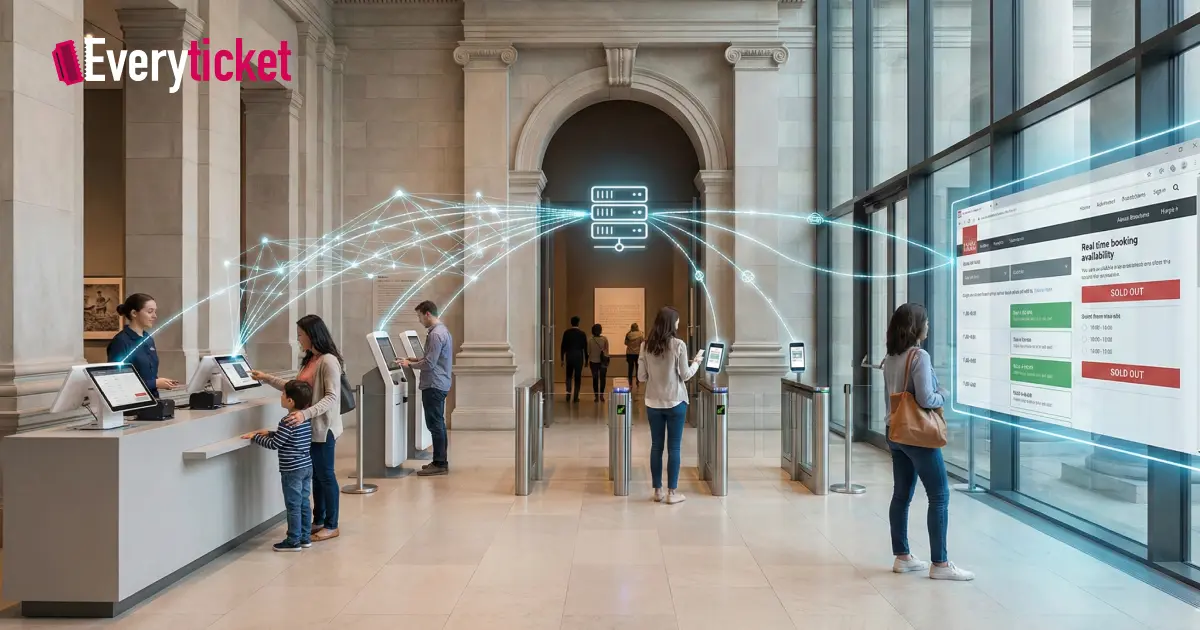
An integrated museum ticketing system connects every point of sale within an institution. It ensures data flows seamlessly in real-time between the institution’s website and physical locations. A robust system centralizes operations and removes the need for duplicate data entry across different departments, such as finance, visitor services, and IT.
- Unified Data Core: A single database manages inventory, customer data, and transaction histories for web sales, mobile purchases, and the physical POS system for museums.
- Real-Time Synchronization: Ticket availability updates instantly across all channels simultaneously. Advanced API integrations for modern museums enable this instant data transfer between core software and frontend portals.
- Omnichannel Ticketing: Visitors purchase tickets through their preferred channel. Omnichannel ticketing ensures a consistent purchase experience regardless of whether the transaction occurs on a smartphone, a desktop computer, or at a physical kiosk.
Why Do Disconnected Systems Create Financial Liabilities?
Running separate software solutions for different sales channels introduces significant operational risk. Finance directors face major challenges when attempting to reconcile end-of-day reports from disparate sources. Manual tallying errors occur when staff combine data from spreadsheets, standalone credit card terminals, and distinct web platforms.
These operational inefficiencies lead directly to missing revenue data and opaque financial reporting. Furthermore, mismatched inventory between the physical counter and the website results in overselling timed-entry slots. Relying on paper-based logs increases the hidden costs of time-consuming administrative work. Addressing these administrative bottlenecks often makes an automated platform the perfect ticketing solution for small museums and large institutions alike.
How Does Automated Revenue Reconciliation Transform Financial Reporting?
For finance teams, the primary benefit of an integrated museum ticketing system is ensuring accurate, auditable financial data. A centralized system replaces manual guesswork and spreadsheet consolidation with automated revenue reconciliation.
Direct Financial Feeds
Sales data from web payment processors and the onsite POS system for museums feeds directly into central accounting ledgers. This requires zero manual intervention. Financial directors view daily transaction volumes, separated by admission type or membership tier, immediately upon the close of business. The system categorizes funds automatically based on pre-defined ledger codes.
Elimination of Manual Matching
Staff no longer manually match physical credit card receipt batches against ticket stubs or printed web reports. Automated revenue reconciliation flags discrepancies instantly. If a transaction fails to process or a refund is issued at the front desk, the central database records the adjustment. This eliminates the need to cross-reference multiple terminal batch reports at the end of the shift.
Clear Audit Trails
Digital records provide clear, unalterable audit trails for every transaction. The American Alliance of Museums emphasizes the necessity of leveraging exact data to tell accurate financial stories. Centralizing visitor and sales data eliminates departmental silos, allowing for highly accurate revenue reporting. Automated revenue reconciliation removes manual tallying guesswork entirely.
What Role Does Digital Ticketing Play in Modern Access Control?
Modernizing entry operations requires moving away from physical paper. Digital ticketing facilitates faster scanning, secure validation at entry points, and better data collection.
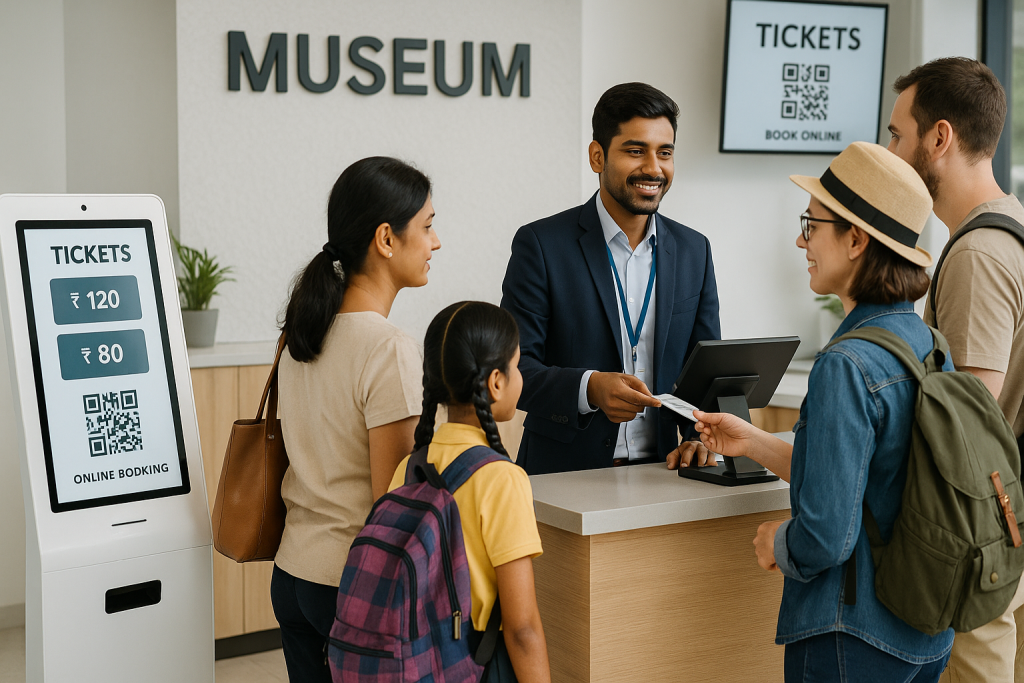
- Contactless Entry Methods: Visitors receive secure QR codes via email immediately upon purchase. Digital ticketing accelerates the entry queue.
- Hardware Integration: Turnstiles and handheld scanners validate digital ticketing instantly against the central database.
- Fraud Prevention: Real-time validation prevents duplicate scans of the same ticket. This secures revenue and ensures accurate visitor counts. Implementing digital ticketing provides precise capacity tracking for facility management.
How Can Museums Achieve True Real-Time Inventory Synchronization?
Maintaining accurate inventory is critical for museums operating with capacity limits or timed-entry schedules. An integrated museum ticketing system must synchronize inventory instantly across all platforms.
When a transaction occurs on the website, the POS system for museums located at the front desk reflects that change immediately. This prevents situations where onsite staff sell tickets for a time slot that just sold out via the web channel.
Synchronizing front-of-house physical counters and online web channels in real-time prevents mismatched ticket inventory. This level of synchronization requires a modern museum booking system for timed entry and group bookings.
What Are the Long-Term Operational Benefits of Integration?
Moving to a fully integrated museum ticketing system provides long-term administrative advantages beyond daily sales processing. Industry analysis regarding what’s the future of museums in terms of innovation and digital trends points directly toward centralized data management.
- Streamlined Reporting: Administrators generate comprehensive reports covering omnichannel ticketing performance from a single dashboard.
- Reduced IT Overhead: Managing a single vendor and one unified POS system for museums reduces technical complexity.
- Predictable Workflows: Omnichannel ticketing standardizes the training process for new visitor services staff.
- Consistent Data: Omnichannel ticketing provides marketing teams with a complete view of visitor purchasing habits.
How Do Disconnected and Integrated Systems Compare?
The structural differences between legacy and modern setups affect every operational department.
| Operational Function | Disconnected System | Integrated Museum Ticketing System |
| Inventory Management | Separate pools for online and physical sales. | Single pool synced in real-time. |
| End-of-Day Reporting | Manual data compilation from multiple sources. | Automated revenue reconciliation. |
| Entry Management | Paper tickets or delayed scanner sync. | Instant digital ticketing validation. |
| Sales Hardware | Standalone credit card terminals. | Connected POS system for museums. |
| Visitor Experience | Fragmented purchase journeys. | Unified omnichannel ticketing. |
What Are the Next Steps for Upgrading Infrastructure?
Institutions evaluating their current infrastructure must assess the financial impact of their operational bottlenecks. Disconnected software causes manual tallying errors and mismatched inventory.
Administrators must prioritize centralizing sales data across all channels. Institutions utilize EveryTicket to consolidate these processes and automate end-of-day financial workflows. A unified setup directly addresses the core inefficiencies of legacy operations.
Conclusion
Implementing an integrated museum ticketing system is essential for maintaining financial accuracy in modern institutions. Unifying the physical POS system for museums with online sales channels achieves true omnichannel ticketing. This integration directly enables automated revenue reconciliation and secure digital ticketing. Finance directors and administrators require this level of automated revenue reconciliation to maintain reliable, real-time oversight of institutional health.
FAQs
What is an integrated museum ticketing system?
An integrated museum ticketing system connects online booking platforms with onsite physical sales terminals. This centralizes inventory, prevents overselling, and streamlines daily administrative tasks entirely.
How does a POS system for museums differ from retail POS?
A POS system for museums handles timed entry admissions, capacity management, and membership validation. Standard retail POS systems lack these exact functions for visitor control.
What are the main benefits of omnichannel ticketing?
Omnichannel ticketing allows visitors to buy tickets on any device or in person. It provides a consistent purchasing experience and gives administrators centralized sales data.
Why is automated revenue reconciliation important for finance directors?
Automated revenue reconciliation eliminates manual data entry and spreadsheet errors. It matches web sales with onsite transactions instantly, providing finance teams with accurate financial reports.
How does digital ticketing improve the visitor experience?
Digital ticketing delivers entry barcodes directly to mobile phones. This removes the need for physical paper, accelerates the entry process, and prevents long admission queues.