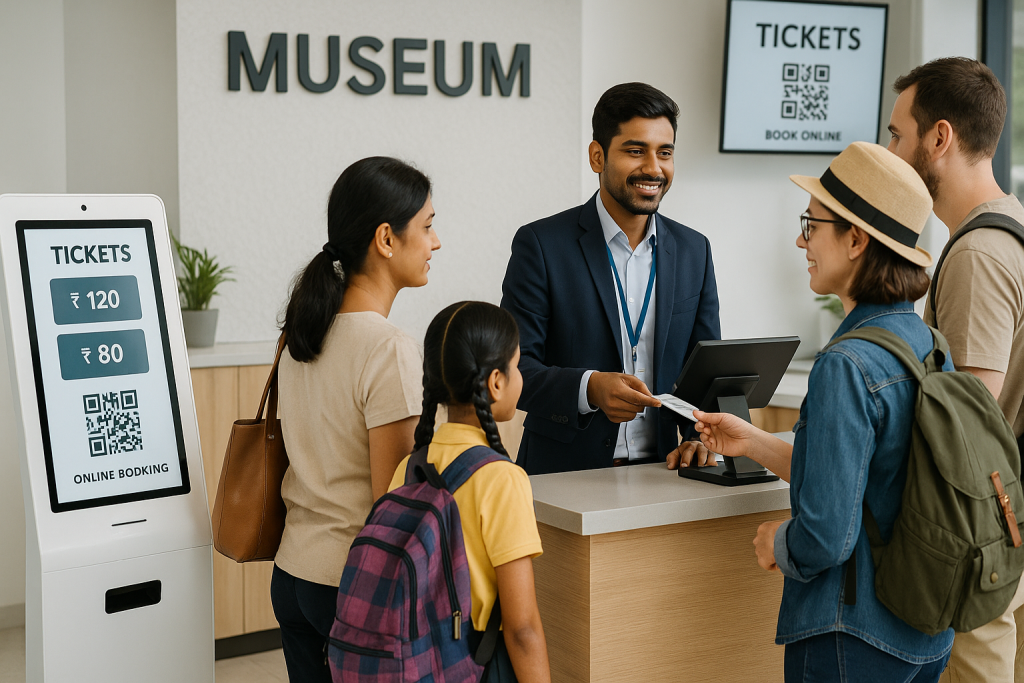
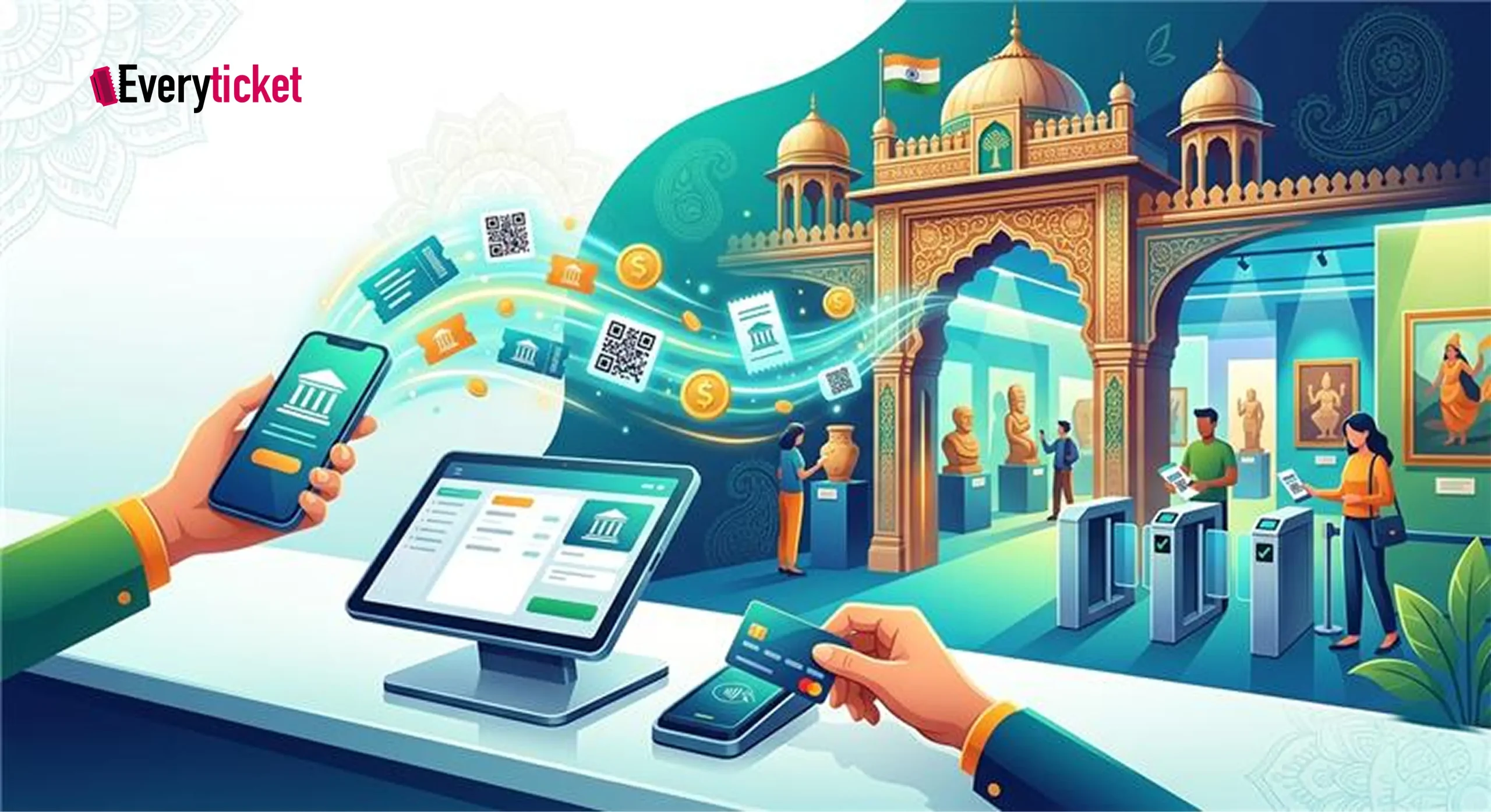
Indian museums need an online ticketing system with POS because online sales and counter sales should never run separately. When both are connected, museums get cleaner reporting, faster ticketing, fewer mismatches, and a smoother visitor experience.
That is especially important for operations managers. If the online booking system says one thing and the ticket counter says another, the problem quickly becomes bigger than ticketing. It affects reporting, staff efficiency, visitor flow, and trust in daily operations.
What is an online ticketing system with POS?
An online ticketing system lets visitors book tickets before arriving. A museum POS system handles walk-in sales at the counter.
When these two work together, the museum gets a connected setup for all ticket sales. Online bookings, walk-ins, payment records, and ticket validation stay in sync.
That sounds simple, but it solves one of the most common museum problems in India: the mismatch between online and offline sales.
Why do museums face a counter mismatch?
Counter mismatch usually happens when the booking system and the counter system do not talk to each other.
A visitor may book online, but the counter team may still have to check a separate record. A walk-in sale may happen at the desk, but that number may not reflect properly in the final report. Refunds, edits, or special entries may also be tracked in different places.
Over time, this creates confusion like:
- ticket count differences
- payment mismatch
- slower daily closing
- longer counter queues
- reporting errors
- extra work for staff
For operations managers, this means one small gap at the counter can create a full-day reporting issue.
Why is POS important for museums?
Many museums still depend heavily on walk-in visitors. Even if online booking grows, counter ticketing remains important.
That is why a museum POS system should not be treated as a separate tool. It should be part of the same ticketing flow.
A connected POS helps staff sell tickets faster, track payments properly, and reduce confusion during busy hours. It also makes it easier to manage visitor categories, group entries, and different pricing rules from one place.
Without POS integration, the museum may have online convenience but still face offline chaos.
Why should online and counter ticketing be together?
Because museums do not run in two separate worlds. Visitors may book online, walk in directly, ask for changes, or arrive as part of a group.
If online and counter ticketing are managed separately, staff need extra steps to check bookings, match records, and prepare reports later.
A unified system removes that problem. It gives one source of truth for:
- online sales
- walk-in sales
- ticket validation
- payment records
- shift closing
- day-end reports
This is not just better software design. It is better operations.
What changes when both systems are connected?
The biggest change is clarity.
Staff know what has been sold, how it was sold, and what still needs action. Counter teams do not have to work around the online system. They work with it.
Operations managers get better visibility, too. They can see how many tickets were sold online, how many were sold at the counter, and whether the numbers match in real time.
That means fewer surprises at the end of the day. It also means less manual checking and less pressure on teams during busy periods.
Is this only useful for large museums?
No. Smaller museums can benefit just as much.
In fact, smaller teams often feel the pain faster because they do not have extra staff to fix mismatches later. If one person is managing tickets, payments, and visitor entry, even one reporting issue creates stress.
A unified online ticketing system with POS helps small and mid-sized museums stay organized without adding complexity.
It is not about size. It is about how smoothly the museum runs.
What should ops managers look for?
If the goal is unified ticketing, the system should solve real daily problems, not just offer digital booking.
Look for these things:
- online and counter ticketing in one system
- real-time sync between bookings and POS
- QR or code-based ticket validation
- support for walk-ins and pre-booked visitors
- clear payment tracking
- easy day-end reporting
- simple staff interface
- flexible ticket categories and pricing
- support for group visits
- GST-ready billing if needed
A good system should reduce work for the ops team, not create more steps.
What questions should teams ask before a demo?
This is where many museums make better decisions.
Ask:
- Can online and counter sales sync in real time?
- Can the same system handle walk-ins and pre-bookings?
- How does day-end closing work?
- How are payment mismatches handled?
- Is the POS easy for front-desk staff to use?
- Can reports be checked without manual cleanup?
- Can the system handle different ticket types and visitor categories?
These questions matter because they focus on operations, not just interface.
What does this look like in real life?
Imagine a museum where online bookings come from one platform, but counter sales are entered separately.
During a busy weekend, staff have to check booking confirmations manually, manage walk-ins at speed, and later match totals from two systems. At closing time, the team still has to sort out ticket counts and payment records.
Now imagine the same museum using one online ticketing system with POS.
Visitors who book online are already in the system. Walk-ins are added through the same setup. Counter staff can sell, validate, and track tickets without switching tools. Reports are cleaner because the data comes from one place.
That does not just save time. It makes the whole operation easier to trust.
Why does this matter for Indian museums?
Indian museums often deal with mixed visitor behavior. Some people book in advance. Many still prefer to buy at the counter. On top of that, there may be school groups, special ticket types, local pricing rules, or busy holiday periods.
That is exactly why unified ticketing matters here.
Museums in India do not need one more separate tool. They need one connected setup that fits both digital and on-site operations.
When online booking and POS work together, the museum gets better control without making the front desk more complicated.
Why should museums talk to EveryTicket?
If your museum is still handling online bookings and counter sales in separate systems, this is the right time to fix that gap.
EveryTicket helps museums bring online ticketing and POS into one connected workflow, so teams can manage bookings, walk-ins, ticket validation, and reporting with less confusion.
What makes that valuable is practical implementation experience. Solutions like this have already been implemented in real environments, which means the approach is based on day-to-day operational needs, not just feature lists.
For operations managers, that matters. You need a system that works in real conditions, is easy for staff to use, and helps reduce mismatches at the counter.
If your team is looking for a unified online ticketing service with POS, getting in touch with EveryTicket is a practical next step. A quick discussion can help you see where the mismatch is happening today and how one connected solution can simplify the full ticketing process.
FAQs
What is an online ticketing system?
It is a system that lets visitors book tickets online before visiting.
What is a museum POS system?
It is the counter-based system used to sell tickets to walk-in visitors.
Why should both be connected?
Separate systems create a mismatch, slower reporting, and more manual work.
Is POS still important if online booking is available?
Yes. Many museum visitors still buy tickets at the counter.
Who needs this most?
Operations managers need it most because they deal directly with reporting, counter flow, and daily ticketing issues.
What improves first after setup?
Usually, counter speed, payment tracking, and day-end reporting improve first.
Can this help smaller museums, too?
Yes. Smaller teams often benefit quickly because they have less room for manual errors.
For Indian museums, an online ticketing system with POS is no longer optional. It is a practical way to reduce counter mismatch, simplify daily operations, and give teams one reliable system for both online and offline ticketing.