Museums require efficient operational workflows to manage daily visitor traffic. Administrators face significant administrative challenges when they rely entirely on outdated physical entry methods.
Complicated ticket buying creates long physical queues and frustrates potential visitors before they enter the building. Modern institutions deploy online ticket services to resolve these administrative delays permanently.
These software platforms provide easy ticket booking for consumers. Implementing robust online ticketing solutions allows museum directors to improve the user experience and restructure internal accounting tasks.
High Costs Stem from Complicated Ticket Buying Processes
Traditional physical counters drain financial resources and administrative time. The reliance on physical currency and paper receipts creates multiple inefficiencies for the facility management team.
Manual Cash Reconciliation
Staff members must spend hours counting physical currency at the end of every operational shift. They compare the physical cash against printed paper stubs and log the final numbers into spreadsheet software manually. This process introduces human error into the accounting workflow. When the financial numbers fail to match, staff must recount the cash and review the paper stubs a second time.
Security and Accounting Risks
Storing large amounts of physical cash on the premises increases security vulnerabilities. Physical currency requires secure safes and regular armored transport to banking facilities. You can minimize these risks when you replace traditional manual counters with digital payment processors. Digital transactions deposit funds directly into the registered bank account of the institution.
Recurring Printing Expenses
Paper tickets require a continuous operational budget. Ink cartridges and special thermal paper stock are recurring monthly expenses for the procurement department. Maintaining physical ticket printers also requires dedicated technical support and regular mechanical maintenance. Online ticket services eliminate the need for physical paper handling and reduce these continuous overhead costs.
Online Ticketing Solutions Alter the Visitor Experience
Easy ticket booking represents the primary baseline expectation for modern museum attendees. Consumers prefer to finalize their entry logistics before they travel to the physical venue.
Remote Mobile Purchasing
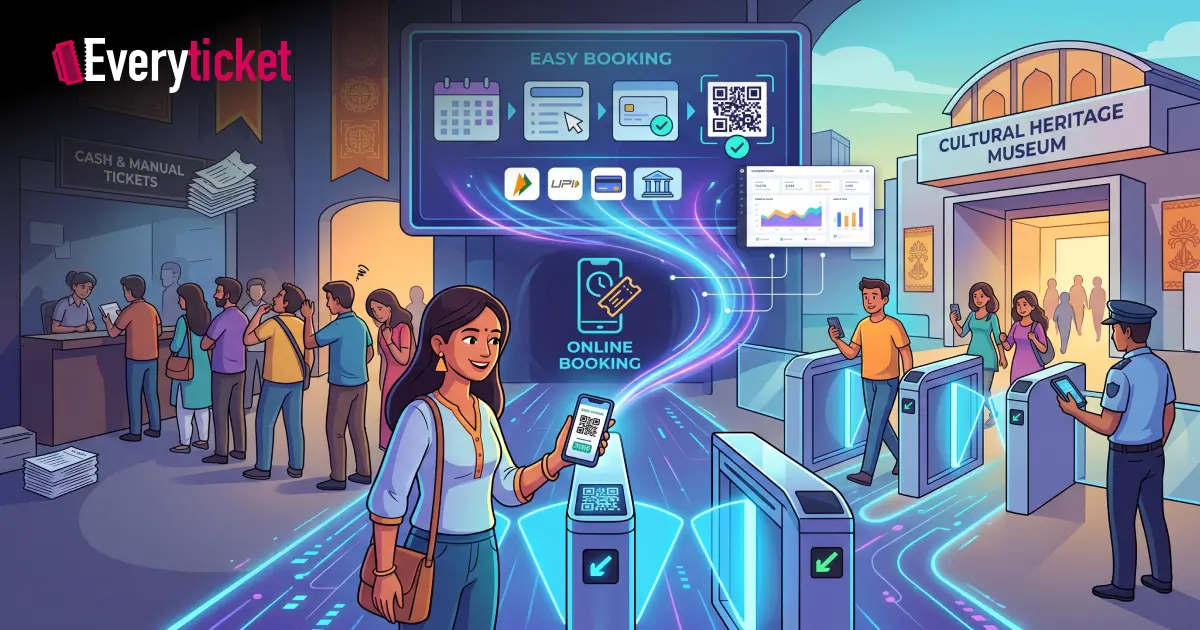
Most consumers carry smartphones and prefer to handle financial transactions on their digital screens. A responsive web interface allows a user to select a specific calendar date, choose an available time slot, and enter their payment details within three minutes. This completely bypasses the complicated ticket-buying procedures found at physical front desks.
Contactless Entry Systems
Once the digital payment clears the banking gateway, the system sends a PDF document or a mobile wallet pass directly to the email address of the consumer. The user presents their digital screen at the physical entry gate. Security staff scan the screen using handheld hardware devices. The physical turnstile opens automatically. This sequence removes all physical interaction with ticket counter personnel.
Global Digitization Standards
Government initiatives globally mandate the modernization of cultural spaces. The Ministry of Culture outlines digitization efforts to preserve heritage assets and improve public accessibility. Aligning with these standards requires digital infrastructure. Effective ticket management processes automate the entry workflow and eliminate physical bottlenecks at the main entrance.
Integration of Digital and Physical Sales Channels
A functional facility requires synchronization between physical hardware and digital software. Museums continue to receive walk in visitors who prefer to pay with cash or physical cards on site.
Unified Inventory Management
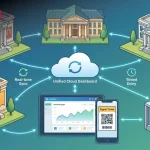
Effective online ticket services connect web applications directly to physical point-of-sale hardware. Administrators rely on syncing online bookings with physical counter sales to maintain strictly accurate capacity limits. This synchronization ensures the building never exceeds its maximum legal occupancy. The central database updates instantly when a consumer buys a ticket online or at the physical lobby counter.
Hybrid Hardware Deployment
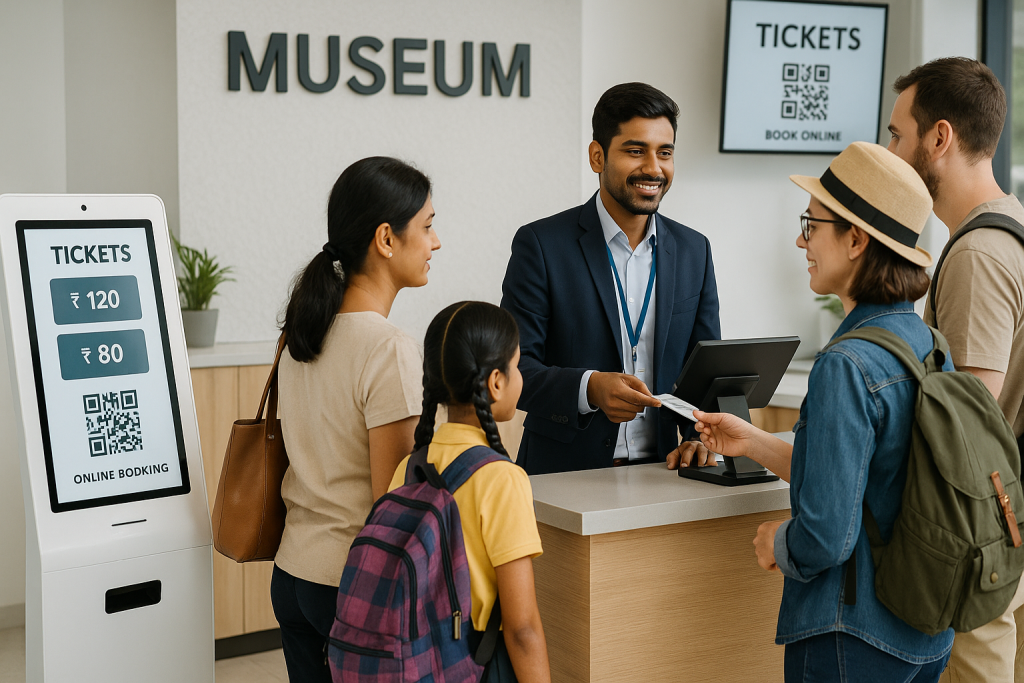
Self-service kiosks placed in the museum lobby reduce the workload on front desk personnel. These kiosks utilize the same online ticketing solutions as the main website. Visitors tap the screen, insert a payment card, and receive a printed QR code. This distributes the physical crowd across multiple automated entry points.
Essential Technical Features for Museum Operations
Procurement departments must verify specific technical requirements before they purchase software. The system must comply with local financial regulations and consumer preferences.
Local Payment Gateway Integration
Visitors abandon digital transactions if their preferred payment method is unavailable. A comprehensive ticketing procurement checklist must include local gateway integrations. The software must process payments through UPI applications, direct net banking portals, and domestic credit networks securely.
Automated Tax Compliance
Museums operate under specific government financial regulations and require precise automated tax reporting. Online ticketing solutions calculate required taxes like GST automatically during the final checkout process. The software applies the correct percentage of tax based on the specific ticket category. The final digital receipt displays the exact tax breakdown clearly for the consumer and the government auditor. When evaluating software costs, administrators calculate the long-term administrative savings of automated financial reporting against the initial software deployment fees.
Multilingual User Interfaces
Cultural institutions serve diverse domestic travelers and international tourists. The digital interface must provide language translation options. A tourist can select their native language from a dropdown menu to read the terms of service and complete the purchase without confusion.
Visitor Analytics Inform Exhibition Planning
Data collection remains a primary operational benefit of digital ticketing infrastructure. Management teams use specific visitor data to optimize daily operations and plan future budgets.
Traffic Flow Monitoring
Online ticket services record every digital transaction and generate detailed analytics reports automatically. These reports show exactly when visitors arrive and which specific ticket categories sell the highest volume. The UNESCO guidelines on digital technologies confirm that digital data tools significantly enhance the management of cultural institutions.
Staff Scheduling Optimization
Museum directors use this traffic data to plan physical staff schedules and allocate resources efficiently. If data indicates that weekday mornings experience low physical foot traffic, management assigns fewer security guards during that specific shift. If weekend afternoons consistently reach maximum capacity, management schedules additional personnel to handle physical crowd control.
Financial Auditing and Forecasting
Reliable digital systems support operations by providing factual historical data for strategic financial decisions. The software stores years of historical purchase data securely. Managers compare current daily ticket sales against previous fiscal years to forecast future institutional revenue.
Adopt a Modern Ticketing Infrastructure
Museums require reliable digital technology to process daily ticketing demands efficiently. We built EveryTicket as a smart digital solution to manage museum entry procedures effectively. Our platform processes digital payments, generates custom QR codes, and synchronizes online web portals with physical counter hardware seamlessly.
We provide the technical infrastructure necessary for easy ticket booking and automated revenue tracking. Implementing our system removes the manual accounting workload from your administrative staff and provides a clear, documented digital record of every visitor transaction.
FAQs
What are online ticket services for museums?
They are digital platforms allowing visitors to easily book, pay, and receive museum entry tickets remotely.
How do online ticketing solutions improve visitor experience?
They eliminate long queues, offer flexible digital payment options, and provide instant confirmation for seamless entry.
Do digital ticketing platforms support local payment methods?
Yes, modern platforms integrate smoothly with local gateways like UPI, net banking, and cards for convenience.
Can online ticket services integrate with physical counters?
Absolutely. Advanced platforms sync online sales with on site POS systems in real time to prevent overbooking.
Why should museums adopt an online ticket management system?
It reduces manual labor, provides visitor analytics, ensures tax compliance, and boosts overall revenue generation significantly.