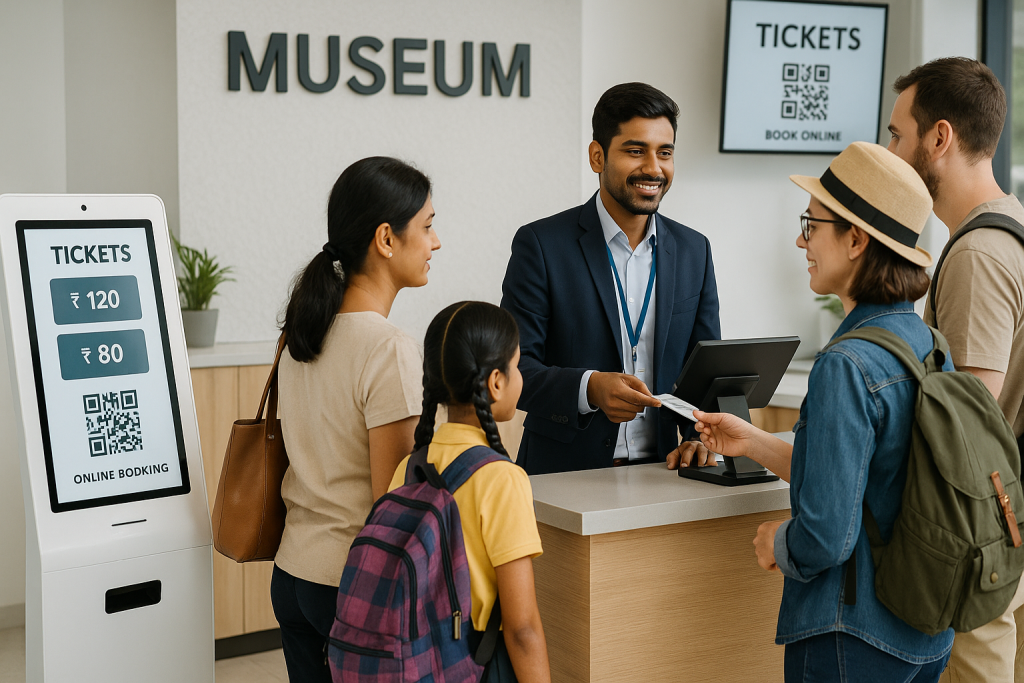
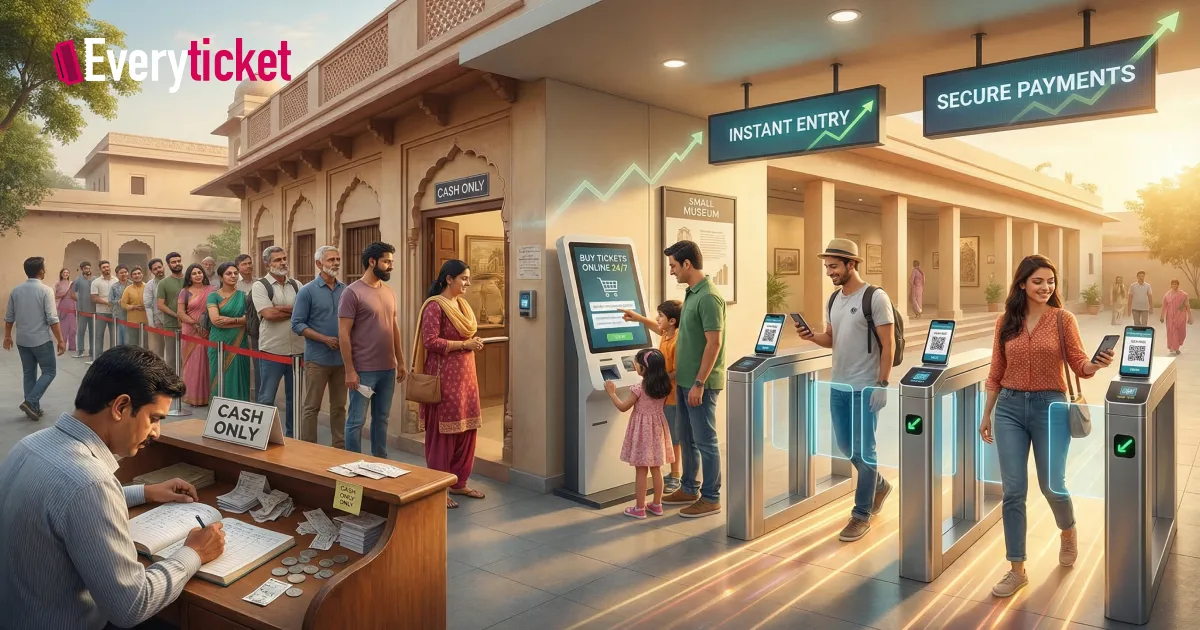
Online museum ticketing increases museum revenue by preventing cash leaks, enabling continuous sales, and automating visitor entry. Small museums in India often report low revenue due to their reliance on manual ticket counters. Manual systems cause long queues, cash discrepancies, and missing visitor data.
Digital growth requires a transition to software solutions. Effective small museum ticket management reduces operating costs and captures modern tourists. Implementing an online museum ticketing system provides measurable returns on investment by optimizing front-desk operations and maximizing ticket sales.
Operational Comparison: Manual vs. Digital Ticketing
| Feature | Manual Ticketing | Online Museum Ticketing |
| Sales Availability | Limited to physical operating hours | 24 hours a day, 7 days a week |
| Payment Collection | Physical cash handling | Secure digital payment gateways |
| Visitor Data | None collected | Demographic and booking data saved |
| Ticket Format | Printed thermal paper | Digital PDF or mobile QR code |
The Hidden Revenue Leaks in Traditional Ticketing Methods
Cash Handling and Reconciliation Errors
Staff members process physical currency at manual ticket counters. This process creates opportunities for miscalculation. Daily cash reconciliation takes up to five hours per week. Operational inefficiencies in manual payment processing cost businesses a significant percentage of their total revenue. Online museum ticketing processes payments digitally. Digital payments are deposited directly into the museum’s bank account, eliminating manual counting errors.
The Cost of Counterfeit Paper Tickets
Paper tickets lack secure verification methods. Visitors duplicate standard paper tickets. Staff cannot easily identify counterfeit paper tickets during busy periods. Fraudulent entry reduces the total revenue for the museum. Implementing secure barcodes stops this issue. Software includes QR code verification to prevent duplicate entries. You can review exactly how an online ticketing system stops fake tickets at Indian museums by validating each entry through a central database.
Walk-Aways Due to Wait Times
Tourists arrive at the museum and see long queues. Many tourists choose to leave rather than wait. Lost visitors equal lost revenue. Small museum ticket management must prioritize fast entry. Online museum ticketing allows visitors to bypass the physical queue. They scan their digital ticket at the entrance and enter immediately.
Direct Financial Impact: How Online Museum Ticketing Drives Sales
Capturing the Digital Tourist (24/7 Sales)
Tourists plan their trips using smartphones. They purchase tickets before arriving at the destination. A physical counter only sells tickets during operating hours. Online museum ticketing keeps the sales channel open 24 hours a day. Small museums capture revenue from international and domestic tourists in different time zones. Proper small museum ticket management ensures the ticketing portal functions correctly on all mobile devices.
Automated Upselling and Bundling
Museums generate revenue from secondary products. These products include guided tours, audio guides, and souvenir merchandise. Counter staff often forget to offer these items to visitors. Online museum ticketing displays these options during the checkout process. Visitors select these add-ons before completing their purchase. This automated process increases the average transaction value per visitor.
Dynamic Pricing for Better Yield Management
Visitor demand changes based on the day of the week and the season. Manual ticket management uses static pricing. Online museum ticketing enables dynamic pricing adjustments. Administrators increase ticket prices during peak tourist seasons. They lower prices during weekdays to attract local visitors. Yield management directly improves total revenue and ensures steady cash flow.
Cost Reduction as a Revenue Multiplier in Small Museum Ticket Management
Automating the Front Desk
Labor is a significant expense for small museums. Manual ticket sales require dedicated staff members at the front desk. Online museum ticketing shifts the purchase process to the visitor. Museums install self-service kiosks in the lobby. Visitors buy tickets and print them without staff assistance. Small museum ticket management becomes more efficient when staff members handle visitor questions instead of transaction processing.
Slashing Paper and Printing Costs
Physical tickets require custom printing and thermal paper rolls. These materials represent a recurring monthly expense. Digital tickets generate a unique PDF or mobile QR code. Visitors scan their phones at the entrance. Removing paper tickets reduces operational costs and improves the profit margin on every ticket sold.
Synchronized POS Systems
Small museums process both online and walk-in ticket sales. Running separate systems causes inventory errors. An integrated approach combines the website with the physical counter. A synchronized point of sale connects all transactions to one database. Implementing an online ticketing system with POS for museums in India ensures accurate financial reporting and prevents overbooking.
Leveraging Visitor Data for Long-Term Digital Growth
Identifying Peak Hours and Demographics
Museum directors need data to make business decisions. Manual ticketing provides no information about the visitor. Online museum ticketing collects demographic data and booking times. The dashboard displays the most popular visiting hours. Reports by McKinsey & Company demonstrate that organizations utilizing customer behavior data generate significantly higher revenue than their peers. Effective small museum ticket management relies on this data to schedule staff efficiently and plan marketing campaigns.
Remarketing and Audience Retention
Small museums need repeat visitors to maintain consistent revenue. Online checkouts require visitors to input their email addresses. The museum collects these addresses in a database. Administrators send automated emails about new exhibitions and events. Email marketing campaigns encourage previous visitors to return and purchase tickets again.
Choose the Right Solution: Built for Small Museums
Why Generic Event Software Fails Museums
Standard event platforms do not support the operational requirements of a museum. Museums require timed entry slots to manage crowd capacity. They also need specific tax compliance reporting for the Indian market. Generic software lacks these features. Museums need specialized tools. Evaluating the best event ticketing software for museums hosting special exhibitions shows the necessity of custom features built for daily visitor management.
The EveryTicket Advantage
EveryTicket designs software specifically for museums. The platform provides a digital ticketing website, smart counter POS systems, and self-service kiosks. The system requires no legacy hardware. Setup takes 60 minutes. EveryTicket focuses on digital growth and revenue optimization through dedicated small museum ticket management tools. Museum directors implement online museum ticketing to secure their revenue, optimize their operations, and serve their visitors efficiently.