Public and heritage institutions manage high daily visitor numbers. Administrators face severe operational challenges when they rely on physical paper tickets. These legacy physical systems create revenue leaks, inaccurate daily reporting, and long entry queues at the front gates. Implementing dedicated museum ticketing software resolves these administrative bottlenecks directly. Transitioning to a structured digital framework supports institutional digital transformation mandates set by public sector authorities across the country.
Relying on manual ticket issuance requires extensive staff supervision and physical storage space for ticket rolls. Facility directors must process cash payments, issue a printed stub, and manually record the transaction in a ledger. This process takes minutes per visitor. When thousands of visitors arrive simultaneously, this physical process causes immediate congestion.
Here, we have explained how public facilities can digitize their entry management systems efficiently to solve these exact logistical problems and secure daily operations.
The Financial Drain of Manual Ticketing in Public Spaces
Relying on manual ticket issuance causes direct financial and operational inefficiencies. Administrators must identify these core issues to justify a system upgrade to regional directors and board members.
- Revenue Leakage at the Counter: Cash transactions at physical counters increase the risk of accounting errors. Staff members must return exact change during peak hours. Mistakes happen frequently. These small daily errors accumulate into significant annual financial losses for the institution.
- Total Lack of Visitor Data: Paper tickets do not collect demographic information. Management cannot determine the age groups of visitors or identify peak visitation times accurately. They base their staffing schedules on guesswork rather than concrete data.
- Operational Staff Strain: Staff members spend excessive hours managing cash and resolving entry disputes at the gate. Adopting automated ticketing processes eliminates staff fatigue and tedious manual tasks. Automated entry reduces the time staff spend on transactional duties entirely.
- Recurring Printing Costs: Institutions spend significant portions of their budget on printing paper tickets. Visitors discard these tickets immediately after entry. Moving to digital systems removes this recurring procurement cost and frees up budget allocation for other heritage preservation needs.
How Digital Ticketing for Museums Operates at an Enterprise Scale
Enterprise facilities require robust infrastructure to process thousands of transactions daily without system crashes. Digital ticketing for museum operations centralizes all visitor transactions into one controllable dashboard accessible by management.
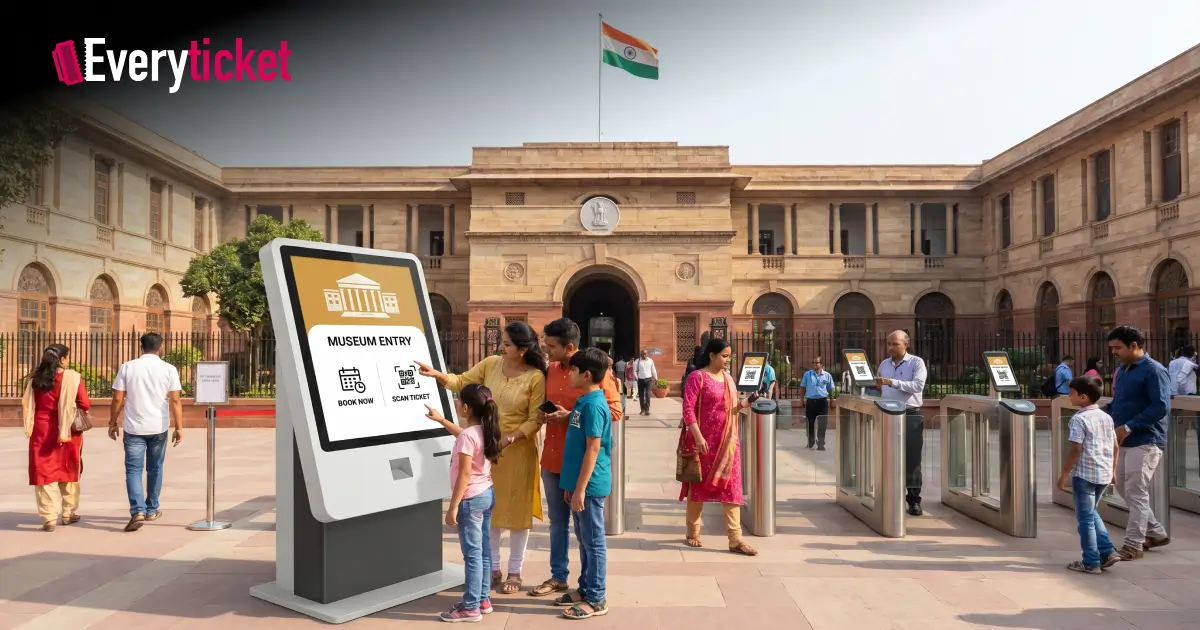
- Barcode and QR Code Entry: Visitors receive digital tickets directly on their smartphones via email or SMS. Scanning a barcode at the automated turnstile speeds up the entry process. Staff do not need to tear ticket stubs physically. Understanding the automated entry process helps decision makers see the immediate value of modern gate control hardware.
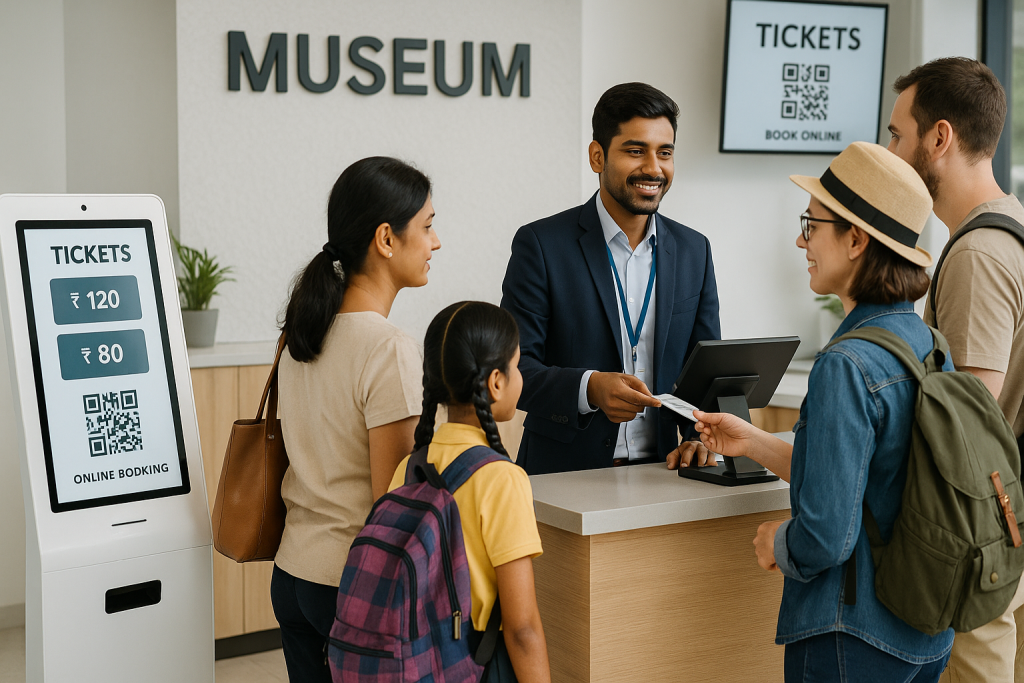
- Timed Ticketing Capabilities: Administrators set strict hourly capacity limits within the system backend. Visitors book specific time slots prior to arrival. This feature is necessary when handling high traffic periods at prominent heritage sites. It spreads visitor arrivals evenly across operating hours and solves visitor congestion completely.
- Multi-Channel Inventory Synchronization: The system updates ticket inventory instantly across multiple sales channels. When a user buys a ticket on the official website, the physical kiosk at the gate registers one less available ticket. This prevents double booking and ensures accurate capacity management.
- Automated Financial Reconciliation: The software tallies daily sales automatically at the close of business. The system generates a report detailing cash, card, and digital wallet transactions. This eliminates manual ledger entries at the end of the shift and provides instant clarity for the accounting department.
Core System Features Required by Heritage Sites
Public institutions operate under specific geographic and economic constraints. Museum ticketing software must accommodate local user behavior, regional languages, and specific administrative requirements.
- Regional Payment Gateway Integration: The platform must support popular local payment methods. Visitors expect to pay using their preferred native mobile wallets and immediate bank-to-bank transfer protocols like UPI. Systems without these integrations lose direct sales and frustrate local tourists.
- Multilingual User Interfaces: Self-service kiosks and online booking portals need to offer multiple regional languages. Institutions serve diverse demographic groups daily. Visitors must read instructions clearly in their native language to complete a purchase without asking staff for translation assistance.
- Offline Point of Sale Functionality: Many historical sites suffer from poor internet connectivity due to thick stone walls and remote locations. Physical kiosks must continue processing sales offline. The hardware stores the transaction data locally and syncs it to the central server once the connection returns. Investing in future-proof technology ensures continuous operations regardless of local infrastructure limitations.
- Tax Compliant Automated Reporting: The software must generate automated financial reports that comply with local government tax regulations, like GST. Management exports these files directly to the central auditing department for compliance reviews securely.
Aligning with National Digital Transformation Goals
Upgrading to museum ticketing software aligns with broader administrative modernization efforts. Government bodies actively encourage public institutions to adopt centralized digital frameworks.
- Accessing Government Financial Support: Institutions can often access cultural grants and funding schemes designed specifically to modernize historical site infrastructure. Securing these funds requires a clear digital implementation plan. Upgrading legacy systems fulfills the core requirements of these modernization grants and secures public capital for the facility.
- Integration with Open Networks: Government initiatives currently push for centralized digital commerce platforms. Top archaeological sites are already adapting to open networks and implementing interoperable digital ticketing networks to standardize national entry across all regional sites. This allows tourists to buy authentic tickets through certified third-party travel applications securely.
- Direct API Connectivity: Enterprise facilities need scalable tech integrations to connect their ticketing system with existing government audit tools. Open API architecture allows the software to push daily sales data directly to national tourism databases without manual data entry.
Improve Visitor Experience While Securing Institutional Revenue
A reliable entry system directly impacts how visitors perceive a public institution. Digital ticketing for museum facilities removes friction from the arrival process and creates a highly structured environment for all attendees.
- Elimination of Entry Queues: Pre-booked digital tickets eliminate the need for visitors to wait at physical counters. Visitors walk directly to the scanning gate. This reduces crowd buildup outside the main entrance and improves the overall visual appeal of the monument facade.
- Preservation Through Crowd Control: Managing capacity limits protects fragile heritage structures from overcrowding. The software stops selling tickets once the building reaches maximum safe capacity for that hour. This prevents physical wear and tear on historical floors and artifacts safely.
- Strategic Staff Allocation: Automating front gate sales allows management to reassign staff to visitor assistance roles inside the exhibits. Staff monitor the halls instead of counting cash. This improves security and visitor engagement concurrently.
- Unified Facility Management: The ticketing platform connects seamlessly with comprehensive facility management modules. This links the front gate entry data with souvenir shop point of sale terminals and cafeteria operations. Administrators start calculating the overarching return on investment accurately once all institutional departments connect digitally to the same local server.
Modernize Your Institution with Proven Ticketing Infrastructure
Enterprise public institutions need secure systems to manage daily operations. We provide dedicated museum ticketing software designed specifically for complex and high-volume environments. EveryTicket supports direct local payment integrations, localized language portals, and offline-capable point of sale terminals. Our platform enables facility directors to automate daily financial reporting and manage visitor flow through precisely timed entry protocols. We build digital ticketing for museum administrators who require exact data analytics and secure revenue tracking. Contact EveryTicket to schedule a technical demonstration of our enterprise ticketing architecture and secure your facility operations completely.
Conclusion
Upgrading from manual processes to digital ticketing for museum operations secures institutional revenue and improves daily facility management. Museum ticketing software provides the exact digital tools required to track visitor demographic data, manage crowd capacity safely, and automate financial reconciliation. Public heritage sites must adopt these centralized systems to meet modern operational standards and comply with national digital transformation objectives. Implementing a robust software infrastructure prepares historical institutions for future growth, audit compliance, and long-term operational stability.
FAQs
What is museum ticketing software?
Museum ticketing software is a digital platform automating ticket sales, gate entry management, and daily visitor reporting.
Why do public museums need digital ticketing?
Digital ticketing for museums stops financial revenue leakage, reduces physical entry queues, and provides accurate financial reports.
Does digital ticketing for museum facilities work offline?
Yes, enterprise digital ticketing for museum operations includes offline functionalities that sync local data upon network reconnection.
Can museum ticketing software accept local mobile payments?
Advanced museum ticketing software integrates directly with local payment gateways like UPI to process mobile transactions instantly.
How does software help with historical site crowd control?
Museum ticketing software uses timed entry slots to control visitor capacity limits and prevent structural building overcrowding.