Museum directors and finance managers face a high volume of transactions daily. Visitors expect fast checkout processes at the entry gates. Manual cash handling creates long queues and counting errors. Administrators require modern museum ticketing solutions to solve these operational problems.
Integrating digital payments reduces cash dependencies and speeds up the ticketing queue. Implementing UPI for museums accelerates the entry process because visitors use their mobile devices to pay instantly.
Establishments must also ensure Indian tax-compliant ticketing for accurate monthly financial reporting. Upgrading to systems with secure payment processing protects both the institution and the visitor from transaction failures and fraud.
Why Must Institutions Adapt to Changing Visitor Payment Habits?
The preference for physical cash is declining rapidly. Visitors now use smartphones to complete daily transactions. This shift requires facilities to adopt digital payments at the ticket counter and online booking portals. The Government of India reports that the Unified Payments Interface handles over 80% of retail transactions across the country. You can review the official transaction data published by the Press Information Bureau.
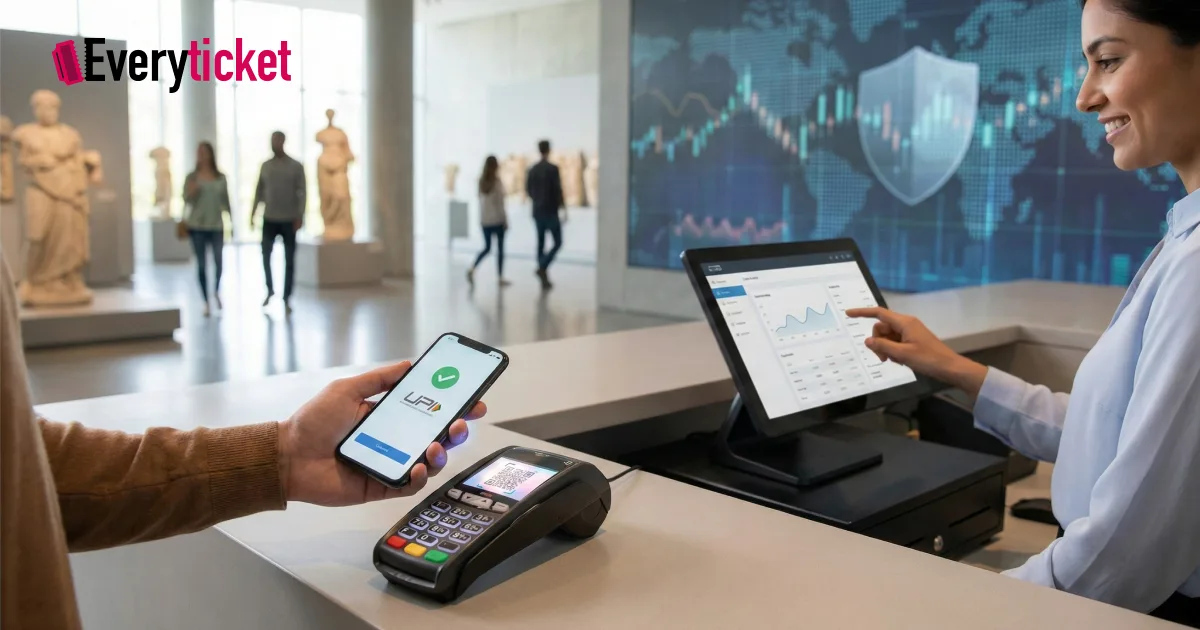
Integrating UPI for museums directly into the point-of-sale system prevents manual entry errors by the staff. Staff members scan dynamic QR codes to confirm bank transfers instantly. This specific process provides secure payment processing by eliminating third-party card machines and manual verification workarounds. Upgrading museum ticketing solutions to support these banking networks improves the visitor experience. Proper Indian tax-compliant ticketing begins with capturing accurate transaction data at the source.
What Causes the Reconciliation Bottleneck at the Ticket Counter?
Finance managers spend hours matching physical cash with receipt logs at the end of each day. Reconciling third-party wallet transfers adds another layer of administrative work. Outdated systems isolate ticketing data from the main accounting ledgers. Modern museum ticketing solutions consolidate this financial data into a single dashboard. They record cash and digital payments in a single database in real-time.
Implementing secure payment processing guarantees that the collected funds match the recorded ticket sales exactly. You can learn more about this integration process in our comprehensive guide on configuring a Complete Museum Ticketing System with POS and Online Booking. Using UPI for museums requires automated syncing with the bank to avoid missing payments. A centralized software system provides Indian tax-compliant ticketing by linking every individual transaction to the correct tax category immediately.
How Do Administrators Navigate the Complexities of Mixed Revenue Streams?
Cultural institutions generate revenue from multiple sources simultaneously. Standard admission tickets usually attract a 0% GST rate under current laws. However, souvenir shop merchandise and cafeteria food sales fall under different tax slabs. Administrators must separate these revenue streams for government reporting. The Central Board of Indirect Taxes and Customs mandates accurate classification for GSTR-1 and GSTR-3B filings.
Reliable museum ticketing solutions categorize items automatically during the checkout. This specific function ensures Indian tax-compliant ticketing without requiring manual calculations by the finance team.
Below is a breakdown of typical museum tax categories and their reporting requirements.
| Revenue Source | Typical GST Rate | Reporting Requirement |
| General Admission Entry | 0% (NIL) | Exempt Supply |
| Special Event Exhibition | 18% | Taxable Supply |
| Souvenir Shop Merchandise | 12% – 18% | Taxable Supply |
| Cafeteria Food Sales | 5% | Taxable Supply |
Accurate tax categorization relies heavily on secure payment processing. When visitors use digital payments, the software tags the exact tax amount to the specific item sold. Deploying UPI for museums across all sales points, including the cafe and gift shop, maintains strict consistency in tax records.
Why Should Finance Managers Automate Financial Reports?
Manual spreadsheet reporting leads to data entry errors and compliance failures. Finance teams need immediate access to accurate transaction logs. Advanced museum ticketing solutions generate detailed financial reports automatically at the end of the business day.
They track every single entry, whether funded by cash or digital payments. We detail the operational benefits of unified data in our article on How a Museum EPOS Ticketing System Centralizes Financial Reporting.
The software formats these financial reports for immediate monthly tax filing. This automation delivers Indian tax-compliant ticketing by default, saving the finance department days of administrative labor. Integrating UPI for museums into the reporting module allows managers to track real-time bank settlements. Verified secure payment processing ensures the audit trail remains intact for future government inspections.
How Do Institutions Integrate Natively with India’s Preferred Payment Networks?
Ticket counter staff cannot rely on standalone card machines running separately from the ticketing software. Disconnected hardware slows down the checkout line and frustrates visitors. Direct software integration connects the payment gateway straight to the ticket printer.
This specific setup enables rapid, secure payment processing without manual intervention. Administrators can review the technical setup steps in our guide on How to Set Up Ticketing Software for Museum.
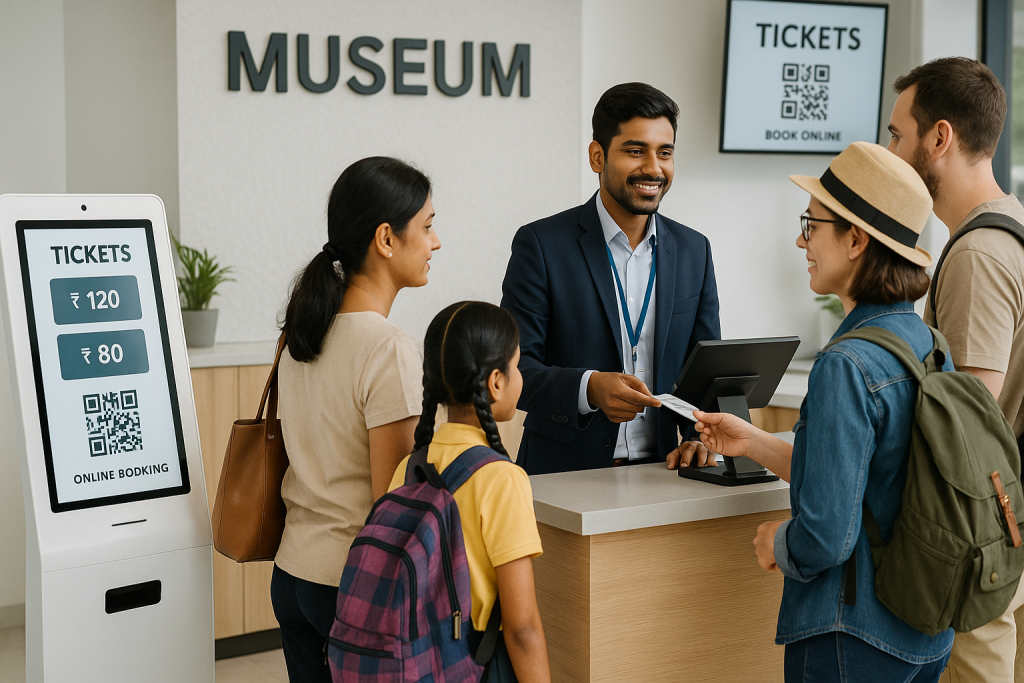
Processing digital payments within the primary interface removes reconciliation delays entirely. Implementing UPI for museums requires dynamic QR code generation on a customer-facing screen. The screen displays the exact payable amount, including all applicable taxes.
This visual confirmation supports transparent Indian tax-compliant ticketing. Institutions utilizing fully integrated museum ticketing solutions process visitors faster and maintain accurate financial records.
How Can Directors Prepare for the Next Generation of Museum Operations?
Transitioning to automated operations requires a reliable software infrastructure. EveryTicket provides dedicated platforms designed specifically for the needs of cultural institutions. The system generates accurate financial reports and handles high visitor volumes efficiently.
Museum Directors and Finance Managers can implement EveryTicket to resolve checkout delays and eliminate tax reporting errors. The platform centralizes operations across the main entry gate, the retail shop, and the online booking portal. You can explore our custom software options directly at EveryTicket or connect with us by filling out this form.
Final Thoughts
Cultural institutions must modernize their financial infrastructure to remain operational. Implementing UPI for museums meets modern visitor expectations for fast entry. Utilizing native digital payments reduces the heavy administrative burden on counting staff.
Deploying secure payment processing safeguards the institution’s primary revenue. Maintaining precise, Indian tax-compliant ticketing prevents legal penalties and accounting audits. Upgrading your museum ticketing solutions creates a highly efficient, accurate, and manageable operational environment for both staff and visitors.
FAQs
How do museum ticketing solutions handle UPI payments?
Modern systems generate dynamic QR codes directly on the customer screen. Visitors scan the code using any UPI app to complete the transaction instantly.
What makes a ticketing system Indian tax-compliant?
The software automatically applies the correct GST rates to different items. It then generates accurate financial reports formatted specifically for monthly government tax filings.
Can digital payments reduce queue times at museums?
Yes. Digital transactions eliminate the need for staff to count physical cash or return change. This speeds up the checkout process at the entry gates.
How does secure payment processing protect museum revenue?
Integrated processing connects the payment gateway directly to the software. This removes manual entry errors and ensures all collected funds match the recorded sales exactly.
Do these systems support different GST slabs for museums?
Yes. The software separates revenue streams automatically. It applies a zero percent rate for admission and higher rates for souvenir or cafeteria sales simultaneously.