Cultural institutions handle massive crowds daily. Operations managers face severe bottlenecks when they rely on legacy entry methods. High footfall locations require efficient crowd processing to maintain security and order. An online ticket management system provides the exact infrastructure needed to process visitors quickly.
A museum ticketing system removes the administrative burden from front desk staff and automates data collection. Here, we have discussed the transition from manual entry logs to digital platforms and explained the operational benefits of modernization.
The Administrative Cost of Paper Admissions
Manual ticket tracking creates significant operational delays at the entry gates. When staff issue paper stubs, entry lines grow into the street. This delays access and causes poor experiences during peak tourist seasons. Major state institutions and national heritage sites face high footfall (Ministry of Culture Annual Report), making physical logs unsustainable.
- Revenue Leakage: Cash transactions and paper stubs lead to reconciliation errors. Staff spend hours at closing time matching daily physical receipts with cash registers.
- Staff Allocation Issues: Operations managers must assign multiple employees to the front desk to handle the crowds. This pulls staff away from primary institutional goals like curation and preservation.
- Physical Storage: Paper tickets require physical storage boxes and file cabinets for audit purposes. These paper trails are vulnerable to damage and loss.
- Lack of Visitor Data: Manual ticket tracking offers zero insight into peak visitation times or demographic breakdowns.
Without an online ticket management system, handling this volume remains inefficient and prone to accounting errors.
Shift to Digital Entry Platforms
Institutions are modernizing their access points to handle modern visitor expectations. A museum ticketing system allows administrators to centralize sales, distribution, and entry validation. This shift aligns directly with broader institutional digitization (Press Information Bureau) directives aimed at modernizing cultural heritage sites.
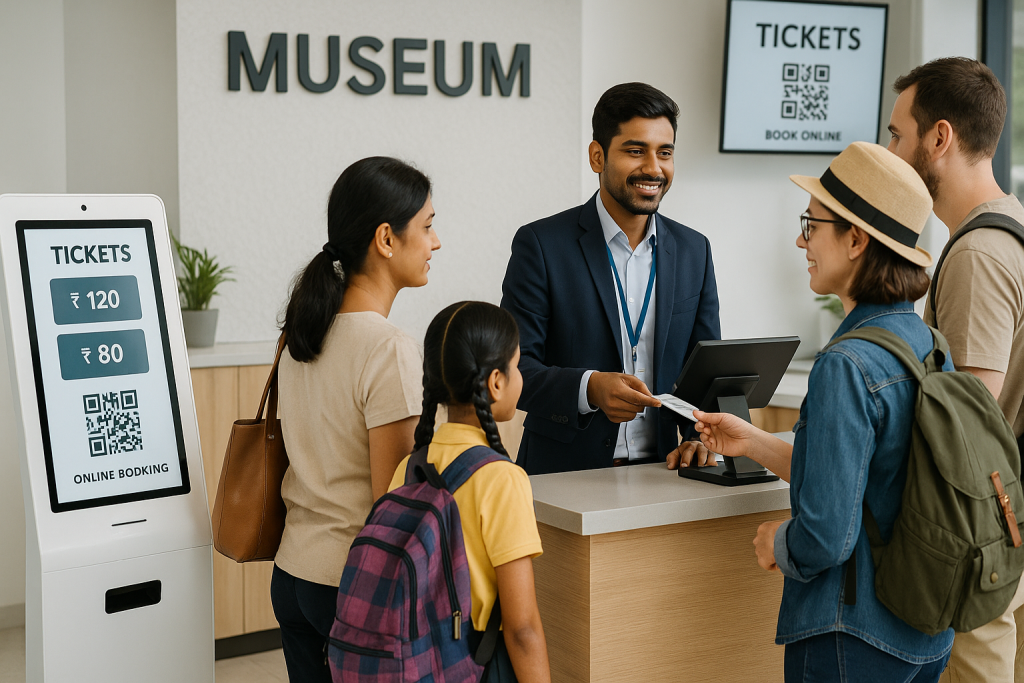
- Self-Service Options: Visitors purchase passes on their smartphones before arriving. This removes the need for physical box office interactions.
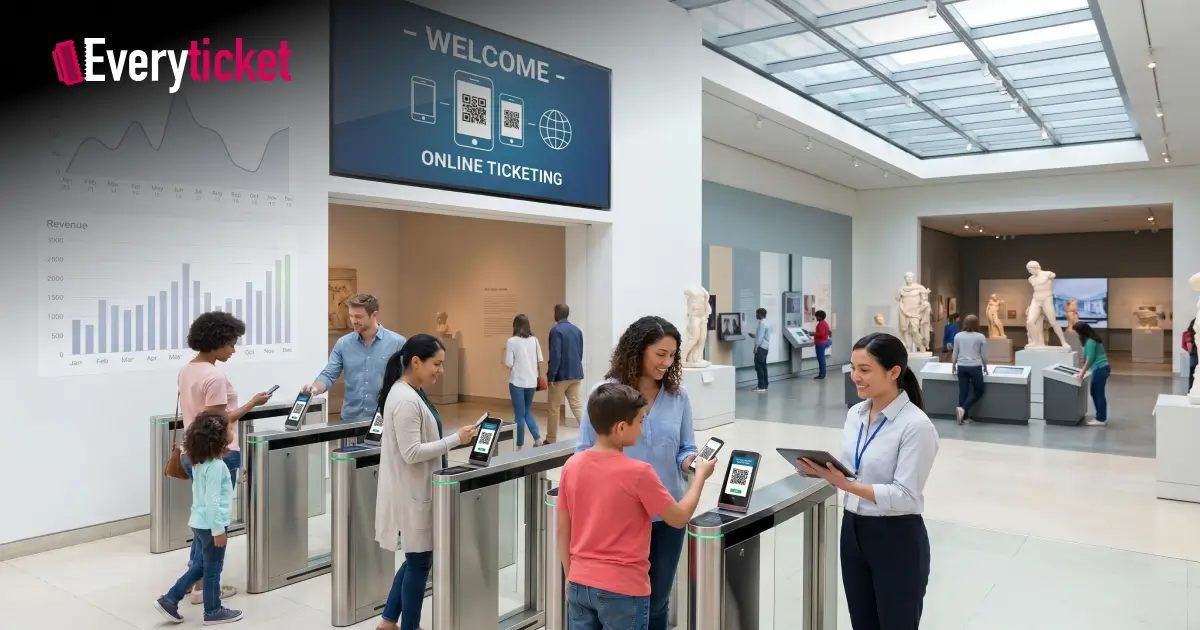
- Contactless Validation: Turnstile scanners read QR codes instantly. Fast scanning speeds up entry lines and clears the lobby area.
- Scalable Implementation: Small institutions can adopt affordable cloud ticketing without installing heavy local servers or hiring dedicated IT teams.
Replacing manual ticket tracking with automated entry tools secures the physical premises. It also supports improving visitor flow across all exhibition halls by preventing lobby congestion.
Core Infrastructure Upgrades for Cultural Venues
Implementing an online ticket management system requires specific hardware and software components. Venues need reliable technology to handle transaction spikes during holidays and weekends.
- Payment Gateways: Systems must process local payment methods seamlessly. Integrating UPI and mobile wallets accelerates the checkout process for domestic visitors.
- Access Control Hardware: Turnstiles and handheld scanners connect to the main database. This smart access technology verifies digital passes in real time and rejects duplicate tickets automatically.
- Cloud Architecture: Remote servers host the primary database. The software remains functional even if local venue computers experience hardware failures.
A dedicated museum ticketing system manages these tasks automatically in the background. This eliminates manual ticket tracking entirely and creates a secure digital perimeter around the facility.
Extract Value from Visitor Metrics
Data replaces guesswork in modern facility management. Ticket analytics provide accurate daily reporting on every aspect of the venue. Operations managers use this exact data to plan future exhibitions and adjust staff schedules.
- Peak Time Identification: Software records exact entry times for every visitor. Managers schedule extra security and janitorial staff during known busy hours.
- Demographic Tracking: Systems categorize visitor types at checkout. Institutions track the exact ratio of student groups to general admission tourists.
- Financial Reporting: Digital records simplify daily audits. Administrators use accounting software integrations to sync daily ticket sales directly with finance departments.
Proper ticket analytics give administrators the concrete numbers needed to forecast future operational budgets. Connecting individual ticket sales to unified visitor data creates a complete, measurable profile of institutional health.
Strategic Resource Allocation and Growth
Cultural venues survive on consistent ticket revenue, memberships, and state funding. Ticket analytics highlight the most profitable exhibition days and the most popular visitor routes.
- Dynamic Pricing Models: Managers adjust entry fees based on historical demand data. High demand days command standard prices, while slow days receive automatic discounts.
- Membership Upgrades: Staff identify frequent visitors through database records. They offer these specific individuals annual memberships directly at the digital checkout screen.
- Operational Budgeting: Accurate attendance records justify external funding requests. State venues use precise digital footfall numbers to secure government grants and private sponsorships.
Operations managers rely exclusively on these automated reports for daily decisions. Optimizing daily revenue through data ensures the venue can maintain its exhibits and fund new acquisitions.
Training Staff on New Ticketing Protocols
Transitioning to new software requires staff training. Frontline workers must understand how to operate scanners, process digital refunds, and read dashboard metrics.
- Interface Training: Staff learn the point of sale interface. They practice issuing digital passes and applying group discounts.
- Hardware Troubleshooting: Employees receive instructions on resetting handheld scanners and clearing paper jams in receipt printers.
- Data Entry Standards: Desk workers learn to input visitor zip codes or country origins accurately. This ensures the resulting ticket analytics remain clean and useful for the management team.
A modern museum ticketing system features an intuitive design. This reduces the training time required for seasonal workers and volunteers.
How EveryTicket Supports Institutional Upgrades
Cultural sites need dependable technology to process daily admissions. We build tools that handle thousands of daily transactions securely. An online ticket management system from EveryTicket provides point of sale software, QR code scanners, and cloud reporting in one package. We configure the museum ticketing system to integrate directly with local Indian payment gateways, including UPI and mobile wallets.
Our platform captures ticket analytics instantly as visitors scan their phones at the gate. This helps venues eliminate manual ticket tracking. If your institution needs to modernize its entry gates, we provide the software deployment and hardware integration to establish a fully digital lobby. Operations managers gain immediate control over their facility data through our centralized dashboard.
Contact us now to understand how our solution can help your institution or museum.
Final Words
Modern heritage sites cannot operate on outdated entry methods. Replacing physical logs with digital infrastructure improves security and visitor processing speeds. Administrators gain clear oversight of facility operations through detailed reporting and automated tracking. Adopting cloud software streamlines daily administrative tasks and secures financial transactions against human error. Proper digital implementation ensures institutions can handle future growth and increasing tourist numbers effectively.
FAQs
What is an online ticket management system for museums?
It is a digital platform automating ticket sales, entry tracking, and visitor analytics for museum operations.
How does a museum ticketing system improve daily operations?
It eliminates manual ticket tracking, reduces long entry queues, and provides real-time data for operations managers.
Can ticket analytics help museums optimize their resources?
Yes, analytics track visitor patterns and peak hours, allowing managers to efficiently optimize staffing and pricing.
Why is replacing manual ticket tracking so important?
Manual tracking causes entry delays and data errors, whereas digital systems ensure fast, accurate, and secure operations.
What features do museum operations managers need most?
Managers require real-time ticket analytics, POS integration, QR-based entry, and scalable cloud software to handle footfall.