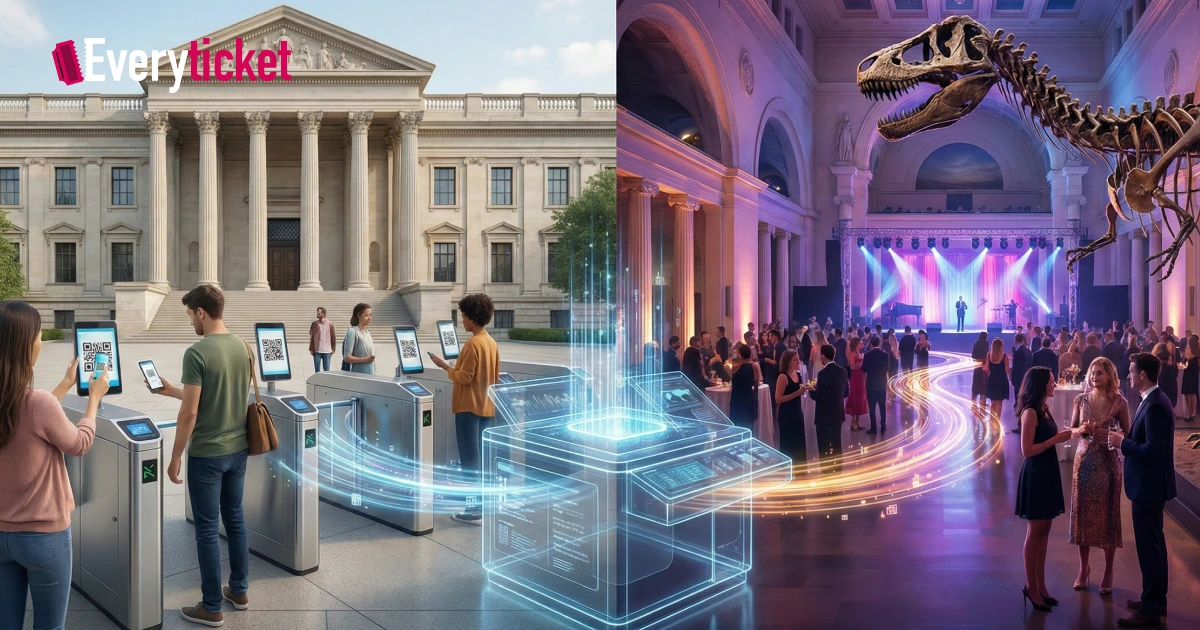
Managing daily visitors and special exhibitions through different systems often leads to data fragmentation and increased manual work for museum staff.
Many cultural venues in India currently use one tool for general admission and another for specialized workshops or gala nights.
This separation creates issues in capacity tracking and financial reporting.
Implementing a unified museum ticketing software allows operations teams to manage all access points from a single dashboard.
What Is the Problem with Fragmented Ticketing?
When a museum uses separate platforms for event ticketing and general entries, the marketing team cannot see a complete visitor profile.
For example, a visitor who buys an entry ticket may also want to attend a photography workshop.
If these sales occur in two systems, the museum loses the opportunity to cross-reference data.
Fragmented systems also require manual reconciliation of online sales at the end of each day.
This process takes hours and increases the risk of accounting errors.
A unified museum event ticketing software solution eliminates these silos.
It syncs inventory in real-time.
If a venue has a maximum capacity of 200 people, the system tracks both daily visitors and event attendees against that limit.
This prevents overcrowding and ensures compliance with safety regulations.
Main Features of Integrated Museum Ticketing
Modern museum ticketing software must handle diverse ticket types.
These include timed-entry passes, recurring daily tickets, and one-time event seats.
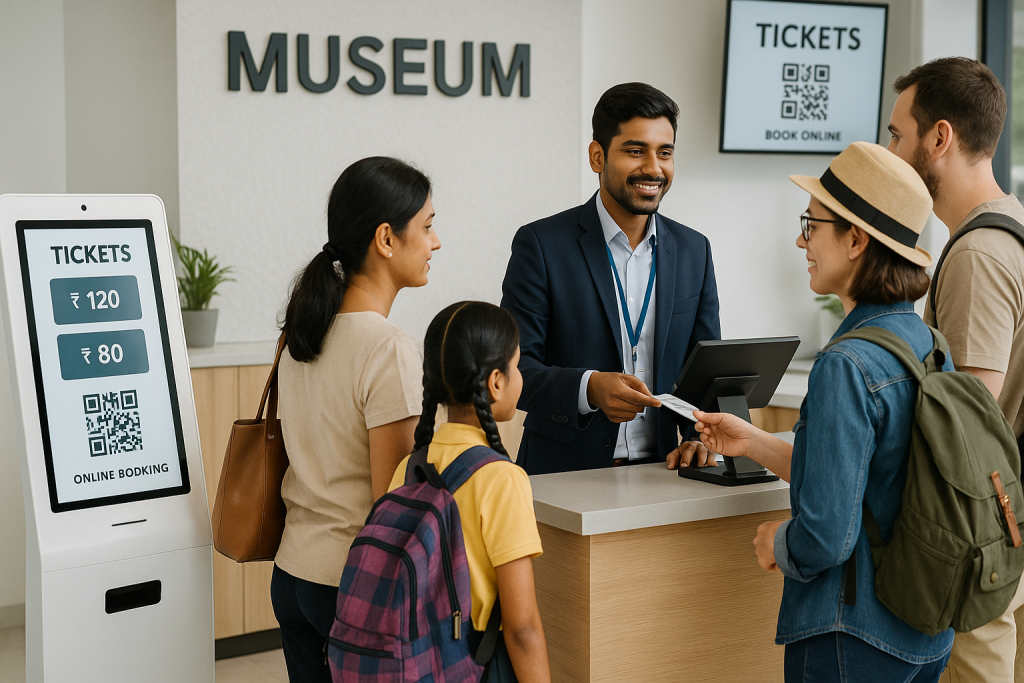
High-quality systems provide a point-of-sale (POS) integration that connects physical counters to the digital storefront.
| Feature | Impact on Operations | Impact on Visitor Experience |
| Unified Dashboard | Centralized reporting for all revenue | Faster support and troubleshooting |
| Real-time Sync | Prevents overbooking across channels | Accurate availability updates |
| QR-based Entry | Faster check-ins and reduced staffing | No physical queues at the gate |
| Automated CRM | Better data for future exhibitions | Personalized event invitations |
According to research from MuseumNext, institutions that adopt seamless digital infrastructure report higher visitor satisfaction scores due to reduced wait times.
By moving all online sales to a single platform, museums can also offer bundled packages.
A single purchase could include a general entry, a guided tour, and a souvenir voucher. This strategy increases the average transaction value.
It Improves Event Management Efficiency
Museums frequently host educational programs, film screenings, and private corporate events.
Effective event management requires more than just selling a ticket.
It involves tracking attendee lists, managing waitlists, and sending automated reminders.
When you integrate event ticketing with your daily admissions, your staff only needs to learn one interface.
This reduces training time and operational costs.
For museums looking to optimize their workflow, understanding how museum ticketing software solves key problems is a necessary step.
Automation handles the routine tasks of sending confirmation emails and generating tax-compliant invoices.
It Drives Online Sales Through Better UX
A mobile-friendly booking journey is essential for increasing online sales.
Most visitors in 2026 book their trips on smartphones.
If the checkout process is complex, drop-off rates increase.
EveryTicket provides a streamlined interface that supports all major Indian payment methods, including UPI and credit cards.
For many cultural venues, the goal is to shift the majority of visitors to pre-booked slots.
This shift makes visitor flow predictable.
You can learn more about features to look for in a museum ticketing platform to ensure your chosen tool supports this transition.
A system that manages both daily entries and event management tasks ensures that your website remains the primary source of truth for all visitor interactions.
What Museums Actually Need
Not all ticketing tools are suitable for cultural venues. General event ticketing platforms often lack the capability to handle recurring “daily” tickets or memberships.
Conversely, simple POS systems often lack the robust event management features needed for workshops and lectures.
A dedicated museum ticketing software should offer:
- Scalable architecture for high-footfall days.
- Offline-ready POS for areas with poor connectivity.
- Regional language support for diverse visitor groups.
The global market for smart museum solutions is growing as institutions prioritize digital modernization.
Data from Coherent Market Insights shows that the Asia-Pacific region is the fastest-growing market for these technologies.
Indian museums are now adopting tools that combine online sales with physical gate control to stay competitive.
Step-by-Step Transition to a Unified System
Transitioning from multiple tools to a single museum ticketing software involves three main stages.
First, the operations team must audit current ticket types and pricing tiers. This includes student discounts, senior citizen rates, and group booking rules.
Second, the marketing team integrates the booking widget into the existing website to capture online sales immediately.
Finally, the venue installs scanning hardware at the entrance. This allows staff to validate both general entry and specific event tickets using a single scanner.
This unified approach to event ticketing reduces hardware costs and simplifies the entry process for visitors.
For technical teams, following a step-by-step guide to integrating museum ticketing software ensures a smooth go-live without disrupting daily operations.
Strategic Benefits for Marketing and Operations
A single system providing data for both daily admissions and event management allows for advanced analytics.
Marketing teams can identify which exhibits drive the most traffic and which events have the highest conversion rates.
This data-driven approach helps in planning future calendars and securing sponsorships.
By centralizing all online sales, the museum also builds a clean database.
You can track attendance patterns to determine peak hours and adjust staffing levels accordingly.
This operational efficiency is one of the powerful revenue wins with museum ticketing that helps cultural venues become self-sustaining.
Managing a museum involves complex scheduling.
Using one platform for all ticket types ensures that your team focuses on visitor engagement rather than technical troubleshooting.
EveryTicket offers a comprehensive solution designed specifically for the Indian museum landscape.
Book a demo to see how EveryTicket modernizes museum ticketing without complexity.
FAQs
1. Can this software manage both daily entry and special exhibition tickets simultaneously?
Yes, the system manages recurring daily admissions and one-time special events within a single dashboard.
2. Does the platform support Indian payment methods like UPI for online sales?
The software integrates with major Indian gateways to support UPI, credit cards, and net banking.
3. How does integrated museum ticketing software prevent venue overbooking?
The system tracks real-time capacity and automatically stops sales once the set limit is reached.
4. Can our marketing team access visitor data for future promotional campaigns?
Yes, the software centralizes visitor contact details and purchase history for targeted marketing and analysis.
5. Is the ticketing interface compatible with mobile devices for on-the-go bookings?
The booking portal is fully optimized for smartphones to ensure a smooth mobile purchasing experience.
6. Does the system provide physical scanners for entry point validation?
The platform supports QR-code scanning via dedicated hardware or mobile apps for fast visitor entry.