India has over 1000 museums. Visitor numbers are rising steadily. International tourist arrivals reached 9.66 million in 2024, and domestic visits surpassed 2.5 billion annually. Yet many museums still depend on paper tickets, manual cash counters, and separate software systems that do not connect with each other.
Museum management software gives museum directors a single platform to manage ticketing, entry, payments, visitor data, and reporting. When every operational function runs from one system, staff spend less time on administration and more time on visitors. This article explains what the software covers, why Indian museums need it now, and what to confirm when evaluating online ticketing services for museums.
What Museum Management Software Actually Covers
Museum management software is a set of connected modules that handle different parts of museum operations. It replaces the collection of disconnected tools that most museums currently use to manage their day.
The core components include:
- Online ticket booking: visitors purchase tickets from any device before arriving
- Museum entry management system: QR code scanning, timed entry slots, and real-time capacity tracking at the gate
- POS counters: on-site ticket sales with payment processing and receipt generation
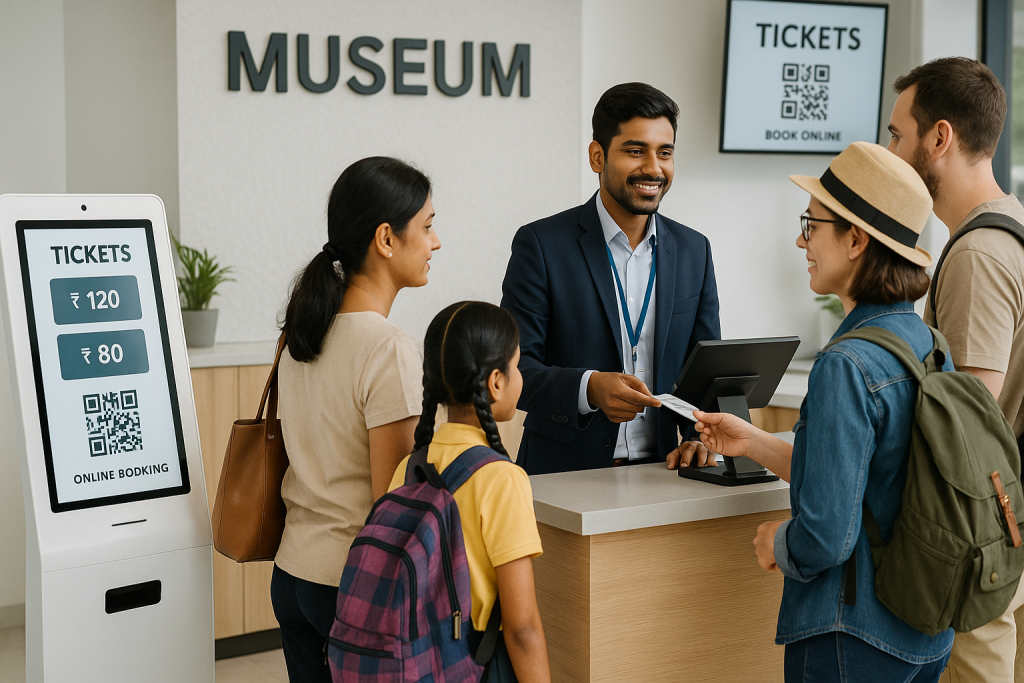
- Self-service kiosks: walk-in visitors buy tickets without requiring staff involvement
- CRM: visitor profiles, membership records, and communication history
- Analytics dashboard: footfall data, peak hour identification, and revenue summaries
- Event management: exhibition ticketing, group bookings, school trip coordination
- GST-compliant billing: auto-generated tax receipts and exportable audit reports
When these modules work together, data flows automatically across the system. Staff do not re-enter the same information across multiple platforms. Reports reflect accurate, current data at all times.
Indian Museums Are Losing Revenue to Disconnected Systems
A 2025 report by the Museums Association found that museums face internal challenges including fragmented internal operations and disconnected technology that directly affect visitor experience and revenue. This pattern is equally visible in India.
Common operational problems that museum directors face:
- Paper tickets allow duplication and cash leakage at counters
- Online and counter sales run on separate systems that do not sync
- No real-time data on how many visitors are inside the museum at any given time
- Manual reconciliation takes several hours each day
- No visibility into which exhibitions or time slots are performing well
Without a museum entry management system, directors cannot identify bottlenecks or respond to crowding in real time. They cannot plan staffing around actual visitor patterns. They cannot see where revenue is leaking.
Online ticketing services for museums that integrate with counter sales solve the data fragmentation problem directly. Every transaction, online or offline, feeds into one central report.
The Six Modules That Run a Modern Museum
1. Ticketing Across Every Channel
Museum ticketing software handles online bookings, counter sales, kiosk purchases, and group reservations from one dashboard. Visitors choose their preferred method. The system records every transaction in the same place. Online ticketing services for museums that support advance booking reduce gate pressure on busy days and school visit periods. Directors can also use ticket reservation tools to pre-sell capacity for peak slots well in advance.
2. A Museum Entry Management System That Controls Crowd Flow
A museum entry management system verifies tickets at the gate using unique QR codes. It enforces capacity limits per time slot and prevents duplicate entries and counterfeit tickets. Museums that move to QR-based entry report significant reductions in average wait times. Real-time entry data allows staff to respond immediately when specific galleries become congested.
3. POS and Kiosk Integration for On-Site Sales
An integrated POS counter system processes counter sales alongside online bookings. Self-service kiosks serve walk-in visitors without requiring additional staff. All transactions sync to the central dashboard. This closes the gap between what was sold online and what was recorded at the counter.
4. Visitor Analytics and CRM
The platform captures data at every entry point. CRM tools organise this into visitor profiles with booking history, membership status, and visit frequency. Directors use this data to plan exhibitions and communicate with specific visitor segments. CRM and membership management also automates renewal reminders, reducing manual follow-up work.
5. Event and Exhibition Management
Museum ticketing software assigns separate ticketing queues to special exhibitions. Pricing, capacity, and time slots are configured independently from general admission. Group bookings for schools and tour operators are handled with bulk pricing and coordinated entry schedules.
6. Tax Compliance and Reporting
The system generates GST-compliant receipts on every transaction. Reports are exportable in formats suitable for audits and government submissions. Manual end-of-day reconciliation is no longer required.
What Museum Directors Gain When Operations Are Unified
The outcomes of implementing museum management software are measurable and consistent across institutions:
- Queue reduction: timed entry spreads visitor arrivals across the day, lowering crowding at the gate and inside galleries
- Revenue accuracy: digital records eliminate cash discrepancies and manual counting errors
- Staff efficiency: automated administrative tasks free staff for visitor-facing work
- Advance planning: real-time dashboards show demand patterns, enabling accurate staffing and resource decisions
- Visitor retention: CRM data supports timely communication with members and previous visitors, increasing return visit rates
- Fraud prevention: unique QR codes per ticket make duplication technically impossible
The International Council of Museums (ICOM) has consistently highlighted digital tools as essential for museums managing growing visitor volumes and expanding their cultural reach. Institutions with connected systems handle operational complexity better without increasing headcount.
What Indian Museums Must Confirm Before Selecting Software
Not all museum management software addresses Indian requirements. Museum directors must verify the following before selecting a platform:
UPI and local payment support
The system must accept UPI, cards, and net banking natively. UPI is the dominant payment method among Indian visitors. A platform that requires third-party plugins for UPI creates unnecessary friction at the point of purchase.
Offline functionality
Internet connectivity can be unreliable in some museum locations. The ticketing system must record transactions offline and sync automatically when connectivity returns.
GST compliance
The software must generate tax-compliant receipts automatically. Manual GST calculations introduce errors and slow operations during busy periods or audits.
Group booking tools
School visits account for a significant share of museum footfall in India. The software must support bulk ticket generation, concession pricing, and group entry coordination.
Scalability
The platform must serve a museum processing 500 tickets per month and one processing 50,000. Multi-location museums also need centralised reporting across all venues.
Local support
Implementation, staff training, and ongoing technical assistance must be available within India. Remote-only support from overseas vendors creates significant delays during peak visitor seasons.
EveryTicket Gives Indian Museums a Complete, Connected System
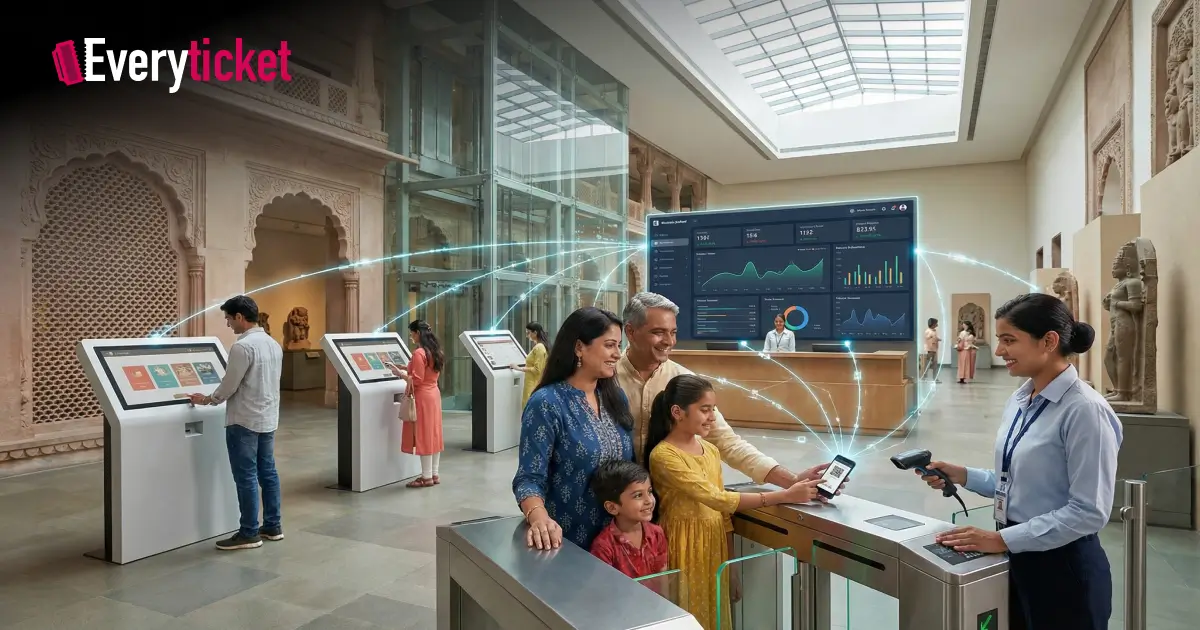
EveryTicket is museum management software built specifically for Indian museums. The platform includes online ticketing, a museum entry management system with QR scanning, POS integration, self-service kiosks, visitor analytics, CRM tools, and GST-compliant reporting. All modules operate from one connected dashboard.
Pricing starts at Rs 3,000 per month. Staff training is included at no extra cost. UPI, cards, and net banking are supported natively. Museums go live within 60 minutes of setup.
The Museum of Art and Photography (MAP) in Bengaluru uses EveryTicket to manage ticketing and visitor data across its operations. The platform has processed over 115K+ tickets.
If your institution is evaluating museum ticketing software or looking for online ticketing services for museums built for the Indian context, EveryTicket is built for exactly that purpose.
Book a demo to see how the platform operates in a live museum environment.
Museum Operations Are Changing. The Right Software Makes the Difference.
Museum management software is an operational infrastructure. Indian museums are managing higher visitor volumes, stricter compliance requirements, and rising expectations from domestic and international visitors.
Manual and fragmented systems create accounting errors, slow down entry, and hide revenue opportunities. A connected platform that handles ticketing, entry, payments, CRM, and analytics gives museum directors accurate data and full operational control.
The shift to digital operations reduces costs, improves revenue accuracy, and creates a measurably better experience for every visitor. Museum ticketing software, a proper museum entry management system, and integrated visitor analytics are the operational foundation that every modern Indian museum needs.