
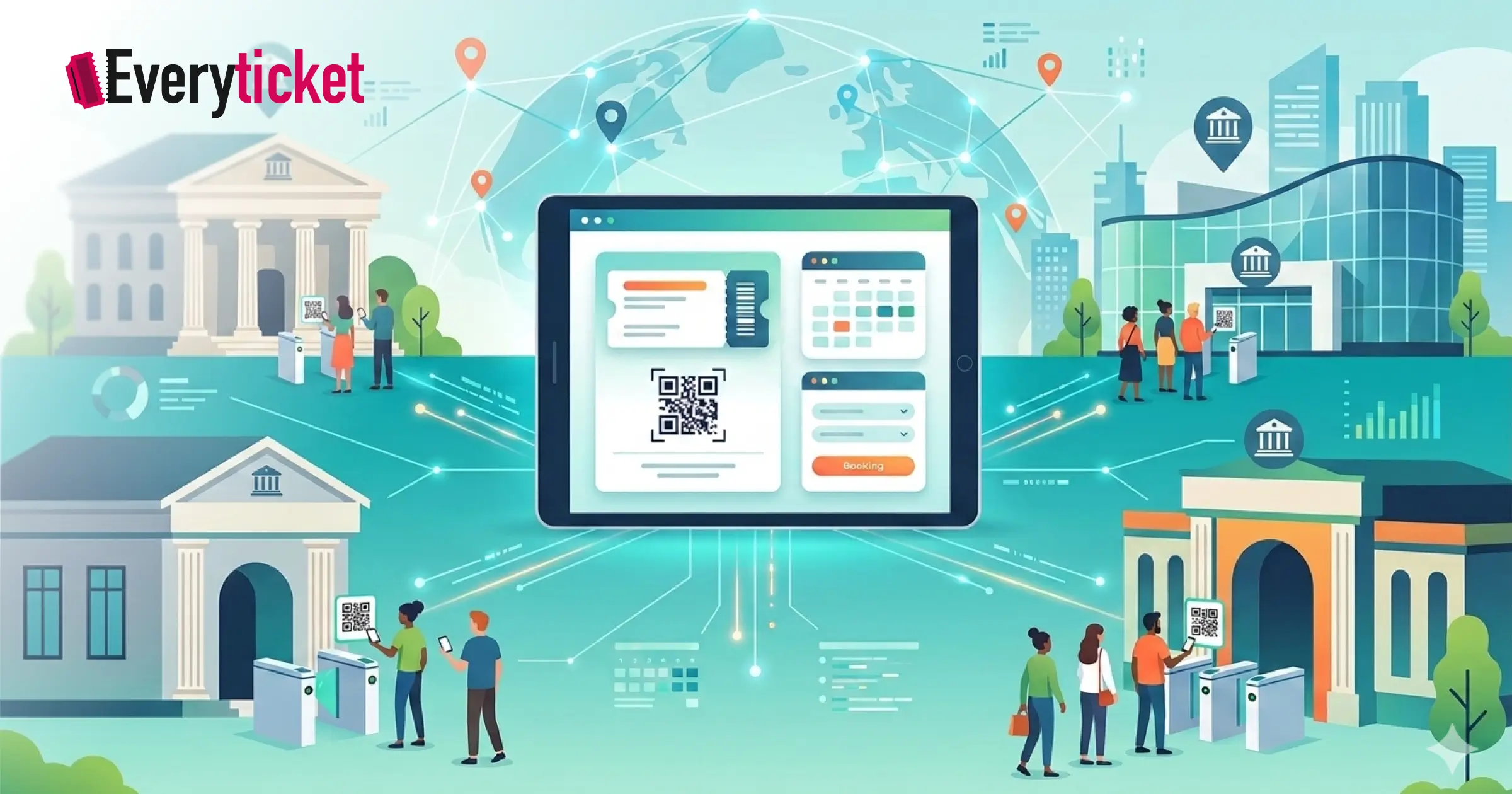
Online ticketing solutions help museum groups manage bookings, visitor entry, payments, reporting, and operations across multiple sites from one system instead of using separate tools at each location. For museum groups in India, the strongest option is usually a white-label ticketing platform that supports branded booking pages, timed entry, group visits, POS sales, analytics, and GST-ready billing. That matters because multi-site museums do not just need digital ticket sales; they need centralized control with local flexibility.
What facts should buyers know first?
- White-label ticketing keeps the museum brand visible across the booking journey.
- Timed entry helps control capacity and visitor flow.
- Group booking is essential for schools and institutions.
- POS matters because museum sales happen both online and on-site.
- Centralized reporting helps compare all locations from one dashboard.
- CRM and analytics improve visitor insight and repeat engagement.
- GST-ready billing is relevant for museum operators in India.
- Integration support matters when groups already use internal systems.
Why do multi-location museums struggle with ticketing?
Most museum groups do not actually have a booking problem first. They have a coordination problem, where each site runs its own workflow, reports differently, and creates operational chaos for headquarters. That is why fragmented systems feel manageable at one site but become expensive and inefficient across a museum network.
What should a museum ticketing platform include?
A museum-ready platform should combine ticket sales with operational control. The most important features are timed entry, group booking, walk-in POS, CRM, analytics, branded checkout, centralized permissions, and tax-ready billing. In simple terms, it should work like one command center for all locations, not just a page to sell tickets.
A white-label ticketing platform is especially valuable because it keeps the visitor journey under the museum group’s identity. Instead of sending visitors to a third-party-looking interface, the organization keeps brand trust intact across pages, emails, and digital tickets.
How can museum groups centralize control?
Step 1: Audit every site
- Map current booking channels, counters, reports, and pricing rules.
- Identify where teams rely on manual reconciliation or disconnected tools.
Step 2: Define central rules
- Decide what head office should control, such as branding, reporting, taxes, payments, and roles.
- Decide what local sites can manage, such as exhibit slots or local programs.
Step 3: Choose the right platform
- Prioritize museum-specific features over generic event ticketing claims.
- Shortlist vendors that support white-label branding and integration flexibility.
Step 4: Pilot before rollout
- Launch one location first and test real booking and reporting workflows.
- Measure queue reduction, reporting accuracy, and staff efficiency.
Step 5: Scale with governance
- Standardize SOPs for refunds, setup, tagging, and monthly reporting.
- Review data centrally so all sites improve from the same source of truth.
What mistakes should museum groups avoid?
- Choosing a generic event platform, do this instead: pick one built for timed entry, group visits, and museum workflows.
- Solving only online checkout, do this instead: unify POS, reporting, CRM, and finance workflows too.
- Letting each site run separate branding, do this instead: standardize the digital experience through white-label controls.
- Comparing vendors only on setup cost, do this instead: evaluate long-term fit, features, and scalability.
- Rolling out everywhere at once, do this instead: test one site, improve, then expand.
Are there myths buyers still believe?
Yes, and they delay better decisions. One common myth is that any online ticketing solution will work for museums, but museum groups often need timed entry, on-site sales, and structured group booking that generic platforms may not handle well. Another myth is that white label only changes the logo, when in reality it can shape the full branded experience across the booking journey. A third myth is that centralized systems reduce site flexibility, even though better platforms allow central governance with local controls.
What does real-world evidence show?
Ticket Fairy says its white-label ticketing solutions have processed more than $300 million in ticket sales in India and worldwide, showing that white-label ticketing is already a proven operating model rather than an experimental one. It also highlights branded customer journeys, multiple ticket types, analytics, and integration support, which reflects what enterprise buyers increasingly expect from ticketing platforms.
A museum-specific example from EveryTicket points to features such as timed entry, school booking, POS, CRM, email tools, analytics, and GST-ready billing for museums in India. That combination is important because museum groups need one system that supports both visitor convenience and internal control.
A realistic use case is a museum group with four or five sites using separate counters and reports. After moving to a centralized white-label platform, headquarters can compare performance across locations, while each site still manages daily entry operations more smoothly.
What is the best framework for evaluation?
Use the C3 Framework: Control, Consistency, and Conversion.
Control means centralizing pricing, reporting, permissions, and finance rules. Consistency means one brand experience and one data structure across all sites. Conversion means making booking easier through timed slots, clear categories, and smoother visitor journeys.
This framework works because museum groups usually outgrow fragmented tools before they realize it. When teams evaluate platforms through these three lenses, they choose systems that solve operational complexity, not just surface-level booking issues.
Why is this bigger than ticketing?
The bigger opportunity is not just selling more tickets online. It is building a centralized digital layer for visitor data, performance reporting, memberships, outreach, and operational planning across every museum location. That is where enterprise value appears, and that is what many buyers still overlook.
What should buyers compare before booking a demo?
- White-label branding across pages, emails, and tickets.
- Timed entry and capacity controls.
- Group booking support.
- Online plus walk-in POS integration.
- Centralized reporting across locations.
- CRM and analytics.
- GST-ready billing for India.
- API or integration support.
What is the old way vs the new way?
The old way uses different tools across locations, generic booking pages, manual reports, and disconnected counter sales. The new way uses one centralized white-label platform with branded checkout, timed entry, shared reporting, and one source of truth across the museum group.
What should the next step be?
If you manage a museum group, start by identifying where ticketing fragmentation is slowing operations across sites. Then evaluate online ticketing service based on centralized control, white-label branding, reporting, and museum-specific workflows rather than price alone. If your organization is already comparing vendors, this is the right time to book a demo and test a real multi-site workflow before committing.
FAQ
What is a white-label ticketing platform?
It is a ticketing platform that uses vendor technology while presenting your museum brand to visitors.
Why do museum groups need centralized reporting?
Separate site reports make it harder to compare performance and manage operations at the group level.
Can online ticketing solutions handle school visits?
Yes, many platforms support group bookings and category-based ticketing.
Is POS still important for museums?
Yes, because many museums still serve walk-in visitors alongside online bookings.
Why is timed entry useful?
It helps manage visitor flow, crowding, and operational planning.
What matters most in India?
Brand control, GST-ready billing, multi-site reporting, and museum-specific workflows matter most.
Museum groups in India need more than simple ticket sales software. They need online ticketing solutions that centralize control, unify branding, simplify operations, and create a stronger foundation for enterprise growth across multiple locations.
Streamlining Museum Operations Across Locations | Expressy
April 7, 2026[…] If you want to explore how centralized ticketing works in real-world scenarios, check out:👉 https://everyticket.in/blog/online-ticketing-solutions-for-multi-location-museum […]