India’s museums are dealing with a visitor management problem that manual counters alone cannot solve. Domestic tourist visits in India crossed 2.51 billion in 2023, a 44.98% increase over the previous year.
That volume is arriving at museum gates with no prior booking, no predictable timing, and no way for staff to prepare. A museum ticket reservation system gives museum admins control over this flow before visitors arrive, not after.
Let’s discuss what advance booking systems do, why they work specifically for Indian museums, and what features matter when choosing one.
Indian Museums Are Seeing More Visitors Than Their Counters Can Handle
The National Museum in New Delhi handles between 2,500 and 3,000 visitors per day on average. Many science centers in India report peak-day crowds of up to 15,000, concentrated in a three-hour window. Walk-in-only ticketing means all of those visitors hit the counter at once.
The operational result is predictable:
- Staff process tickets manually while queues stretch outside the entrance
- There is no pre-visit data on how many people are coming or when
- Cash-heavy transactions slow entry and create reconciliation errors at day’s end
- Visitors who see long queues leave without purchasing, that revenue is unrecoverable
Understanding why traditional counters fail under peak demand is the first step toward fixing the underlying system, not just adding more staff.
What a Museum Ticket Reservation System Actually Does
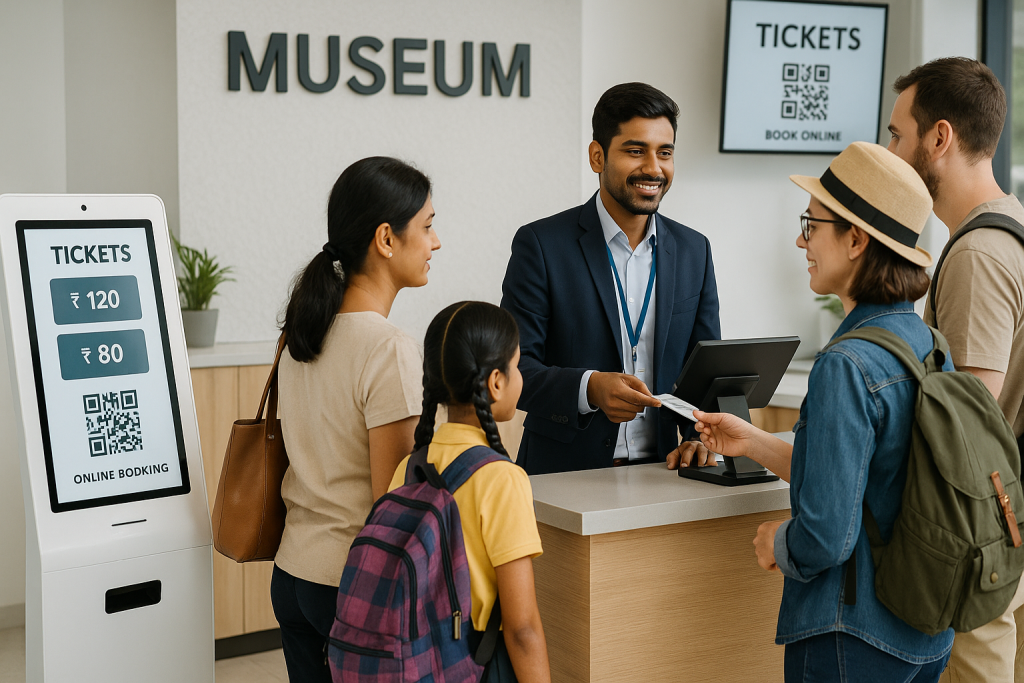
A museum ticket reservation system is software that lets visitors select a date, a time slot, a ticket category, and complete payment before arriving at the museum. The system holds that booking against the museum’s defined capacity for that slot.
For museum admins, it works as follows:
On the visitor side
- Visitors book online through a web portal or mobile interface
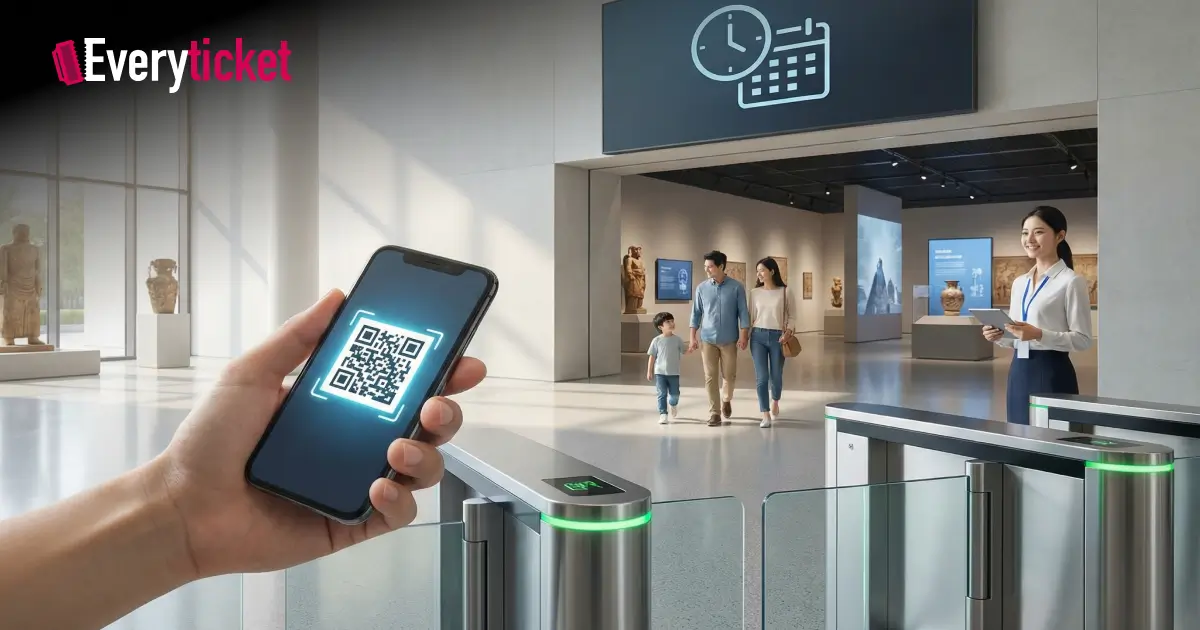
- They receive a confirmed digital ticket with a QR code
- At entry, staff scan the QR code, no counter queue required
On the admin side
- Admins set maximum capacity per time slot
- The system blocks further bookings once a slot is full
- A real-time dashboard shows how many visitors are confirmed for each period of the day
This structure converts unpredictable walk-in traffic into a scheduled, measurable flow. Online museum ticketing does not eliminate walk-in visitors entirely, it gives admins the tools to manage the ratio and set caps where needed.
The Walk-In Rush Problem Is Predictable, and Preventable
Walk-in rush is not a random event. It follows consistent patterns: weekends, public holidays, school trip schedules, and seasonal tourism peaks. Indian museums face this cycle every week yet often have no system that captures and uses this data.
Without advance booking:
- Admins cannot know tomorrow’s visitor count until visitors are already at the gate
- Staffing decisions are based on guesswork, not confirmed numbers
- Revenue from group bookings, schools, corporate visits, tour operators, is difficult to track or guarantee
- Museum ticketing software that only handles on-site transactions produces no forward-looking data at all
The management of busy museum counters requires data that walk-in systems structurally cannot provide. Advance booking changes this directly.
Core Features That Make Advance Booking Work for Museum Admins
Not every museum ticketing software platform is built for advance booking. Museum admins should verify that a system includes:
- Timed entry slots: fixed windows (e.g., 10:00–11:30 AM) with individual capacity limits
- Real-time availability display: visitors see open slots when they book; no overbooking
- Group booking management: schools and tour operators can book in bulk with per-head pricing
- QR-code-based entry: entry staff scan rather than manually check; reduces counter time to seconds
- Multiple payment options: UPI, credit/debit cards, net banking, and cash for walk-in counters
- Analytics dashboard: daily, weekly, and monthly attendance data by ticket type and time slot
- Cancellation and refund controls: automated refunds reduce staff workload when bookings change
A platform that combines online and on-site ticketing in a single dashboard gives admins a complete picture of all transactions, not just the digital ones.
How Online Museum Ticketing Changes Day-to-Day Museum Operations
Online museum ticketing changes three specific operational areas for museum admins.
1. Staffing decisions become data-driven
Admins know the confirmed visitor count for each time slot by the previous evening. Staff deployment at entry, galleries, and food counters can be scheduled against real numbers.
2. Revenue forecasting improves
Advance paid bookings generate revenue before the visitor arrives. Cancellation windows with refund cutoffs further protect this income. Museums using online ticketing services for museums report measurable reductions in revenue leakage compared to cash-only walk-in models.
3. Visitor experience improves without additional staff
Visitors with confirmed bookings arrive, scan, and enter. Entry lines shorten. The gallery experience improves because crowding at the entrance does not carry forward into exhibition spaces.
India’s online event ticketing market was valued at USD 3.6 billion in 2025 and is projected to reach USD 7.9 billion by 2034, according to IMARC Group. Museums that have not yet adopted online museum ticketing are operating outside a market that their visitors are already participating in.
The broader shift in visitor management is happening across Indian cultural institutions, advance booking sits at the center of it.
What Indian Museums Specifically Need in a Reservation System
General-purpose online ticketing services for museums built for international markets do not always meet India-specific requirements. Museum admins in India should confirm that any platform covers:
- UPI and RuPay payment support: the majority of Indian visitors pay via UPI; a system without it creates drop-offs at checkout
- GST-compliant invoicing: automated tax calculations and invoice generation reduce accounting workload
- Mobile-first booking interface: India has over 954 million internet users, the majority on mobile devices; the booking portal must be fully functional on smartphones
- POS counter integration: walk-in visitors at the counter should be managed within the same system, not a separate tool
The compliance requirements for museum payments in India are specific enough that a platform without built-in UPI and GST support creates manual reconciliation work every day.
How to Evaluate Online Ticketing Services for Museums Before You Buy
Museum admins evaluating museum ticketing software should assess platforms across these criteria:
Integration
- Does it connect to your existing POS counter system? See how POS integration works in practice before committing to a platform.
- Does it update inventory in real time across online and on-site channels?
Setup and training
- How long does onboarding take? A system that requires months of implementation delays the benefit.
- Does the vendor provide staff training at no extra cost?
Data and reporting
- Can you export attendance reports by date, time slot, and ticket category?
- Does the dashboard show live capacity status during operating hours?
Support
- Is support available during museum operating hours, including weekends?
- What happens if the system goes down on a peak day?
According to visitor attraction research published by Blooloop, museums that adopt advance booking tools see measurable gains in both visitor satisfaction scores and per-visit revenue. The gains come from reduced friction at entry, not from pricing changes.
EveryTicket Gives Museum Admins the Tools Advance Booking Requires
EveryTicket is a museum ticket reservation system built specifically for Indian museums. It handles online booking, on-site POS transactions, and self-service kiosk entry from a single dashboard. UPI, credit/debit card, and cash payments are all supported. GST-compliant invoices generate automatically. Timed entry, group booking management, real-time capacity tracking, and QR-code entry are all included.
Museums can go live within 60 minutes. Staff training is included at no extra cost. Pricing starts at ₹3,000 per month with no hidden onboarding fees. Explore EveryTicket’s full platform capabilities to see how each feature applies to your museum’s specific setup.
Conclusion
A museum ticket reservation system solves the walk-in rush problem at the operational level. It gives admins confirmed visitor numbers before each day begins, distributes entry across time slots, and produces attendance data that walk-in-only systems cannot generate. For Indian museums facing increasing footfall and pressure to improve visitor experience, advance booking through online museum ticketing is a practical, measurable step. The technology is available, the market is ready, and the operational benefits are immediate.
FAQs
What is a museum ticket reservation system?
It is software that allows visitors to book museum entry online before visiting. It assigns a time slot, processes payment, and issues a digital ticket with a QR code for entry.
How does advance booking reduce walk-in rush?
When visitors pre-book a time slot, entry is distributed across the day. The system blocks bookings once a slot reaches its capacity limit. This prevents large crowds from arriving simultaneously.
Does online museum ticketing work for small Indian museums?
Yes. Platforms like EveryTicket offer tiered pricing starting at ₹3,000 per month, which is designed for smaller museums with lower monthly ticket volumes.
What payment methods should museum ticketing software support in India?
It should support UPI, RuPay, credit and debit cards, net banking, and cash for walk-in counters. UPI in particular is essential given how Indian visitors transact.
Can a museum ticket reservation system handle school and group bookings?
Yes. Systems with group booking management allow tour operators and schools to book in bulk, select arrival times, and pay per head, all through the same online booking portal.
Is online ticketing services for museums difficult to set up?
Setup time varies by platform. EveryTicket’s onboarding takes 60 minutes, with staff training included.