Indian museums are upgrading their technology infrastructure. IT heads face the task of selecting a reliable museum ticketing system. A wrong vendor choice results in software incompatibility, financial discrepancies, and operational downtime. Decision-makers must evaluate platforms based on technical architecture, data security, and integration capabilities. This article details the essential features an IT department requires from a museum ticket reservation system to ensure long-term operational stability.
Feature #1: Cloud Networks Replace Legacy Servers for Real-Time Syncing
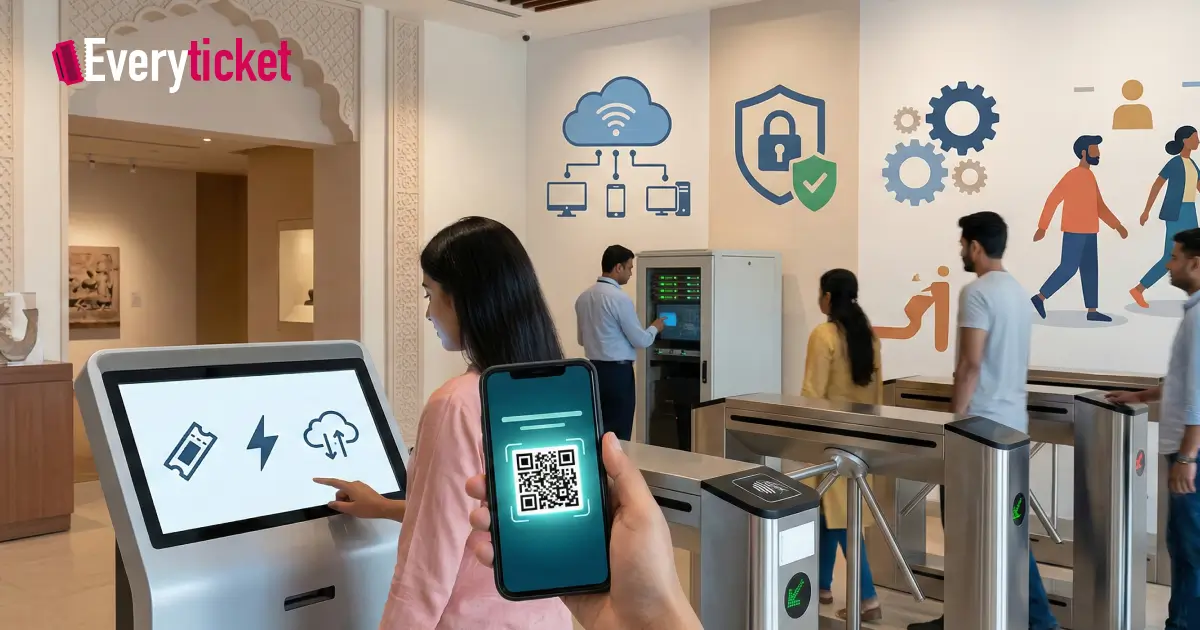
Museum IT departments are moving away from local servers. A modern museum ticketing system operates on cloud architecture. This structure ensures real-time data synchronization across all sales channels. When a visitor buys a ticket on a third-party website, the museum ticket reservation system instantly updates the on-site Point of Sale (POS) terminals. This immediate communication prevents double bookings and inventory errors.
You can review how online booking and POS sync functions to maintain accurate ticket counts. Cloud systems also reduce local hardware maintenance costs. The IT team no longer needs to manage physical server updates, backups, or cooling systems. Instead, the software vendor handles security patches and version upgrades centrally. This architecture guarantees high uptime and allows museum staff to access the management dashboard from any authorized device.
Feature #2: UPI Integration Eliminates Checkout Delays at Ticket Counters
Payment processing speed directly affects visitor queues. A museum ticketing system must support native Unified Payments Interface (UPI) integrations. Third-party payment plugins frequently fail during high traffic periods. Native UPI integration removes these third-party dependencies. The museum ticket reservation system communicates directly with banking gateways to process transactions instantly.
This direct connection ensures accurate financial reconciliations at the end of the business day. Accounting departments can track exact payment sources without cross-referencing multiple third-party vendor reports. Local payment integration is a mandatory feature for any museum operating in India. It prevents abandoned transactions online and keeps physical entry lines moving efficiently.
Feature #3: New Data Protection Rules Force Overhaul of Visitor Privacy
Data security is a primary concern for IT heads. The Digital Personal Data Protection (DPDP) Act, 2023 mandates strict guidelines for data collection and storage in India. A compliant museum ticketing system protects sensitive visitor data. Museums collect personal information during group bookings, membership registrations, and school trips.
The museum ticket reservation system must encrypt this data at rest and in transit. IT heads must verify that the vendor hosts their servers within secure environments and adheres to data minimization principles. The software must also provide clear consent management tools. If a visitor requests the deletion of their personal data, the system administrator must have a straightforward mechanism to execute that deletion and maintain legal compliance.
Feature #4: System Interoperability Bridges Gap Between Operations and Marketing
Isolated software creates operational bottlenecks. IT directors require a museum ticketing system with open Application Programming Interfaces (APIs). These APIs allow the ticketing software to communicate with existing enterprise resource planning (ERP) software, customer relationship management (CRM) databases, and marketing tools.
A connected museum ticket reservation system automatically transfers ticket sales data into the central CRM. This data transfer allows management to analyze visitor demographics accurately without manually exporting and importing CSV files. Implementing advanced API integrations prevents manual data entry and reduces administrative errors. It creates a unified database where finance, marketing, and operations departments access the same real-time information.
Feature #5: Self-Service Hardware Reduces Entry Queues During Peak Seasons
Physical entry points require efficient hardware support. IT teams must implement contactless entry methods to manage high footfall. A comprehensive museum ticketing system includes support for barcode and QR code scanners. Scanning digital tickets directly from visitor smartphones speeds up the entry process and reduces paper waste.
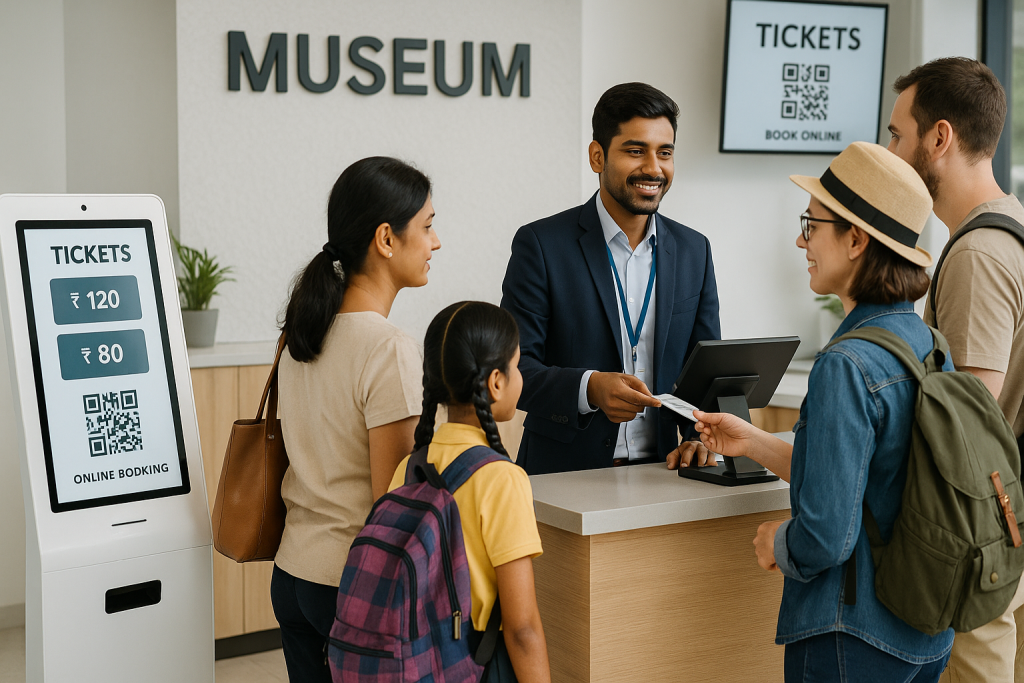
Furthermore, deploying multilingual self-service kiosks shifts the workload away from manual ticket counters. The International Council of Museums (ICOM) states that digital transformation at entry points significantly improves institutional management. A robust museum ticket reservation system connects these self-service endpoints directly to the central database. The kiosks operate on standard operating systems, allowing the internal IT staff to troubleshoot basic hardware issues easily.
Feature #6: Capacity Management Tools Handle School Trips and Heavy Footfall
Museums experience fluctuating visitor volumes. IT heads implement dynamic timed-entry features to manage building capacity. A reliable museum ticketing system allows administrators to set specific entry time slots and ticket limits per hour. This function prevents overcrowding in exhibit halls and distributes foot traffic evenly throughout the day.
Additionally, a specialized museum ticket reservation system handles complex group bookings. It generates single group invoices, applies bulk discounts automatically, and issues block tickets for school trips and tour operators. These capacity management tools ensure compliance with local fire safety and building occupancy regulations. Administrators can adjust these limits in real-time through the backend dashboard if unexpected closures or delays occur.
Read: How a Modern Museum Booking System Simplifies Timed Entry and Group Bookings
Vendor Evaluation Matrix
To assist IT heads in the vendor selection process, use this evaluation checklist to compare software providers accurately.
| Feature Requirement | Technical Specification | Operational Benefit |
| Cloud Architecture | AWS/Azure hosting with 99.9% guaranteed uptime | Real-time POS and online inventory syncing |
| Payment Processing | Native UPI and local Indian banking gateway APIs | Instant financial reconciliation and fast checkout |
| Data Security | End-to-end encryption, strict DPDP Act compliance | Legal protection of visitor data and privacy |
| API Connections | RESTful APIs, Webhooks for third-party software | CRM and ERP synchronization without manual entry |
| Entry Hardware | Touchscreen kiosk compatibility, QR code scanning | Drastic queue reduction and staff reallocation |
| Capacity Control | Dynamic timed-entry scheduling algorithms | Overcrowding prevention and safety compliance |
Here’s How to Streamline Museum IT Infrastructure with Modern Software
Evaluating ticketing vendors requires a systematic approach based on technical facts. The chosen software must align with existing IT infrastructure and local legal regulations. The right platform solves operational bottlenecks, secures visitor data, and connects isolated software departments.
For IT heads ready to modernize their software stack, exploring a specialized platform provides clear technical advantages. EveryTicket develops ticketing solutions specifically for the operational demands of Indian venues. The platform integrates native UPI processing, ensures DPDP Act compliance, and supports comprehensive API connectivity. IT administrators can review our system capabilities to see how our software aligns with enterprise-grade requirements.
Deploying a proper museum ticketing system reduces the technical burden on internal staff. By implementing a reliable ticket reservation system, museums ensure secure data management, fast transaction processing, and efficient visitor entry protocols.
Contact us now to integrate these features into your museum manager system. We’re backed by fastest AI-driven engineering partner from India.